

Why It Can Cost So Much To Replace Your Car's Engine Mounts
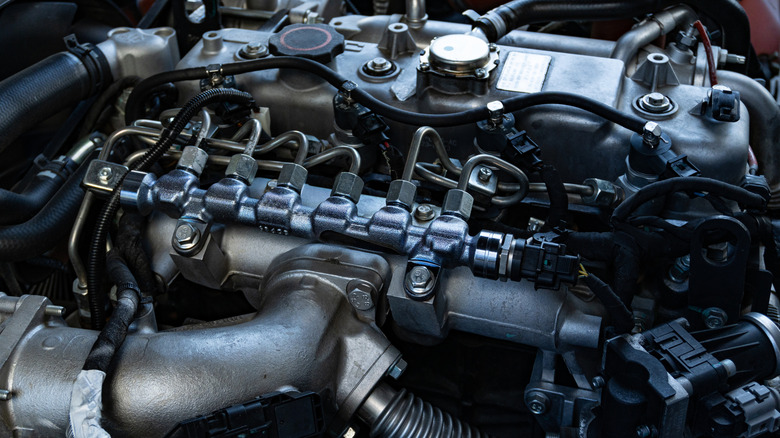
In the grand scheme of car repair, engine mounts are far from the most complicated elements of the modern vehicle. At the same time, they're undeniably vital, holding the engine in place securely and protecting it and associated parts from the rumbles of the road. With that said, if one or more of your engine mounts go bad, you might be surprised to learn that you'll have to pay quite a bit to replace them. The mounts themselves range in price, somewhere between $10 and a few hundred dollars depending on the type, but labor costs will inflate your mechanic bill in a big way.
Engine mount replacement isn't too complicated a task, but it is a tedious and time-consuming one. It requires raising your vehicle and detaching and removing the engine from the engine bay. To get to the mounts, the engine must be lifted up and out of the way. This requires highly specialized and capable equipment to safely lift and hold it, and you need to be mindful of the many elements that run to and from the engine to other parts of the car. These need to be carefully moved or disconnected entirely, adding to the work time. Thus, the parts may not be all that expensive, but the time it takes to do the job right will inflate the final cost dramatically.
Vehicles have different numbers of engine mounts, and how long they last depends on their type. Regardless of your ride's mount layout, though, it's crucial to be aware of the signs that your mounts need replacement. Otherwise, you're asking for serious trouble with not-so-DIY-able solutions.
Telltale signs mount replacement is necessary
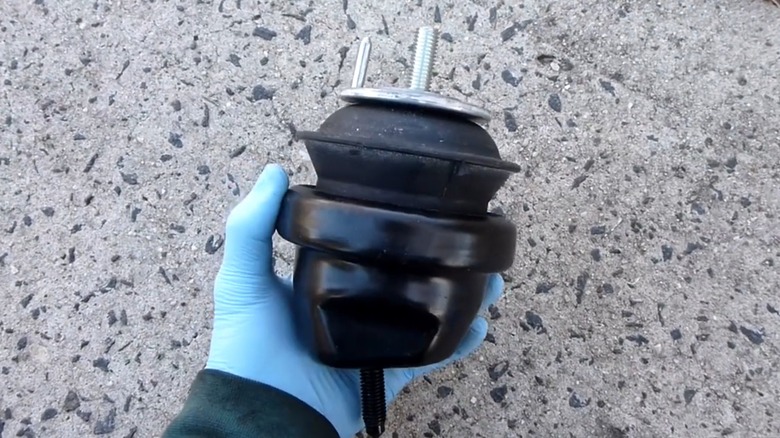
Identifying one or more failing engine mounts is important, as they're a key component in maintaining your engine. The most obvious sign of bad mounts is unusual engine activity. This comes in the form of excessive engine vibration, be it at idle — though cars can shake for a few reasons at idle — while driving, or when you start up or turn off the vehicle. You may even be able to feel the vibration in the steering wheel. If the mounts can't hold the engine securely, it'll have some play, along with strange noises accompanying the movement. Mounts in poor condition will allow the engine so much movement that it may knock into other nearby components.
If you're concerned your mounts may be on their way out, it's worth looking into their status as soon as possible. Suffice it to say, the consequences of not doing so are drastic. If the engine moves around too much, it'll endure extra stress while in use and even suffer damage, from broken belts to cracked manifolds. Worse yet, the effects of failing mounts can spread to other engine components, such as the transmission. If one part of the vehicle is out of sync, so are those connected to it, and they're just as prone to breakage as a result. Suddenly, mount repair costs grow due to the need for repairs of several engine elements that have fallen into disarray.
Leaving degrading engine mounts to their duties isn't in your best interest. Given the exorbitant costs of replacing these parts, it can seem tempting to let them be. In reality, you want to get them done sooner rather than later, unless you're ready to contend with potentially costlier damage throughout your engine bay.