

What Does Bleach Do To An Air Conditioner?
Given that bleach is a strong disinfectant found in almost every home, it might seem like a simple fix for an AC that's developed mold or mildew. However, when cleaning your air conditioner and its coils, be very careful if you decide to use bleach. An air conditioner consists of various materials, including metal coils that don't always respond well to bleach. Sodium hypochlorite (the active ingredient in bleach) is corrosive to metals, and applying it to the wrong parts can cause more trouble than its worth.
Still, you can use bleach to clean AC drain pipes or remove blockage, so long as it's done correctly. First, turn off the AC, then pour about a quarter of a cup of bleach mixed with a cup of water into the drain line access point. Let the solution sit for around 15 minutes, and you should be good to go. In this case, bleach is strong enough to clean your drain or be used for regular pipe maintenance.
While bleach can kill mold and algae in your AC drain line, there are potential problems with using it. It can corrode metal components, including aluminum coils or copper parts, which could lead to leaks and general damage. All you need is a spill in the wrong place, and you'll have a problem. Some safer alternatives are white vinegar and hot water. Additionally, if your drain line is slow or clogged, a wet or dry vacuum at the outdoor outlet can pull out gunk fast.
Will bleach damage AC coils?
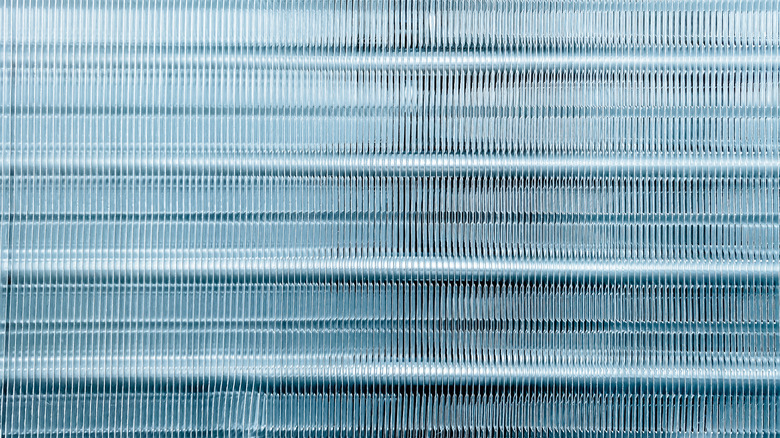
You should have your air conditioner serviced on a somewhat regular basis, either via a professional (preferable) or DIY. At the very least, you could do the above and clean the drain line or the air conditioner coils. However, unlike drain pipes, under no circumstances should you use bleach or any other harsh chemical to clean the AC coils. Due to their corrosiveness, this will damage the coils and eat away at aluminum fins and the copper-aluminum joints in your AC.
The worst that can happen here is formicary corrosion, a type of corrosion affecting aluminum and copper. It happens when airborne acids and chemicals mix with condensation on metal coils. This causes tiny pinholes to form, and once refrigerant starts to leak, the coil is done for. Using bleach can make this a reality, so avoid it at all costs. To properly clean your AC coils, a no-rinse foam cleaner works well.
To conclude, bleach and air conditioners mostly don't mix well. Any contact with a metal component is a disaster, but with proper care and preparation, bleach can be used for drain pipe cleaning. Still, even then, it's a potential problem, and there are safer alternatives. That said, if your air conditioner isn't cooling well, it's likely time for a check-up and cleaning or a sign that your air conditioner is too small for your home.