

The Telltale Signs The Air Conditioner You Have Is Too Small For Your Home
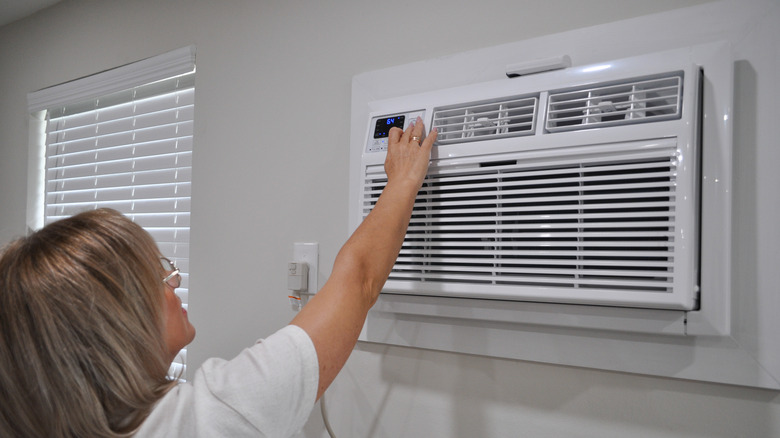
In the summer heat, an AC unit from some of the best air conditioner brands definitely comes in handy, to the point where it's pretty much a requirement. One potential problem with the AC unit that you have is that's too small for your space. One of the easiest ways to know is to be aware of how long the AC is running. If it's going for long periods of time, but the house's temperature is still higher than the setting, you might have a problem.
If so, you may see higher energy bills than usual, which is another sign that your AC unit may be undersized. You also shouldn't have a problem maintaining a comfortable temperature, especially during hot weather, or experience certain rooms staying warmer than others. The air in your home shouldn't feel hot and sticky, and if it does, that could mean the AC isn't properly lowering the room's humidity. All of these signs could point to an undersized AC, which may need more frequent repairs, and potentially have a shorter lifespan due to the added strain.
If you believe your AC is undersized, the best move is to contact an HVAC professional who can use a load calculation, a process which looks at several factors that affect your home's cooling needs. This includes the home's size and construction among others. Once that cooling demand has been calculated, specific guidelines, like the 115% rule, are used to determine how much capacity the AC should have.
Choosing the right AC size
If the air conditioner you have is too small, it's important to know that going with more cooling power than you actually need isn't necessarily a good idea. An oversized AC could bring the temperature down quickly and shut off before it has enough time to properly cool the room. The result can be a room that feels cool yet still uncomfortable. Additionally, the repeated starts and stops can cause the system to work harder and eventually lead to higher energy costs.
When selecting the right size AC for a room in your home, you should start by using the room's size to determine how much cooling power you'll need. Then, you should account for factors that could increase that requirement. GE Appliances recommends adding 4,000 BTU/hour when the space includes a kitchen, while larger areas may benefit from more than one unit. Other factors like ceiling height can also play a role in what size AC you need for the space.
Then there's the condition and environment of your home, which can also affect how much cooling power you need. For example, good insulation along with efficient windows and doors, like this high-tech window material, can decrease the amount of cooling required. In contrast, a home with a combination of sun and little outside shade may require more cooling. This means that two rooms with the same square footage may not necessarily need AC units with the same cooling capacity.