

7 Brands Owned By 3M
You can find the 3M label on so many different products of all different varieties that it can be difficult to know precisely what it is that the company does. In truth, it might be easier to list the things 3M doesn't do.
The manufacturer has been in business for more than a century but not always under the same name. Originally called the Minnesota Mining and Manufacturing Company, the folks in charge later changed the company name to 3M for the sake of brevity and branding. Along the way, 3M innovated several now-standard office supplies like Scotch tape and the Post-it Note.
Today, 3M offers tens of thousands of products on digital and physical store shelves all over the world, and that's just those with the 3M name on the label. Then there are the subsidiaries, companies which present themselves under their own label but which actually operate under the 3M umbrella. It turns out the company's footprint might be even larger than you realized. Here are seven brands you may not know are actually owned by 3M.
Bondo
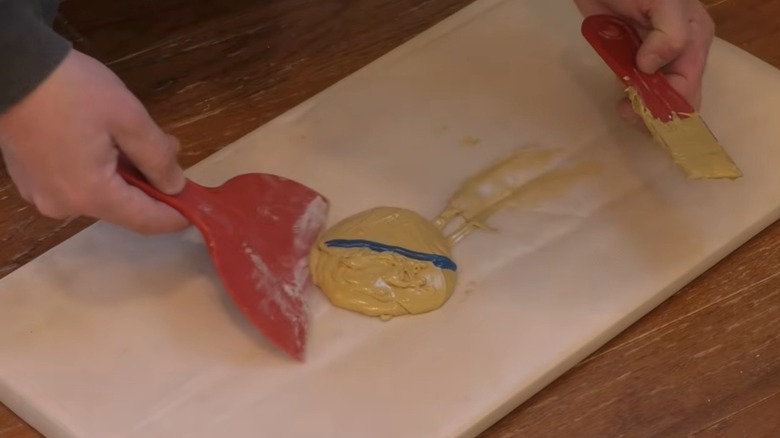
Bondo has been around since the middle of the twentieth century, but it's only been part of the 3M family since 2007. Today, Bondo is a ubiquitous staple of automotive store shelves. Its existence is something many of us take for granted, but it changed the game when it was introduced. Suddenly, repairs which used to require dangerous tools and materials like molten lead could now be done safely at home.
Introduced in 1955, Bondo Body Filler is a polyester resin putty with a cream hardener. When mixed, a chemical reaction creates cross-linked polymer chains in the resin. In short, it cures into a rigid and strong final product and it happens quickly, in about 20 minutes. You can use Bondo for a rust repair, to fill in dings, dents, holes, scratches, and other minor damage to your vehicle's surface. Just fill in the damage, wait for it to cure, sand it down smooth, and finish with paint or sealants.
There are different versions of the product for different purposes. You can find Bondo for automotive repair, for fixing wooden surfaces, for fiberglass and specialty repairs, all-in-one repair kits, and more. It's a multi-purpose material for fixing all sorts of damage on all sorts of surfaces.
Peltor
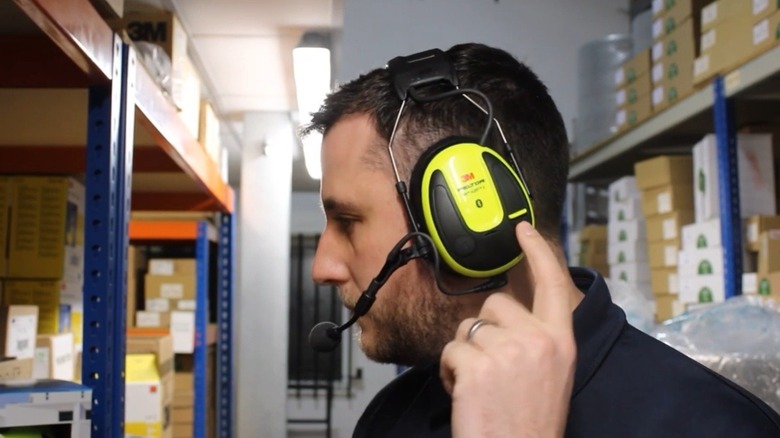
In 2008, 3M spent approximately $1.2 billion to acquire Aero Technologies, owner of safety equipment brands E-A-R, SafeWaze, and Peltor. You can find Peltor products in just about every work environment where safety equipment is needed, including the environment of deep space.
In 2026, 3M Peltor headsets were used by the crew of the Artemis II mission on their flight around the Moon. Artemis II was the first crewed flight to the satellite in more than half a century. It was part of NASA's preparation for an upcoming mission which will land humans on the lunar surface for the first time since 1972.
The crew used Peltor's ComTac VI headsets with omnidirectional environmental microphones capable of dialing down loud noises while amplifying soft ones. The headset is designed to make sure the user can always hear what they need to hear while protecting them from dangerously loud noises, even a quarter of a million miles from Earth. In addition to making microphones for space explorers, Peltor makes protective equipment like harnesses, hard hats with attached headsets, earmuffs, earplugs, and more.
Capital Safety
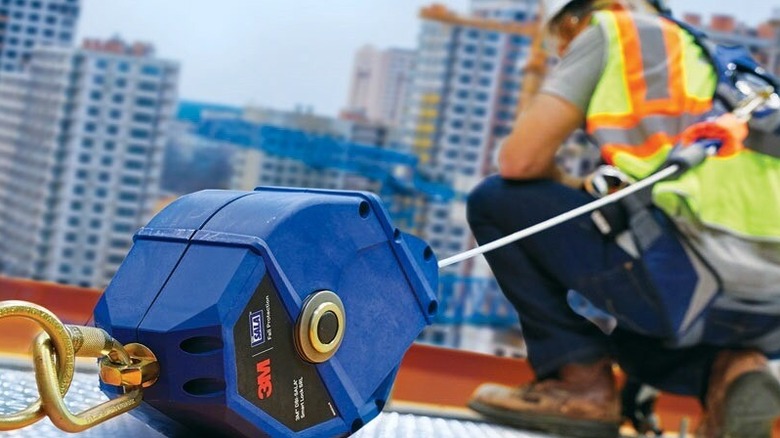
After acquiring Aero Technologies in 2008, 3M continued to expand its personal safety footprint. In 2015, 3M paid KKR & Co. approximately $2.5 billion to acquire Capital Safety, maker of fall protection and other safety equipment. As a result of the acquisition, Capital Safety's brands DBI-SALA and Protecta were both folded into 3M's product lineup.
3M's previously existing personal safety division was already producing things like respiratory protection devices, hearing protection, and high-visibility clothing. The acquisition of Capital Safety allowed 3M to expand its offerings to include things like full body harnesses, retractable lifeline systems, anchors, lanyards, body belts, load arrestors, controlled descent devices, and more. The company's products can be useful for jobs like construction, mining, and oil extraction. In short, if you need to operate in a potentially unsafe environment or put yourself in a possibly unsafe situation, Capital Safety has products that can help to minimize your risk.
Scotchlite
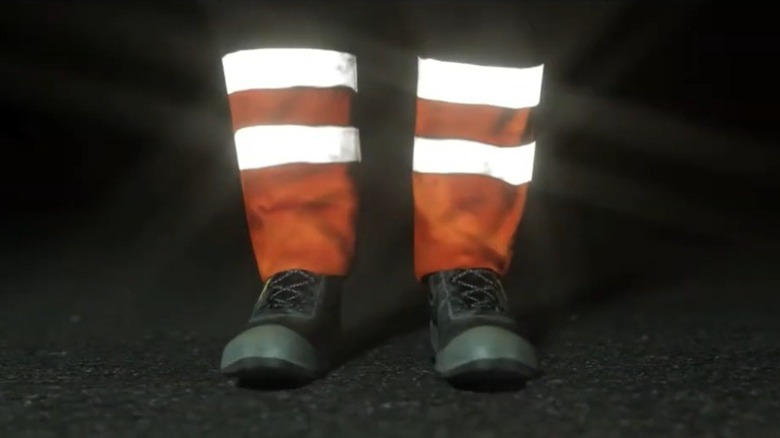
3M has been making, manufacturing, and innovating reflective materials for approximately a century, most famously under the Scotchlite brand.
Scotchlite works through effective retroreflection, which is a fancy term for when light is reflected back toward a light source. When light falls onto a non-reflective surface it gets scattered; when it falls onto a mirror it gets reflected at the same angle it approached. However, when light hits a retroreflective material, it bounces back to its point of origin. The bottom line is that objects in the dark seem brighter because more light is being directed back toward you and into your eye.
3M's reflective materials were first applied to a roadway in Minnesota in 1938. By the time a team had arrived for a nighttime test, the material had peeled away from the road and stuck to a nearby fence. The test itself was a failure but it paved the way, as it were, for future applications. Scotchlite found its way onto traffic signs in Minnesota just a year later, making them more visible in the dark. Decades later, 3M's Scotchlite reflective material has found its way to clothing from work vests to exercise clothing.
Scott
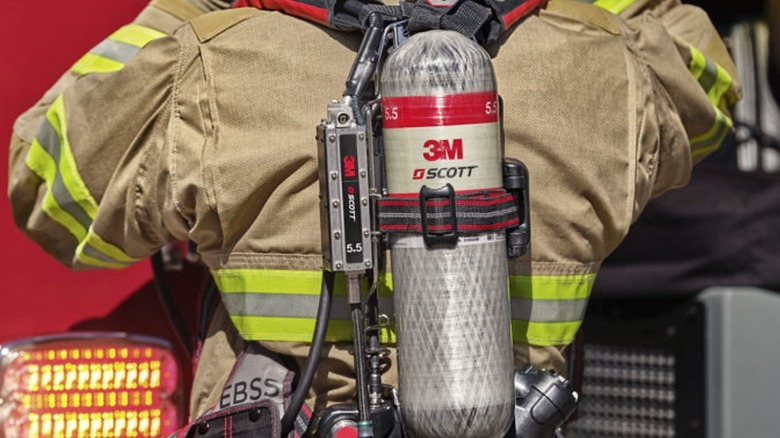
The Scott label is short for 3M Scott Fire & Safety, a brand focused on communications equipment, fire protection, and other safety equipment. The brand's history dates back to 1932 and it has undergone a few name changes along the way, from Uniloy Accessories Corporation to Scott Aviation, then Scott Technologies, and finally Scott Health and Safety.
In 2001, Scott Health and Safety was acquired by Tyco International, which later became part of Johnson Controls and eventually sold the Scott brand to 3M in 2017. More recently, 3M (in partnership with Bain Capital) acquired Madison Fire & Rescue for approximately $2 billion, which it combined with Scott Safety into a more robust Fire and Safety profile.
3M's Scott products help firefighters and others work and communicate in harsh and dangerous environments. Today, the brand offers things like respiratory protection, hazard detection (think smoke and carbon monoxide), thermal imaging, face masks, firefighter locator systems, emergency air supply systems, self-contained breathing apparatuses (SCBA), supplied-air respirators, communication systems, thermal imagers, and more, all under the Scott label.
Speedglas
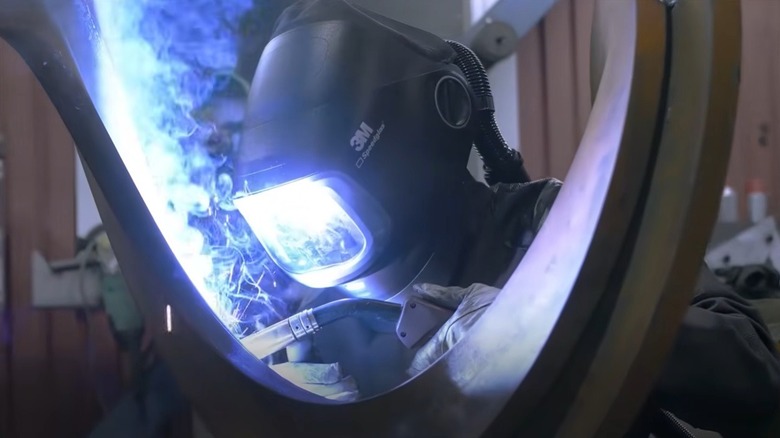
Picking out a good welding helmet can be tough, but they all have two main functions. The first is to protect the wearer from the heat and flying debris generated by welding. The second is to protect the wearer from eye damage caused by high-intensity light.
Conventional welding helmets feature filters that block a certain percentage of light, making it safe to look at a welding torch. The trouble is that conventional helmets block the majority of light all the time, making it difficult to inspect your work or even see what you're doing between welds. Speedglas, by contrast, uses modern technologies to automatically activate light filtration any time bright light is detected.
VHB
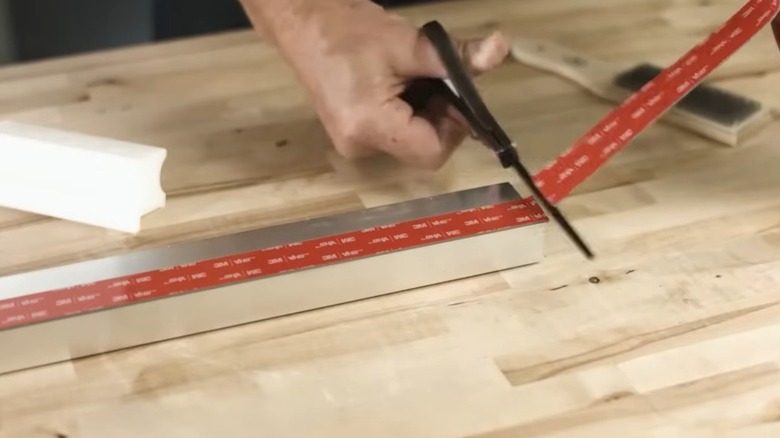
The name VHB is short for "very high bond," which is another way of saying it's really sticky. VHB was invented by 3M more than 45 years ago in 1980. The idea was that a strong enough tape could replace nails, screws, and other fasteners in some situations.
One of the most apparent benefits of VHB tapes is that they spread forces across the surface of materials. When fastening two panels of wood, for instance, tape lets you attach the panels across their entire surface. By contrast, nails or screws attach only at a few specific points, creating opportunities for cracks and other damage. Tapes can also be used more easily on fragile materials like glass and ceramic, which might not play well with conventional fasteners.
3M's VHB tapes come in a few different forms depending on what you're trying to achieve. There's one for clear materials, one for powder coated or painted surfaces, and tapes for use in extreme temperatures, which is good because they can be used for a wide range of applications. They can be used in place of rivets on the exterior of vehicles, to seal electronics like cameras and smartphones, in construction projects, appliances, signage, and more.