

Here's How To Pick Out A Good Welding Helmet
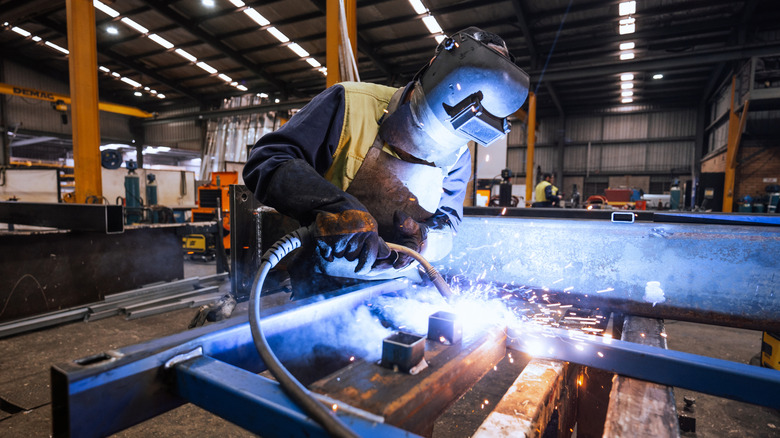
The right helmet can make a major difference in both your comfort and safety when tacking welding jobs. Luckily, choosing one doesn't need to be as confusing as you might assume. All you need to do is account for certain essential factors to find the right welding helmet for your needs and goals.
There's no one single welding helmet that's universally ideal in all situations. A hobbyist who only welds on occasion may not need to spend as much money on an employer who's equipping their workers with helmets they'll use throughout the day. As always, if you're not sure what you should spend money on, it's wise to consult with a professional. Someone deeply familiar with the various types of welding helmets on the market can help you sort through your options if you're stuck trying to decide what's best.
It's also worth noting that a helmet is just one piece of equipment a welder needs. Look into other essential tools for welders to make sure you have everything you need to get started. Remember, in welding, the right gear is as much about preventing injury as it is about boosting productivity.
Know the difference between passive and auto-darkening welding helmets
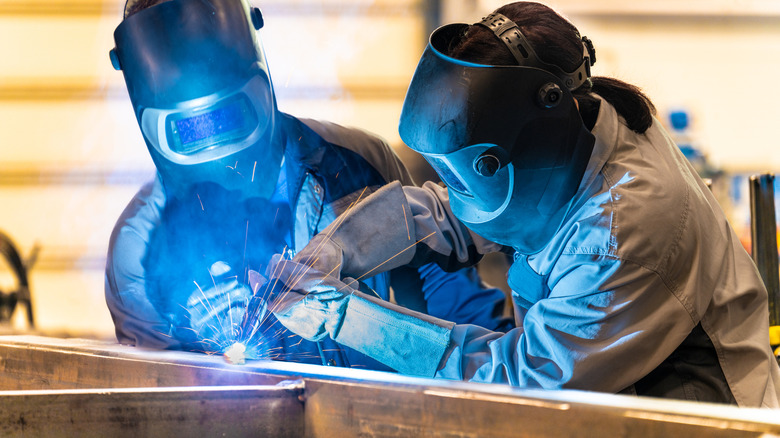
One of the key functions of a welding helmet is protecting your vision during the welding process. However, different types of welding involve different amperage ranges. As such, a welding helmet that protects a wearer's eyes during one type of welding task might not offer the same protection in other circumstances.
Don't assume the shade range of a welding helmet is a "one size fits all" detail. Research the shade range that you'll need for the specific type of welding you'll be performing, and find a helmet that fits the bill.
You have the option of investing in an auto-darkening filter (ADF) helmet. The key benefit of this type of helmet is that it automatically adjusts the shade of the lens to a wearer's chosen setting when it detects the brightness of the arc weld.
This might make an ADF helmet seem like the obvious choice for virtually all welders. However, ADF helmets are typically more expensive than those without this feature. If welding is just a hobby, a premium ADF helmet might not be a necessary purchase. With a passive welding helmet, the kind that doesn't automatically adjust its shade, you often can still manually change the lens when you need to. Having that option might be sufficient for someone who doesn't weld professionally. On the other hand, every time you want to observe your progress without looking through a shaded welding helmet lens, you'll have to take the helmet off if you go with the passive type.
Familiarize yourself with the basics before buying a welding helmet
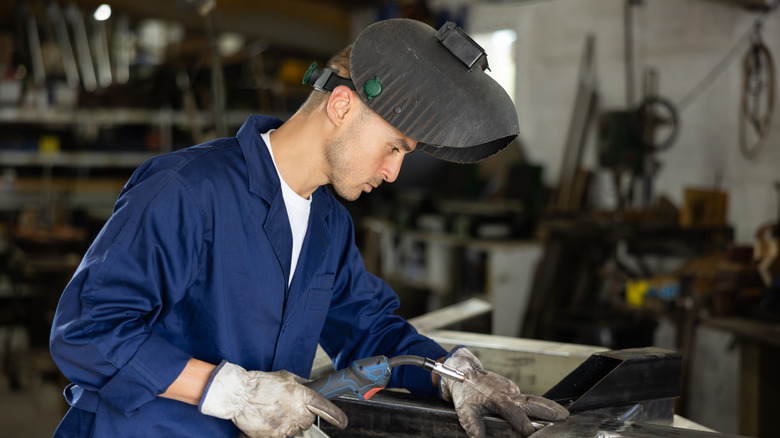
Understanding the difference between passive welding helmets and auto-darkening helmets is a foundational step in learning how to evaluate different helmet options. Depending on the type of welding you're going to be doing, it's also vital to learn about the minimum protective shade numbers associated with that type of welding. For example, if you're going to be performing plasma arc welding that generates an arc current of 20 to 100 amperes, you'll need a helmet offering a minimum protective shade number of eight. However, for improved comfort and safety, you'd be better off with a protective shade number of 10.
That's just one example. It can't be stressed enough, though, that these numbers will vary depending on the type of welding you'll be doing. Once more, consult with a trustworthy professional if you have questions about these matters.
Viewing area is another basic factor to learn more about, as it can vary from one helmet to another. Some welding helmets offer relatively large viewing areas. Although this might seem like it's always preferable to a small viewing area, that's not necessarily the case. A smaller viewing area allows for greater focus. Consider the type of work you'll be doing to determine what type of viewing area best serves your needs. Again, if you know the types of welding processes you'll be working with, you can better identify the appropriate viewing area.
Consider the other types of PPE you'll be using
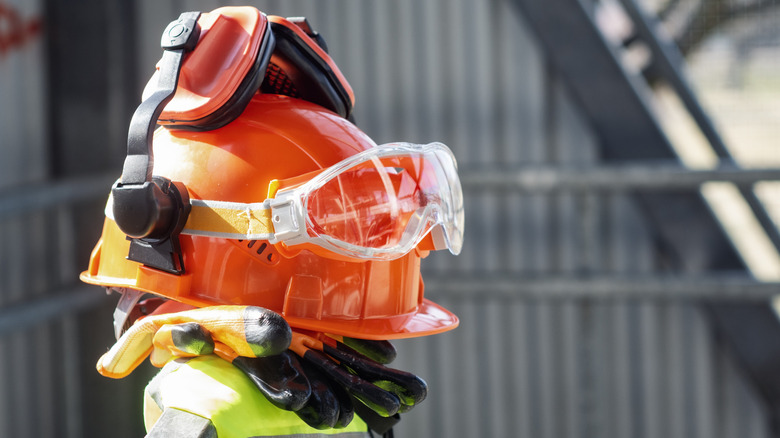
The type of welding you'll be doing and the environment in which you'll be doing it are both factors that influence the other types of personal protective equipment (PPE) you may be using. For example, you might be using equipment like respirators when welding in certain environments. Or, adjacent to PPE, your work might require you to use communication systems and equipment to coordinate with other team members.
Not all welding helmets are equally compatible with all PPE. Consider how your welding helmet will interact with the environment and the other equipment you'll be using when browsing options.
Of course, you also have to account for practicalities like your budget when choosing a welding helmet. That doesn't mean you can afford to cut corners if it means limiting your safety. However, it does mean you should check all welding helmets you're thinking about buying for the kinds of extra features that can add to the cost but that might not be necessary given your plans.
Just remember that you don't need to make this decision alone. The information here will certainly help you begin your search for a quality welding helmet, but speaking with an expert is always advisable if you still have questions.