

How Does No-Lift Shift Work Without Killing Your Manual Transmission?
Those who buy a manuals today do so because they want it, not because it's cheaper or the only option out there. An automatic is the quicker unit in almost every modern application, and in many respects the more technologically advanced one too. Porsche's own figures make the point well. The 992-generation 911 GT3 with PDK hits 60 mph in 3.2 seconds, while the manual version needs 3.7 seconds to get there.
This is a half-second gap that is very difficult to shorten no matter how good the driver is. Be that as it may, enthusiasts still reach for the stick. The appeal lies in the added layer of connection between driver and the car; selecting your own gears makes the whole experience feel more physical, more involved, more yours. If you want to shorten those gear changes and make a manual as quick as it can be, you've got two options: master the timing, or let the car do it for you. Mastering the timing means learning to lift and get back on the throttle as fast as possible, so that break in grunt is cut down to a bare minimum. If you want the car to do it for you, buy one that has no-lift shift.
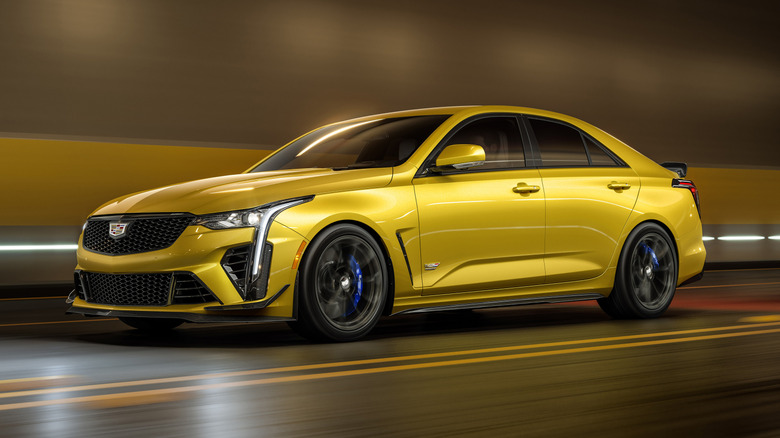
GM (among other brands) built the system into cars like the 2024 Cadillac CT4-V Blackwing: floor the pedal, pull the next gear, and the car does the rest, no lift required. In basic terms, pedal input on a modern manual routes through the ECU first, which decides how much power actually reaches the crank during that shift window.The obvious question is whether that's asking for trouble. GM Authority explains that the system "takes some of the load off of the mechanical hardware, and should extend the life of the drivetrain due to less shock, especially the transmission." So instead of punishing the gearbox, no-lift shift is engineered to spare it. Let's take a more detailed look.
How does no-shift not destroy the transmission
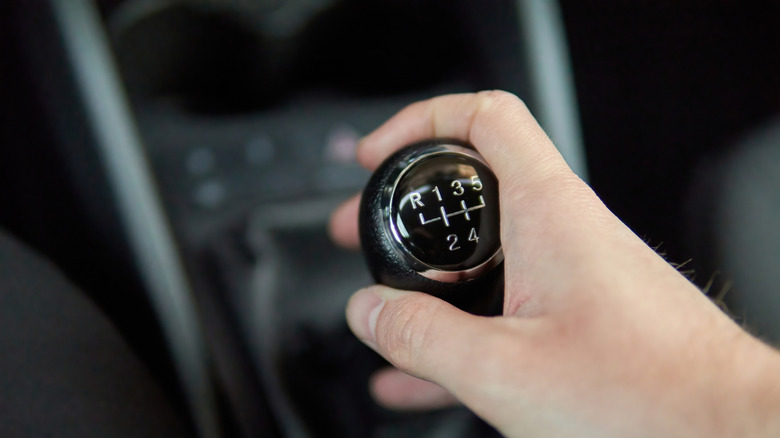
In order to fully understand why this system won't destroy the transmission, we first need to understand how it actually works. Mechanically, it isn't really about the transmission, but rather the engine's software, and just how stick shifts have been made easier with modern cars.
Along with the aforementioned ECU trick, the moment the system senses the clutch pedal going down, it steps in and manages the torque cut itself, timed far more precisely than a driver's foot ever could. The process happens in two phases. Torque gets cut hard as the shift begins, then the system eases off that hard cut and switches to a finer, throttle-based adjustment that carries the engine through until the new gear is fully caught.
That handoff is what keeps the shift from feeling like a single jarring interruption. If the car has a turbocharger, it is a bit more agricultural. Killing the spark outright would let boost collapse and hand the driver a flat spot on the other side of the shift. So instead of cutting ignition entirely, the software just pulls timing back, keeping enough heat and pressure in the exhaust to hold the turbo spinning.
Ferrari's 12Cilindri Manuale is different because it isn't a real manual. Underneath that gated shifter, it's the standard dual-clutch transmission with a Manuale by-wire clutch pedal and shifter bolted on, neither one mechanically connected to the gearbox. Since a DCT already shifts without any throttle interruption, there's no shock to manage. Ferrari's real challenge was the opposite of GM's; making a seamless automatic feel like a manual, not protecting a manual from the driver.
Cars that come with no-lift shift technology
GM has put it on more cars than most people realize. Per GM Authority's own list, the manual C7 Corvette, Camaro SS and ZL1, and the Cadillac ATS-V all had it standard between 2014 and 2022, along with the lesser-known second-generation CTS-V and manual Buick Regal GS.
Its factory debut came on small turbocharged GM hatchbacks, the Cobalt SS and HHR SS, both running 2.0-liter fours where the payoff was less about drama and more about not losing boost mid-shift. Ford later built the same logic into the Focus RS.
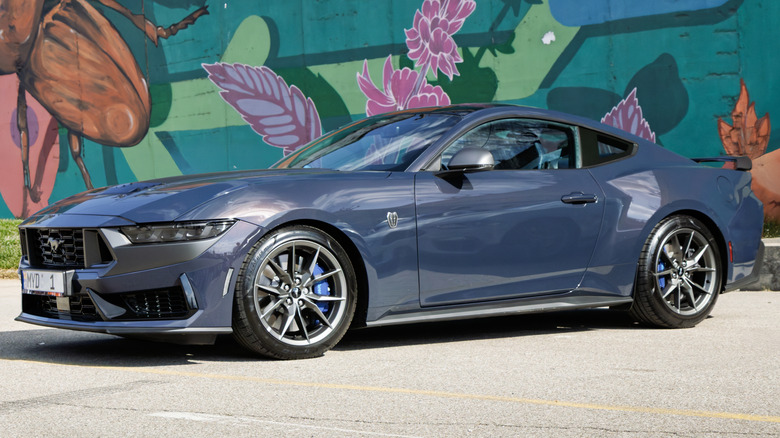
Ford has since pushed the feature past its earliest track specials. The Mach 1's manual gearbox is the same Tremec six-speed used in the GT350, with rev-matching and no-lift shift added on top, borrowed from the Bullitt trim. The current Ford Mustang Dark Horse keeps that combination alive on its TR-3160 gearbox. Neither feature comes on the base Mustang GT — Ford sells it separately through Ford Performance's PP1-PP3 packages. Nissan takes a similar approach with the Z. Nissan's own spec page lists no-lift shift as a factory option on the manual car, sold alongside — not folded into — launch control.