

Should A Dishwasher Be Perfectly Level Or Tilted Back?
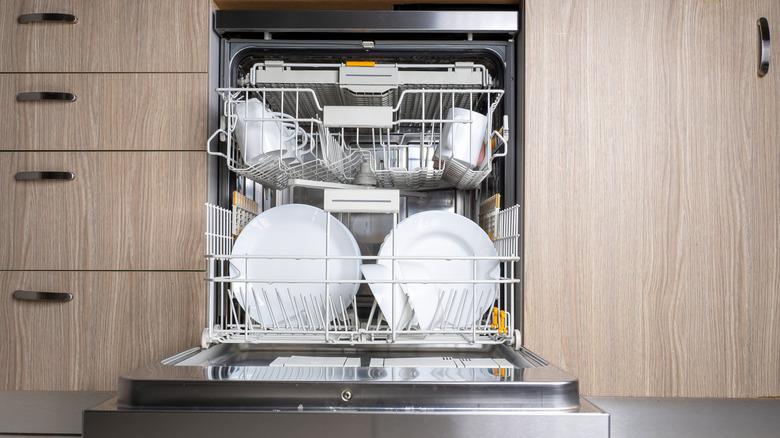
A dishwasher is one of those home appliances where everyone can easily make a mistake when buying and installing it. This is especially true since a dishwasher might need extra installation parts that aren't included with the purchase. More importantly, its positioning can affect the door seal and wash performance. As a result, a common question is: should a dishwasher be perfectly level or tilted back?
Typically, a dishwasher should sit level side to side and front to back, not tilted backward on purpose. Leading manufacturers like Whirlpool and Samsung point out that leveling is a key step in extending the average lifespan of a dishwasher. The reason a dishwasher needs to be level is to avoid leaks and have the best possible performance. If yours isn't, you might run into issues like water not draining, standing water in the tub, more noise than usual, and poor cleaning performance. The good news is that repairing a dishwasher is often cheaper than replacing it.
Also, leveling your dishwasher helps with drying. When it's off-balance, water can pool and leave your dishes wet, which often leads to spots. In case any of the above sounds familiar, it's worth checking whether your dishwasher is sitting flat. You can do this by opening the dishwasher door and seeing how it lines up, and whether it moves smoothly and feels steady. For a more precise reading, use a bubble level against the top edge of the machine and check it both ways. If the bubble is centered, you're good; otherwise, it's time for adjustment.
How to level a dishwasher
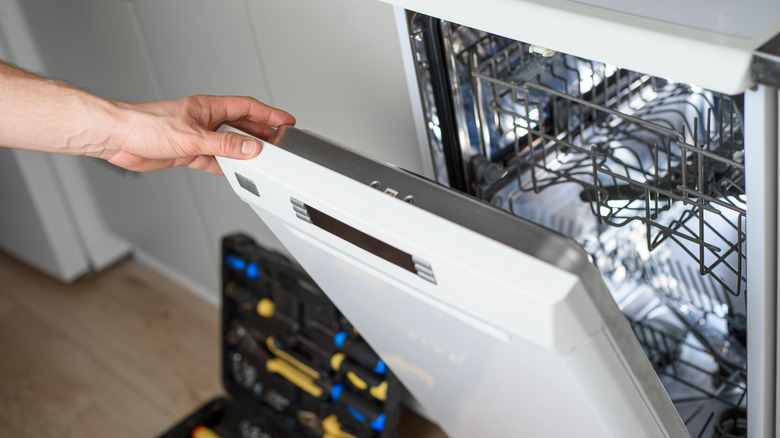
Generally speaking, you don't need expert-level knowledge to level a dishwasher. Start by finding the two leveling legs at the front, which can easily be adjusted using a level, a hex tool, and a wrench. You may also need a screwdriver, depending on whether the dishwasher is already installed and mounted.
After you prep, such as turning off the power or removing the panel under the door with a screwdriver, place a level flat against the front of the closed dishwasher, held vertically, to see if it's leaning forward or backward. In case the dishwasher isn't level front-to-back, you'll need to adjust the front or back legs. Use a hex socket or adjustable wrench to make it easier for yourself. To level the dishwasher side to side, open the door and set a level on the top front edge. If it's off, tweak the left or right legs accordingly by turning counterclockwise to lift or clockwise to lower. When you're done, run a cycle to make sure everything's working as it should.
When installing a dishwasher, you should always have flooring beneath it so it's at the same height as the kitchen floor. This way, you can easily slide the appliance in and out as needed. That said, manufacturers typically provide manuals and guides for their products, which include instructions for leveling. Since some may differ slightly in how they're made or installed (for instance, certain models may have additional screws you're not aware of), your best bet is to check your owner's manual.