

Is Fabric Softener Bad For Your Washing Machine? Here's What It Can Do
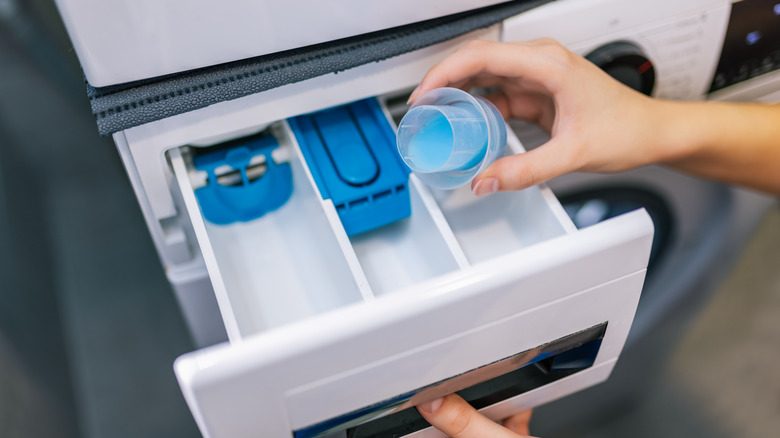
Getting the most life out of your washing machine means using products that are safe for your model. That includes fabric softener, which you should always use as directed on the bottle or according to your washer's owner's manual. But the washing machine manufacturers themselves warn that fabric softener can cause problems when it's overused or allowed to build up over time.
For example, LG says using more than the recommended amount can cause fabric softener to accumulate, while softener left sitting in the dispenser can harden and clog the opening. Similarly, Samsung warns that excessive amounts of fabric softener can lead to residue buildup, as well as dispensing problems. But GE Appliances is even more direct, noting that built-up or dried fabric softener can clog the dispenser cup in its top-load washers. So while fabric softener isn't necessarily bad for your machine, using too much could impact its performance.
Whirlpool offers a good example of this, warning that a clogged dispenser can affect a washer's ability to properly distribute fabric softener and detergent at the right time during the wash cycle. The company also notes that a dirty dispenser can contain bacteria and mildew, which can lead to bad odors. But by regularly cleaning the dispenser, you can help prevent buildup from interfering with how your washing machine operates.
Tips for using fabric softener
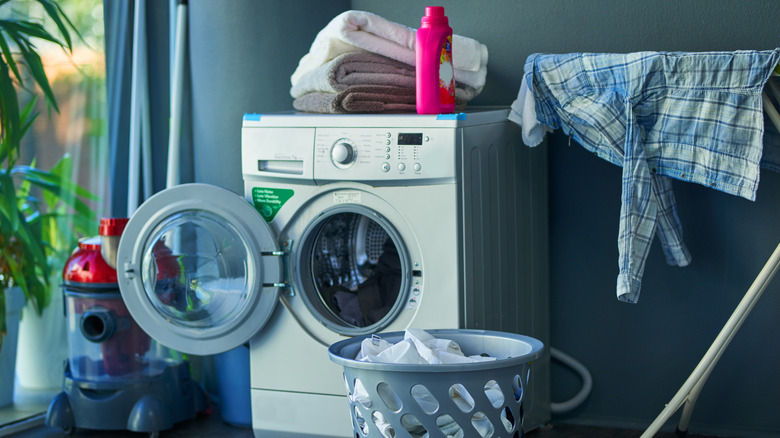
An easy way to limit how much fabric softener residue builds up in your washing machine over time is to simply use less of it. Fabric softener works by leaving lubricating ingredients on the fibers of your clothes. Because not all fabrics are made the same way, softener isn't recommended for a variety of items, including towels, athleticwear, and microfiber cloths for cleaning your car, among others. So even though fabric softener has its benefits, you may be using it more often than you actually should.
You may also want to avoid highly concentrated fabric softener. This could help the fabric softener dispense properly, as thicker softeners can cause dispensing problems. Manufacturers like LG and Samsung recommend paying close attention to the consistency and dilution of fabric softener, especially when it comes to properly getting the product through the dispenser. If you've noticed that your softener isn't dispensing as it should, it might be a good idea to use a thinner product.
The important thing to remember is that not every load of clothes requires the same amount of fabric softener, and there may be times when you don't need it at all. The best move is to check the care labels inside each garment beforehand. It's also good to know what the washer manufacturer recommends in terms of how much softener should be used, and regularly cleaning the softener dispenser can help ensure smooth operation over time.