

Should A Refrigerator Be Level Or Tilted Back?
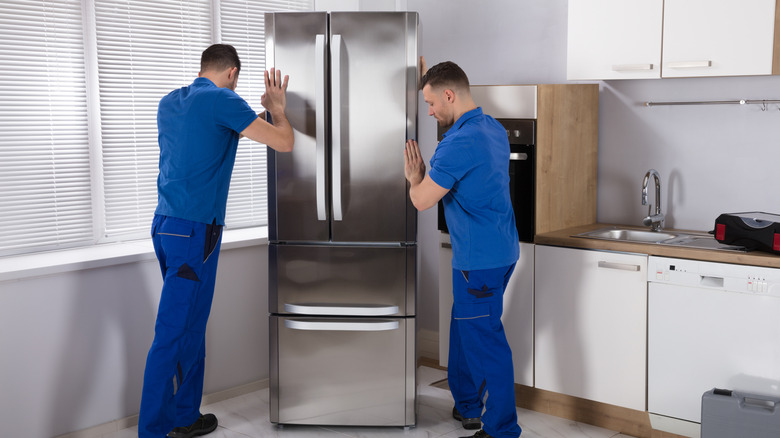
Choosing a new refrigerator from the countless options on the market can feel like the most difficult part, but it's just as easy to make a mistake when installing your new appliance, such as forgetting to level the refrigerator. Manufacturers build refrigerators to run optimally when level or very close to it, and leaving a refrigerator leaning too far in one direction or tilted backwards can potentially cause a variety of problems.
Some manufacturers, like Whirlpool and GE, suggest a slight backward tilt when installing a refrigerator. According to the former, it should be level side-to-side and sit between ⅛ and ¼ inch higher at the front than the back. Whirlpool says that this helps the doors swing closed when they're half shut. Meanwhile, GE recommends that its refrigerators should be ¼ inch higher at the front.
Not every brand offers the same guidance. Maytag, for example, recommends its refrigerators be completely level side-to-side and front-to-back. Thus, check your refrigerator manufacturer's guidance before you install the appliance to make sure you're doing it right. Most major refrigerator brands publish their recommendations on their websites, but you should also be able to find the necessary info in the owner's manual.
Excessive tilt can cause various issues with refrigerators
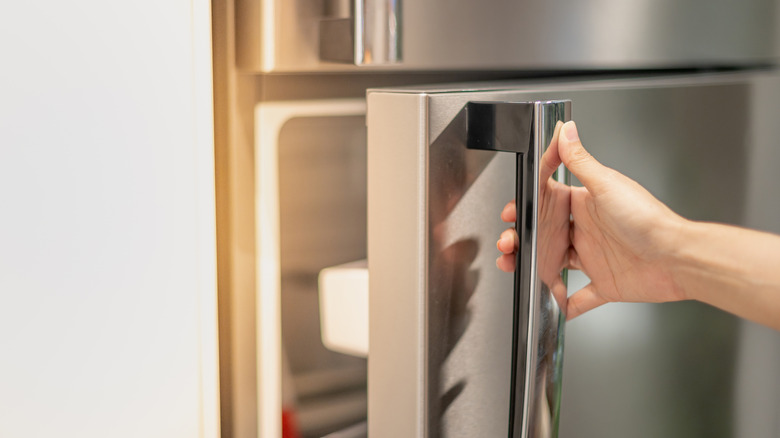
An easy way to tell whether a refrigerator is tilted too far back or not is to open and close its doors a few times. If the door consistently slams shut when you let go, it's tilted too far back. If the door doesn't latch properly, it may be due to the appliance being tilted too far forward.
Even if you're not having door issues, a tilted refrigerator can still cause some less obvious issues over time. A fridge that isn't level can cause frost to build up in the freezer compartment, and it may also vibrate or emit more noise than expected. A rattling sound, in particular, is a key sign that the refrigerator's feet aren't sitting evenly on the floor.
After you've ensured that your refrigerator is properly level, it's also worth checking that it's positioned far enough away from the wall. The minimum distance you should leave between a wall and the refrigerator varies, but most manufacturers recommend at least a 2-inch gap. If you're plugging in a refrigerator for the first time, it's also best to leave it for a few hours after you've positioned it correctly. Contrary to popular belief, you don't always have to wait 24 hours to plug it in; instead, check your owner's manual for the recommended minimum wait time.