

How Long Do Drum Brakes Typically Last?
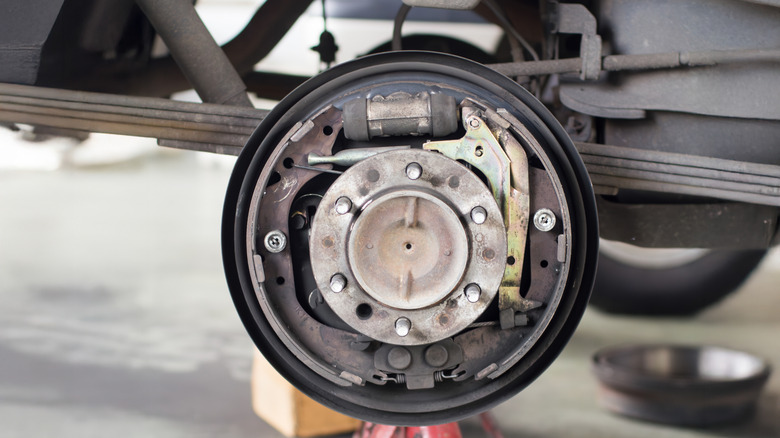
If there's one thing you absolutely need on a car, it's a good set of brakes. It doesn't have to stop particularly hard — the term "good" simply means that it'll always stop. The last thing you want when you're traveling 65 mph down the interstate is to press the brake pedal and little or nothing happens, which is why brakes are engineered to be periodically maintained.
Brake service differs depending on what type of vehicle you have. Most modern cars have four-wheel discs, some have rear drums, and older stuff generally came with full drums. These are your muscle cars and big boats from the mid-20th century. Drum brakes are cheap, parts are readily available, and they're fairly simple — albeit finicky to work on. So how often do you have to get your hands dirty with them, and how can you extend their lifespan?
It's a largely imperfect science because everyone drives differently, but a good rule of thumb is to replace your brake shoes at around 30,000 miles. The drums themselves are far more durable, since they're basically just a big metal bowl that the shoe rubs up against. Then you have all the miscellaneous parts — the drum cylinder, springs and tensioners, and so on. The major stuff like the cylinder typically lasts as long as 150,000 miles or even more, provided you don't abuse the brakes. Drums have many downsides, chief among them being brake fade caused by overheating — not great for its service life.
How to extend the life of your drum brakes
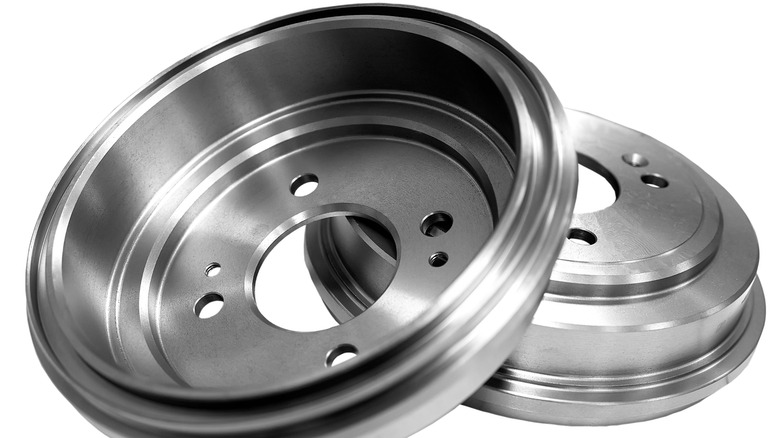
The main issue with durability is heat. Unlike disc brakes, which show their bare metal to the open air all the time, a drum brake is effectively self-insulating. Granted, disc brakes can also overheat, leading to glazing and other problems, but drums are far more susceptible here — you have a big piece of metal (the drum itself) blocking the wind from hitting the shoe. The shoe itself is what's doing the stopping, using friction material to convert kinetic to thermal energy. Every time your brakes overheat, it's giving them the equivalent of rope-burn.
The primary causes of overheating brakes is fairly common-sense stuff — braking for a long time when going downhill, towing excessive loads and putting a lot of stress on the brakes, or blocking ventilation with solid wheels. These issues can lead to the brake shoe prematurely wearing due to the heat warping or polishing the friction material to the point where it's like rubbing glass on the metal. The material is designed to grip, so you don't want a glossy surface. You'll also likely notice a burning smell and potentially unresponsive brakes.
Put simply, therefore, the main recourse here is not to overstretch it. Keep within your vehicle's design limitations, don't brake hard or ride the brakes unnecessarily, use engine braking if you have a manual transmission, and so on. A little mechanical sympathy goes a surprising amount when it comes to extending brake life.