

How To Clean Your Home Speakers To Keep Them Sounding Good As New
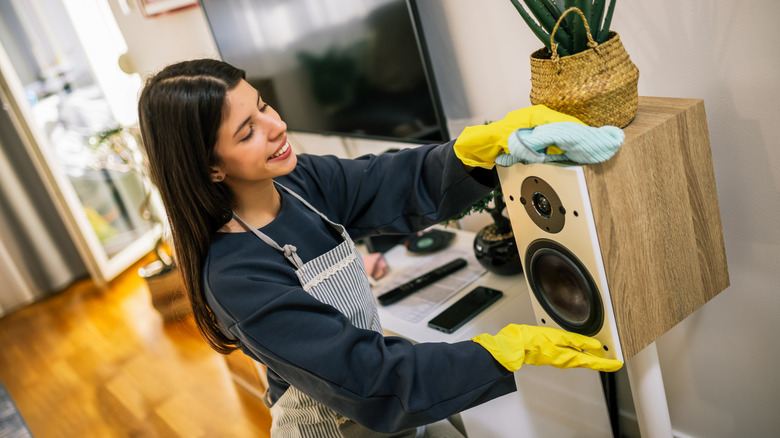
A set of quality speakers can amplify (no pun intended) your home audio experience. Just remember that, as with any device or relatively complex equipment you own, a little maintenance is key to maximizing both the performance and lifespan of your speakers. Part of proper speaker upkeep involves regularly cleaning your speakers. For some, the first step might involve learning how to do so.
Before proceeding with any of the advice here, it's vital to check your speakers' owner's manual to see if the manufacturer offers any information regarding how to clean them. Along with explaining the proper cleaning methods, the manufacturer might recommend not using certain methods or products on your speakers. Generally, however, most speakers can be cleaned fairly easily, with products you either already own or can pick up for very little money. That said, the steps in the process can vary depending on whether you're cleaning your entire speakers, or you're just cosmetically improving some surface components.
Essential info about preparing to clean your speakers and cleaning the cabinets
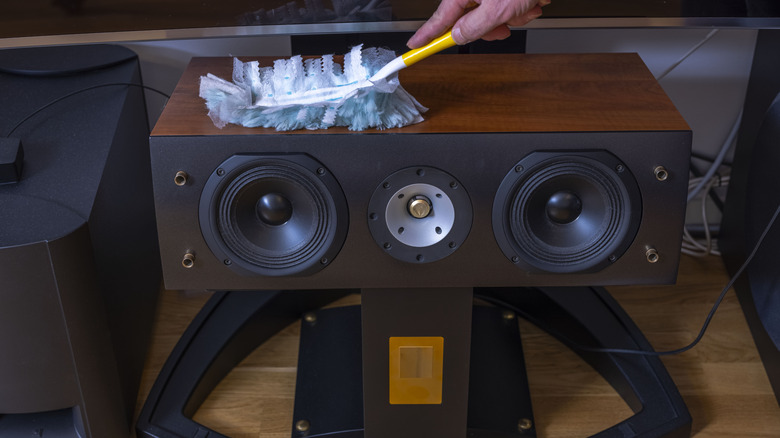
Items you'll typically need when cleaning your speakers include a dust cloth, paper towels, and a clean water source. You may also use soap, but you should confirm that none of the materials you're cleaning will sustain damage when exposed to strong soaps and other such cleaning products. Depending on how thoroughly you want to clean your speakers, you should also have a vacuum cleaner with a soft brush attachment and a can of compressed air that you might use to clean a laptop. Will your supplies gathered, start by unplugging your speakers.
Your first step is to clean the speaker cabinet, but since cabinets can be made of different materials, it's imperative that you find out what material yours consist of to avoid using the wrong products and accidentally damaging it. Again, the owner's manual and the professionals from whom you bought your speakers may be good sources of information on this topic.
Otherwise, cleaning the cabinet of your speakers is fairly easy. You can use a dust cloth to remove basic dust and debris, as well as a vacuum cleaner with a soft brush attachment to address any spots that light dusting alone won't clean. You may use a little water to remove stains, but make sure the speakers are unplugged and you're not at risk of exposing the internal components to water. If a stain is particularly stubborn, some mild soap mixed with water can help. Dry the cabinets with a paper towel when you're done.
Cleaning the grills, cones, and speaker terminals

Speaker grills come in different forms. Some are metal, while others consist of a more delicate material; some are removable, others aren't. As always, checking the manufacturer's information is crucial here.
If your speakers have metal grills or similar grills that can be removed, remove them before cleaning, then use a vacuum cleaner with a soft brush attachment to remove debris. A soft-bristled brush will suffice if you don't have the proper vacuum cleaner attachment.
On the other hand, if your speakers have fabric grills that can't be removed, a lint roller or compressed air (or a combination of both) can help you clean the grills. Don't neglect doing so, as one of their key functions involved protecting the internal components from debris and contaminants.
You can clean both the cones and speaker terminals with a soft-bristled brush or a vacuum cleaner with a soft brush attachment. Exercise care when cleaning these components, as they can be very delicate. If necessary, you may clean some of the harder to access areas of the terminals with a clean cotton swab. Although you may be able to use a damp cloth on the cones, it is absolutely imperative that you not apply water to the terminals.
Why it's important to clean your speakers regularly
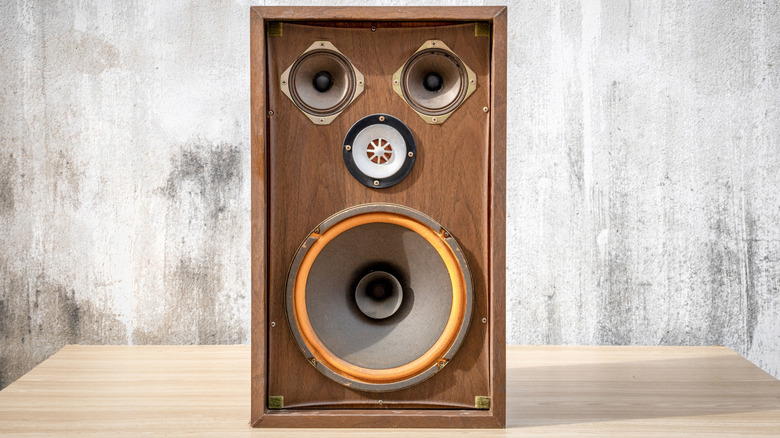
Cleaning your speakers is simple, but it can take time. You need to gather the supplies, check the manufacturer's recommendations to understand what will and won't damage your speakers, and carefully clean every component. It's understandable if this is a task you'd be inclined to procrastinate on.
However, it's worth considering the many benefits of staying on top of speaker cleaning and maintenance. You likely already appreciate how cleaning can improve the appearance of your speakers. Perhaps more importantly, however, if you don't clean your speakers on a regular schedule, dust and debris can build up and potentially damage essential components. Thus, failure to clean your speakers properly and consistently can lead to everything from diminished sound quality to reduced speaker lifespan.
Cleaning your speakers often saves you money in the long run, too, by keeping them in the best possible condition for as long as you can. This may also be important if you intend to sell your speakers one day. You'll have more luck finding a buyer if you've prioritized upkeep over the years. That said, maintaining the units isn't the only way to get the most out of your speakers. It's also wise to familiarize yourself with principles like the 83% rule for speaker placement. Similarly, you might read more about whether it's truly necessary to "break in" new speakers.
You could also save yourself some money by finding out what types of audio equipment are and aren't necessary. For example, odds are good you don't need expensive audio cables. Instead, buying proper speakers and staying on top of maintenance should help you enjoy an optimal audio experience.