

Which Direction Should Solar Panels Face?
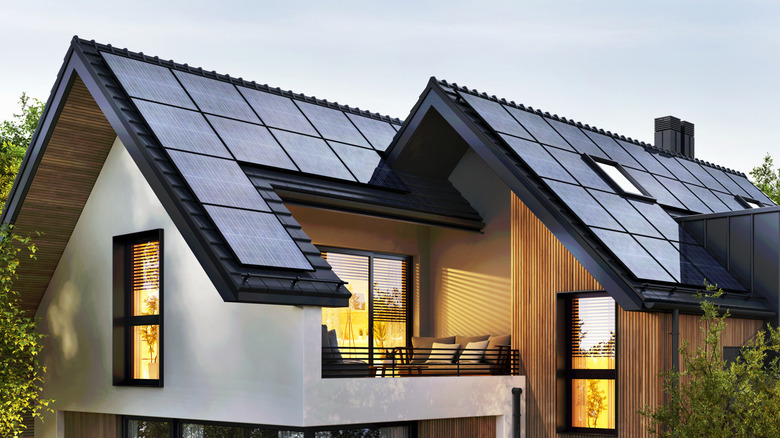
Solar panels can be a great way to efficiently power your home, while also saving money on your monthly utilities. However, there are some things you should know before installing solar panels on your home, including what direction they should face. For homes in the northern hemisphere, a roof facing the south is generally the best location for solar panels.
It mostly comes down to the sun's position in the sky, as panels pointed to the south get the strongest amount of sunlight throughout the day. Roofs facing the southeast or southwest can also provide good results, especially if they have a shallow angle. However, the roof should also not have an excessive amount of shade. That's because chimneys and overhangs can block the sun and potentially decrease energy production.
If pointing your solar panels due south isn't an option, it may not be a deal breaker. You may not even lose that much efficiency with panels turned toward either the east or west, depending on their exact placement. A system facing west may have an advantage over other directions because it produces more electricity later in the day. This can come in handy as the demand for power can potentially be much higher in the evening versus the morning or afternoon.
What to know about solar panel placement
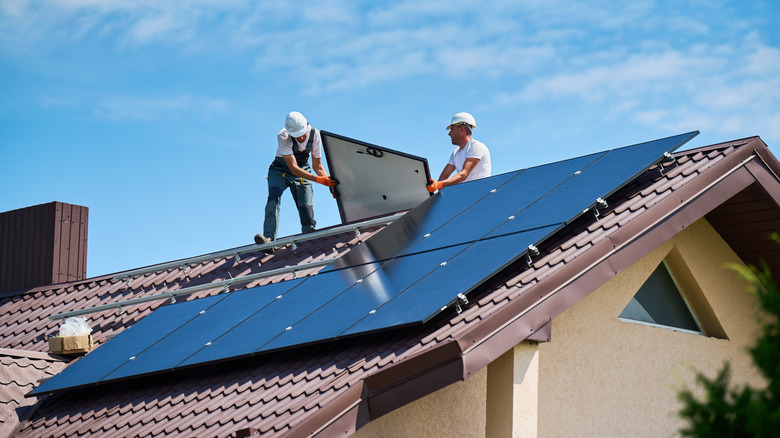
While there is an ideal direction for solar panels to face, that does not mean they all have to point in the same direction. In fact, a roof with multiple sections may need panels installed at several different angles. Those separate groups can still work together as one system, they just might need special equipment to keep each panel operating efficiently.
In order to get the maximum amount of energy production, solar panels should also be tilted rather than installed totally flat. While the ideal setup can vary depending on its location, a south-facing tilt of 15 to 40 degrees typically provides the best production in the continental United States. But there can be reasons to use a different angle and it varies by the situation. For example, a lower profile can help decrease exposure to wind, while a steeper angle can make it easier for snow to slide off.
But even with the flexibility of direction and angle, you may not be able to install solar panels on your roof. If so, a ground-mounted system could be a better option, as this system can be installed somewhere else on your property. Plus, with enough open space and sunlight, you could get more control over angle and direction versus rooftop panels. In the end, a ground-mounted system could give you a more ideal setup for producing electricity for your home.