

Japanese Navy Destroyer Returns Home After US Tomahawk Missile Upgrade
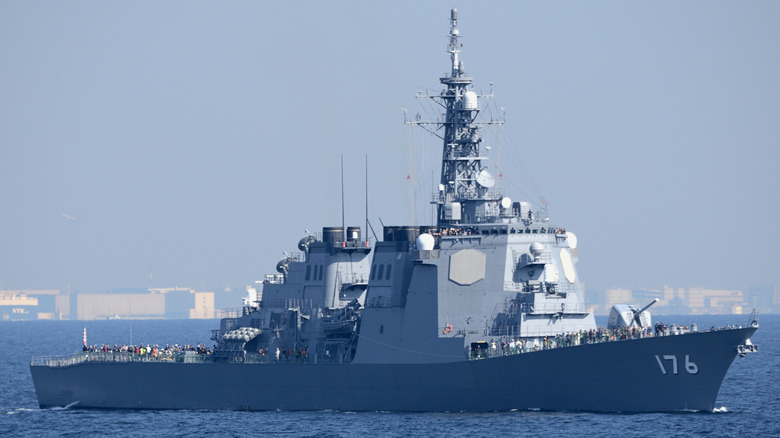
The JS Chokai made headlines in 2025 by being the first Japanese destroyer selected to receive American Tomahawk cruise missiles. Now, after a year of modifications and training in the United States, the Chokai has finally made the trip back home. The work took around six months to complete, with a successful weapons demonstration conducted on July 29. That demo proved the JS Chokai was ready to use its new missiles.
The Chokai's deployment marked the longest amount of time a Japan Maritime Self-Defense Force ship had been away from its home country. Japan's destroyer was not at sea the entire time, and the Japanese government arranged for crew members to spend time off the ship so they could return home whenever they weren't needed. Japan intends to give the same Tomahawk capability to its fleet of seven other Aegis destroyers, as well as the two Aegis System Equipped Vessels currently under construction.
Japan's Tomahawk program dates back to 2024, when the country agreed to buy 400 of the missiles from the U.S. The deal included 200 Block IV missiles, 200 newer Block V missiles, and 14 weapon-control systems, with the total purchase price estimated at roughly $2.35 billion. From there, plans were made to modify the JS Chokai in the United States so it could operate the new Tomahawk missiles.
How Tomahawk missiles fit into Japan's defense plans
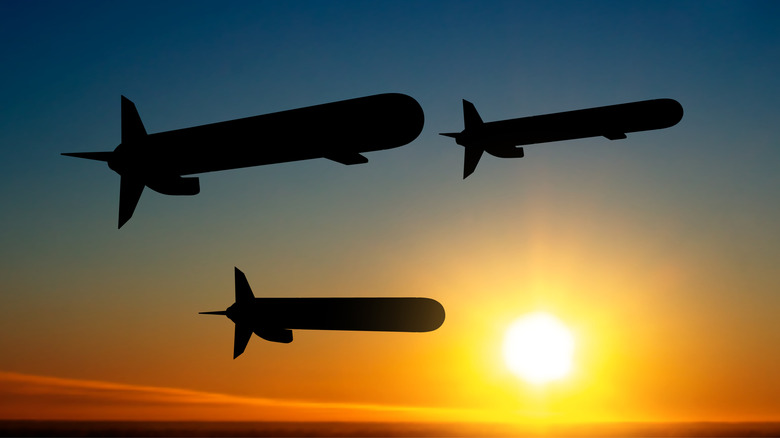
Unlike many of the missiles already carried by Japan's Aegis destroyers, the American-made Tomahawk is a long-range cruise missile designed for deep strikes against targets on land. The U.S. has used the Tomahawk for years for its own navy, and it is also operated by several American allies. For Japan, adding the Tomahawk gives its destroyers additional capability beyond their role in defending against both aircraft and missiles.
In fact, when Japan initially turned to the American Tomahawk missiles in 2024, it wasn't necessarily abandoning its own missile program. The country had already been working to develop its own weapons domestically. But Japan wanted to establish its missile capability sooner, which led the government to move up its Tomahawk acquisition by one year. The goal was to use the Tomahawks alongside its other missile systems being developed at home.
As a result of that work, Japan's new homegrown weapons are now beginning to enter service. On March 31, Japan announced it had deployed the newly designated Type-25 SSM and Type-25 HVGP to units in both Kumamoto and Shizuoka, respectively. This move marked the first time Japan had deployed domestically produced stand-off missiles, giving the country new long-range options to complement its Tomahawks.