

Your Sports Car Has Plenty Of Power, So Why Can't It Tow?
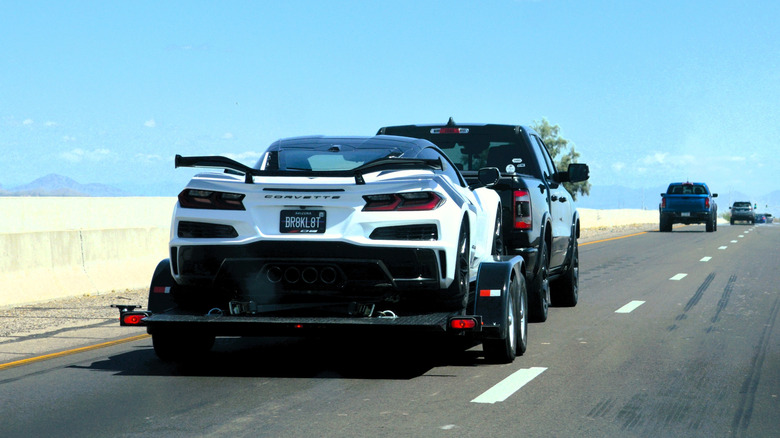
A relatively cursory look across manufacturer specs will show you that most modern sports cars have substantially more horsepower than their pickup truck and SUV brethren. In comparison to the current run of F-150s and their modest range of 325 to 720 horsepower (depending on whether you go for the 2.7-liter V6 EcoBoost or the supercharged 5.2-liter V8 Raptor R), today's Corvettes run horsepower ratings anywhere from 535 on the base level Stingray to 1,250 on the ZR1X. So why don't people sling a camper and a couple of jet skis behind the 'Vette and be set up at the lake before the Ford even arrives?
The answer is that towing is about much more than horsepower; it depends on how that horsepower is distributed, geared, and managed across the vehicle's powertrain.
How an engine is designed to apply the power it generates is critical in determining whether a tow vehicle will ease off the line under controlled acceleration, or strain and crawl under an excess of revs. Stroke length, gear ratios, and the physical structure of the car all contribute to suitability for towing, while the weight and stability of a vehicle determines whether towing can be done safely.
So if you find yourself considering a track toy as a means of getting the boat to the water, the only rod you may end up throwing could be one from under the hood.
Lack of necessary low-end torque
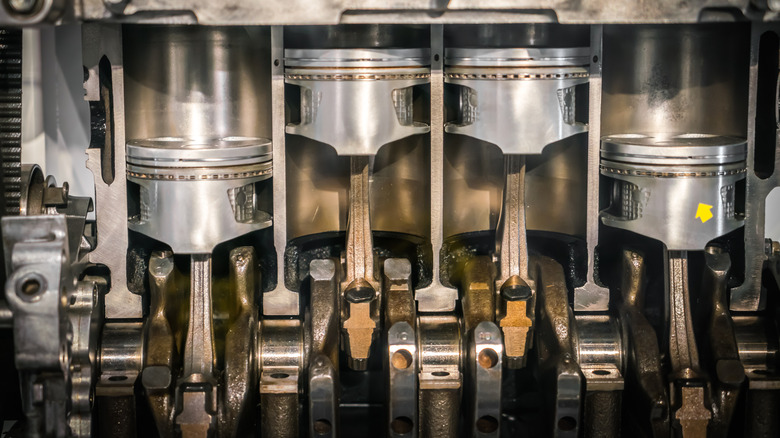
While horsepower gets all the attention in the glossy pamphlets and television adverts, towing begins somewhere much less glamorous: inside the engine block itself.
A specialized tow vehicle can expect to have to move not only itself, but potentially thousands of pounds of additional weight, necessitating long crank throws to achieve enough rotational twisting force to get everything moving. This low-end torque, the rotational force applied by the engine between idle and approximately 3,000 rpm, is what gets a heavy trailer rolling, particularly from a standstill or when climbing a hill.
In contrast, when engineers design a sports car, prioritization for how the horsepower is applied generally favors acceleration and top speed. High-performance engines therefore use shorter crank throws to achieve higher RPMs and generate more high-end power. These short crank throws come at the cost of low-end torque. This trend is carried through the powerband by differences in gearing. A sports car will generally opt for tall, or numerically low, differential and transmission ratios to maximize the number of wheel rotations per engine rotation. Conversely, a tow vehicle will use short, or numerically high ratios, forcing the engine to spin much faster than the wheels, multiplying torque and trading a nippy zero-to-sixty time for immense pulling power.
As an extreme comparison, the British Challenger 2 tank, powered by a Perkins V12 twin-turbocharged diesel engine, boasts roughly the same horsepower as the Corvette ZR1X. Same output, but two very different vehicles with very different purposes in how they apply that horsepower.
Lack of vehicle weight and structural strength
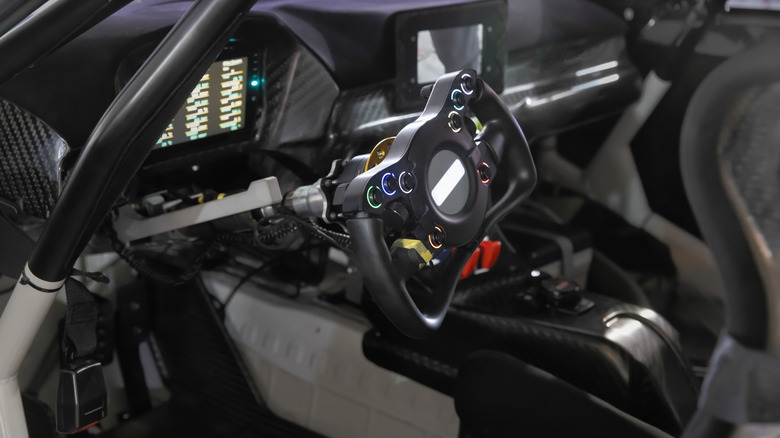
Sports cars are built to be light. Replacing steel with aluminum, magnesium, and carbon fiber, consolidating structures into single components to cut down on excess fasteners and brackets, and minimalist designs that gut the car of unnecessary niceties, all keep the deadweight down. Light is fast. You need air conditioning? Want a radio? Go buy a Daewoo.
These lightweight chassis are wonderful for cornering, acceleration, and staying on the correct side of the power-to-weight ratio. But when you attach a trailer, a vehicle suddenly has to manage forces that extend far beyond its own four tires. A towed load may push against the vehicle under braking, pull on it during acceleration, or even introduce trailer sway, side-to-side forces caused by crosswinds or uneven weight distribution.
Even if a vehicle can get a load moving, the tow vehicle's structure needs to be strong enough to support the hitch and transfer those forces safely into the chassis. The suspension has to handle additional tongue weight. The brakes have to deal with a higher gross combined weight. Even the vehicle's wheelbase and overall mass need to be able to influence, anchor, or control a trailer as it travels. A hard ask for a car that may only weigh a few thousand pounds itself.
The modern sports car trends of independent and elasto-kinematic rear suspension has given us some very impressive pieces of engineering, but they may lose some of their grandeur if a fishtailing trailer tears it free from the rear of the car as you're traveling down the interstate.