

4 Phone Carriers That Are Owned By T-Mobile
If you have T-Mobile, you might be one of the millions who originally signed up for another mobile provider only to have that carrier bought out by the company. Sprint is probably the most famous example, with T-Mobile taking on over 50 million customers from Sprint's base when the purchase became official and the merger closed in April 2020. But T-Mobile has expanded its wireless business well beyond just Sprint in recent years.
Today, T-Mobile has a portfolio that includes several other cell service brands. The company's current roster also includes Metro by T-Mobile, Mint Mobile, Ultra Mobile, and UScellular, all bringing with them millions more people to the T-Mobile customer base. As of this writing, that's over 140 million people in the US using T-Mobile for cell service. (And that's not including those alternatives like Tello Mobile that pay to use T-Mobile's towers.) From the 2013 acquisition of MetroPCS to its 2025 buyout of UScellular, let's break down four of the biggest phone carriers now owned by T-Mobile.
Metro by T-Mobile
Of the four phone carriers listed here, Metro definitely has the longest-standing connection to the T-Mobile family. Their relationship dates all the way back to October 2012, when T-Mobile parent company Deutsche Telekom and MetroPCS Communications announced an agreement to combine MetroPCS with T-Mobile USA. The combined company kept the T-Mobile name, with MetroPCS eventually becoming Metro by T-Mobile.
T-Mobile now positions Metro as an option for customers who want more value without giving up access to newer smartphones (or T-Mobile's broader network). With T-Mobile in charge, the Metro network reaches 99% of the country and serves about 19 million people with its prepaid service. And, unlike what happened with Sprint, you can still find standalone Metro stores that don't require you to enter into a T-Mobile location. Sprint stores, by comparison, were all phased out and converted into T-Mobile locations shortly after the 2020 merger became official.
Mint Mobile
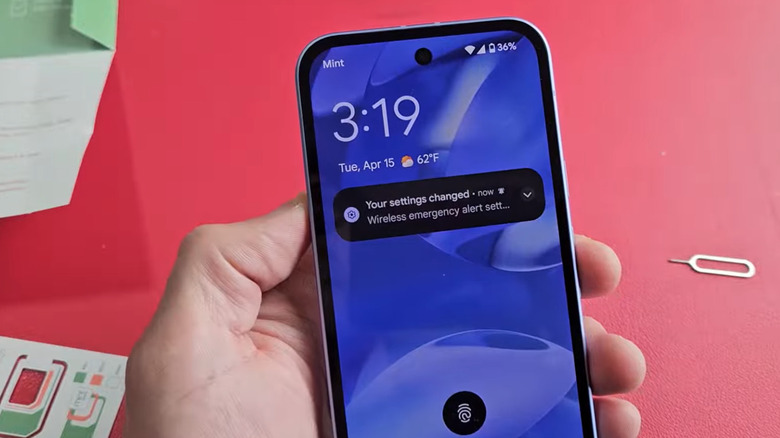
If Metro is one of the more legacy brands under the T-Mobile umbrella, Mint Mobile is one of the newer adds. T-Mobile announced an agreement to purchase the carrier in March 2023, saying the company was interested in Mint as a successful direct-to-consumer prepaid wireless company with strong digital marketing capabilities to boot. The executives at T-Mobile must have really been into all those Ryan Reynolds commercials, because they paid as much as $1.35 billion for Mint and its parent company the Ka'ena Corporation when things became official in 2024.
Rather than simply treating Mint as another version of T-Mobile's existing prepaid business, the company has let Mint remain part of a complementary portfolio alongside Metro by T-Mobile, T-Mobile-branded prepaid service, and Connect by T-Mobile. That gives pre-paid customers several different brands to choose from for what's ostensibly the exact same cell service. Choosing between them all really just comes down to pricing and plans at that point.
Ultra Mobile
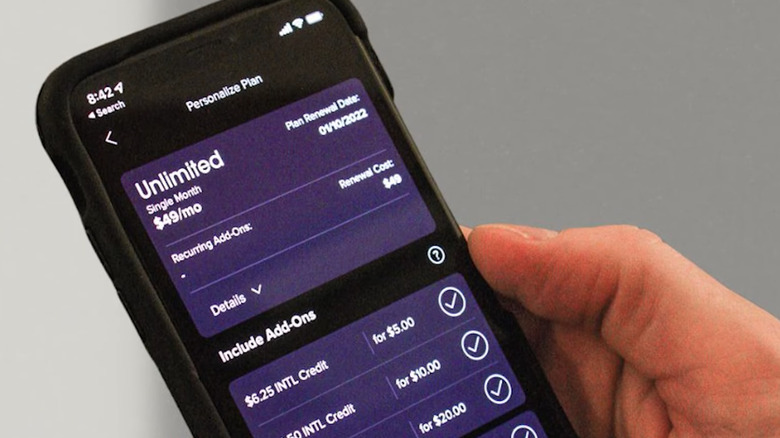
Ultra Mobile came to be owned by T-Mobile through the same deal that brought Mint Mobile into the fold. Before the acquisition, Ultra had carved out a unique position as a value-oriented wireless service with an emphasis on international calling. That must not have been something T-Mobile felt confident in itself, because the company wanted Ultra included in the Mint purchase. Both were owned by the Ka'ena Corporation, which adds a little more context to that billion-dollar price tag.
With the purchase of Ultra, T-Mobile now has yet another prepaid service with a slight distinguishing factor to set itself apart from the company's similar offerings. In Ultra's case, it's that international call capability. The acquisition of both Mint and Ultra formally closed in May 2024, officially making Ultra Mobile part of T-Mobile's broader collection of wireless brands. T-Mobile said it intended to preserve the individual character and entrepreneurial qualities of both Mint and Ultra, and that still seems to be case to this day.
UScellular
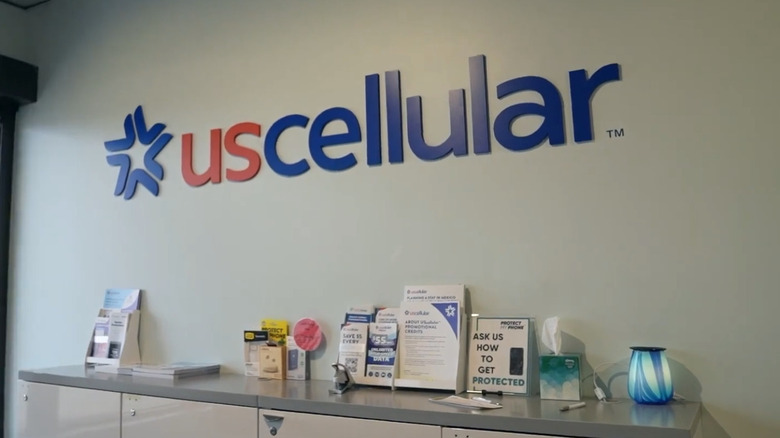
Remember UScellular? The company was at the height of its popularity in the late 2000s and early 2010s, even managing to become the fifth-largest phone carrier before going up for sale. Many likely assumed the brand faded into obscurity around the popularization of smartphones, but, as it turns out, UScellular never actually went anywhere. Other major phone carriers like Verizon, AT&T, and T-Mobile simply ate up more of the market share and pushed UScellular further down the list.
But that doesn't mean UScellular meant nothing to the big guys. T-Mobile in particular must have been keeping an eye on what UScellular was up to all these years, because they announced interest in taking control of the company's wireless business in 2024. The proposed acquisition included all of UScellular's wireless customers and stores. And, unlike Boost, Mint, and Ultra, T-Mobile would want to drop the UScellular name like what we saw with Sprint. The $4 billion deal became official in 2025, right before T-Mobile's new CEO was appointed.