

Texas May Have A Way To Help Roads Last Longer, Especially In Extreme Heat
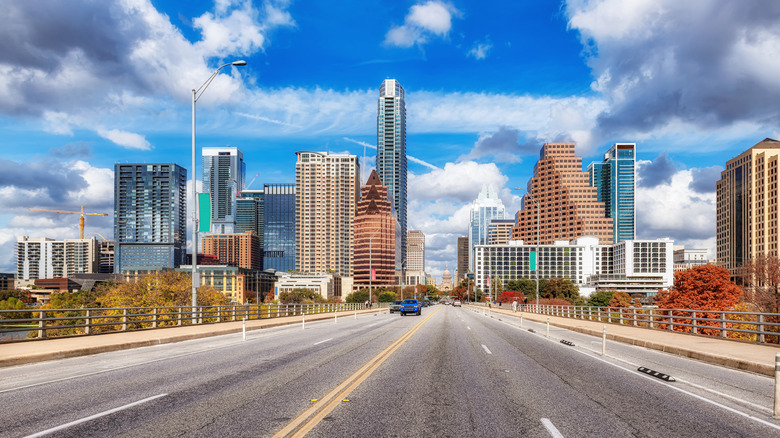
Texas is known for having sky-high overpasses that can be challenging to navigate for both residents and visitors alike. But the Lone Star state is also known for its extreme heat, which can wreak havoc on the highways and affect road conditions. But thanks to recent testing conducted by Texas researchers, a new solution in the form of recycled plastic could be on the horizon.
Dr. Sahadat Hossain with the Solid Waste Institute for Sustainability at the University of Texas (UTA) at Arlington has been developing plastic-infused asphalt. The process consists of melting cleaned and shredded plastic waste into a substance that is then mixed into the asphalt, bonding the two materials together. This method replaces between 8% to 10% of the asphalt's bitumen, a petroleum-based sealing product. The goal of this plastic-infused asphalt is to give pavement better heat resistance and thus reduce heat-related cracking.
After testing the material in Bangladesh and UTA parking lots, 4.5 tons of plastic waste was used to pave a 3,500-foot section of highway in Rockwall, Texas, near Dallas. This was the state's first plastic-infused roadway, and since its construction in 2025, the road has remained intact under temperatures of 100 degrees Fahrenheit and beyond. Estimates from the Rockwall project say that this hybrid material could extend a road's life by several years. This could potentially reduce repair and maintenance costs while also helping to recycle massive amounts of plastic waste in the process.
The challenges of plastic roads
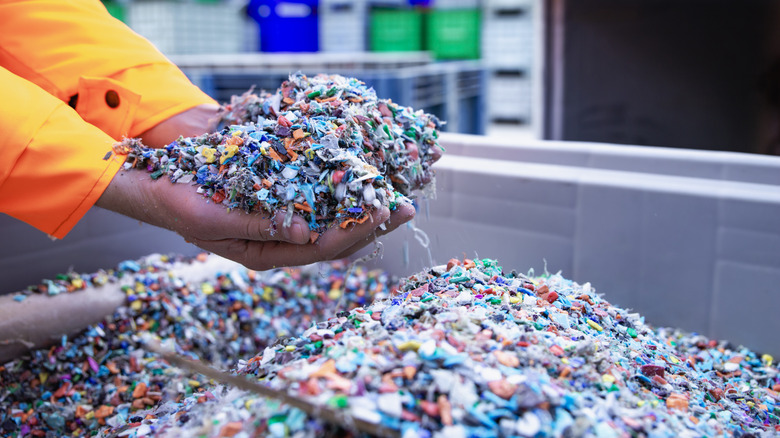
Though plastic-infused road material has had success in Texas, the process itself is still facing a major obstacle in terms of scale. That's because not every area in the state has enough of the right kinds of plastic already sorted and ready for processing. There are also still questions about how the material will perform as the technology expands, though different plastic combinations are currently being studied to determine their long-term environmental impact.
There have also been concerns over the potential for microplastics to be produced by the project. However, a 2024 study conducted by researchers in Missouri and Texas found that the amount of microplastics that could be released from plastic-infused asphalt is about 1,000 times lower than the amount of rubber particles produced by tire wear. That said, the authors of the study stated that their results were based on lab testing only. More field research would be needed to understand how the material performs over an entire road's lifespan.
While the Texas project is still in its infancy, a similar project in Australia is showing what could potentially happen down the road. A company called Downer has developed Reconophalt, a modified asphalt that uses soft plastics, recycled glass, and other reclaimed materials, like old tires. Testing found the material had 60% greater fatigue resistance than regular asphalt, and the product has since moved from testing into commercial use across several parts of Australia.