

What Does Candela Mean On A Flashlight (And Why Brightness Isn't Everything)?
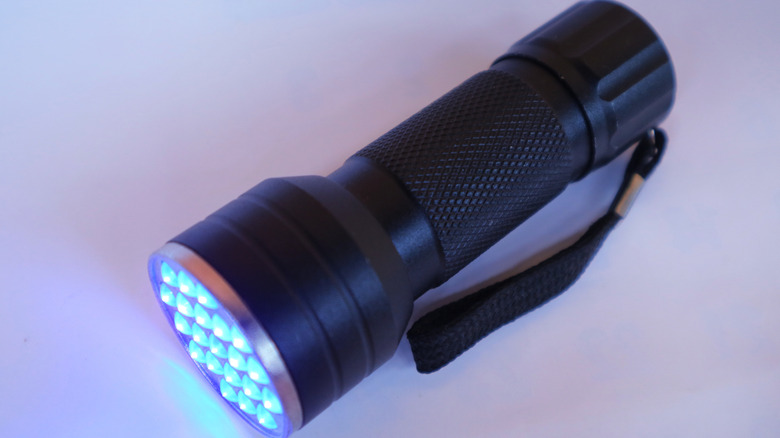
While flashlights seem like simple tech, there are a number of fairly technical terms associated with them, like COB and candela. While many flashlights are primarily evaluated in terms of lumen output, candela is also an important metric. Candela is the measurement that tells you how intense a flashlight's beam is in a specific direction, not how much total light the flashlight produces. It measures the brightness of a light at 100 feet from the source, and unlike lumens, incorporates factors like reflector size and whether the lens in front of a bulb dims the light. In simple terms, lumens tell you the overall amount of light, while candela tells you how tightly that light is focused and how far it can reach.
That distinction matters because buying a flashlight with a high lumen rating doesn't automatically give you a better long-distance light. A wide flood beam can look very bright up close, but still have relatively low candela, while a tightly focused beam can reach much farther even with fewer lumens. Candela is especially useful when you're comparing flashlights that look similar on paper, but behave very differently in the real world. Two lights can advertise the same lumen output and still produce very different beams based on the aforementioned reflectors and lenses, as well as LED placement and optic design.
Why it matters
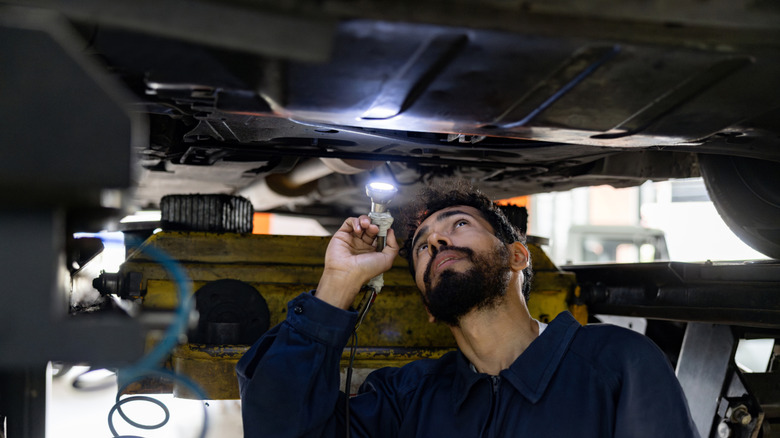
Brightness is only the total amount of visible light a flashlight produces. It doesn't give you a sense of where that light goes or how long it stays bright. It also doesn't indicate how well you can see colors, detail, or whether the light is practical for the job.
Candela, meanwhile, helps you understand whether a flashlight, including the most powerful flashlights available on Amazon, is better for close-up tasks or for lighting up objects at a distance. A high-candela light is usually better for spotting trail markers, looking across a field, or cutting through fog and smoke, while a lower-candela light is better when you want a broad, even wash of light.
You'll also see candela discussed alongside "throw," which is basically beam distance. Flashlight testers often use candela to estimate how far the brightest part of the beam will reach, and the beam's shape matters as much as raw output.
In other words, candela is the number to watch when you care about reach, not just brightness. That's why some flashlight buyers prefer a high-candela model for outdoor or tactical use, while others choose a lower-candela light for camping, household tasks, or general carry. Once you understand what candela is, flashlight specs stop being just a list of numbers and become key info that tells you what the light will actually do in practice.