

3 Ryobi Power Tools That Expanded My Creative Outlook
We may receive a commission on purchases made from links.
As a compulsive "I'll just use the tools I already have" sort of person, it's difficult to admit when I need a new piece of hardware. It came to that, though, this summer, as I ran into a set of projects that I had to admit would be far simpler if I had a few new electric power tools. I really only needed a miter saw to make beveled cuts for some wood molding and for cross cuts for 2 x 4 wood — I could hammer the molding to the wall, I could sand the wooden beams by hand where necessary. But I had a change of heart.
I had a miter box, and I'd used it plenty of times for similar projects. But I needed to be more precise than I'd been in the past, and I needed to move more quickly than that simple contraption would allow. I've used electric miter saws before — I worked with a house refurbishing company in my early working years, and before that I used my father's miter saw when I was a teenager. But I'd only ever run the simplest and tiniest miter saws — just the basics.
I'd used a nail gun a few times at that refurbishing company, too — but I still thought nailing molding to a wall would be just as do-able with nails and a hammer. I was absolutely dead wrong, of course. The same went for my assumption that having a dedicated electric sander wouldn't be all that different from using the sanding disk bit I had for my electric drill.
The Miter Saw
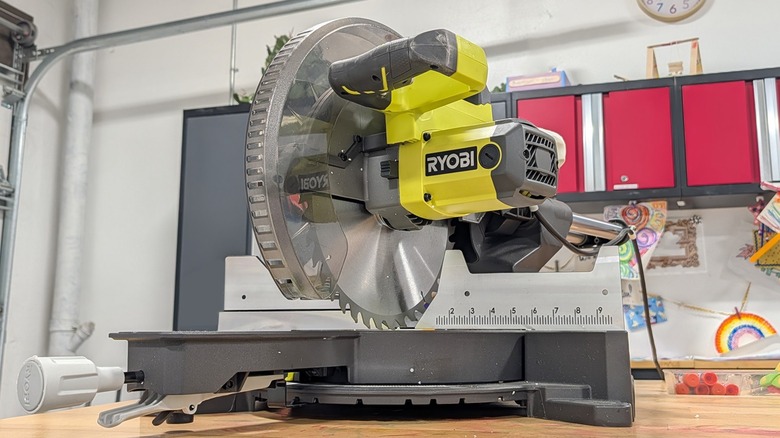
The functionality gap was small between the miter box I had at the start of this summer and the old-style electric miter saws I had access to in the past. The power and versatility of the modern Ryobi miter saw I used this summer (provided by Ryobi on loan for this feature/product test) was far greater than I expected.
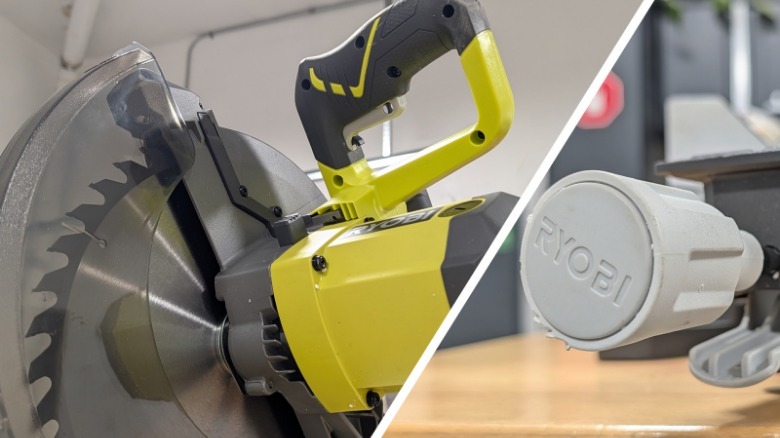
I worked with the Ryobi 12-inch Sliding Compound Miter Saw with LED (model TSS121) (at Home Depot for $329 as of this writing). This saw can cut wood up to 3.5-inches thick (straight down) and (since it's on rails) it can cut a straight line (straight forward at a 90-degree angle) up to 13.5-inches long. The saw also turns on its access to cut up to a 52-degree angle to the left and up to a 47-degree angle to the right, and the saw head can also swing down to 45-degrees for bevel cuts.
 Chris Burns/SlashGear
The simple functionality and power potential of this saw gave me the push I needed to build my first workbench at home in my garage. I'd been hesitating for years — I assumed the whole project would be so much work I'd never finish. Having this machine removed a mental barrier I did not realize I had in place.
 Chris Burns/SlashGear
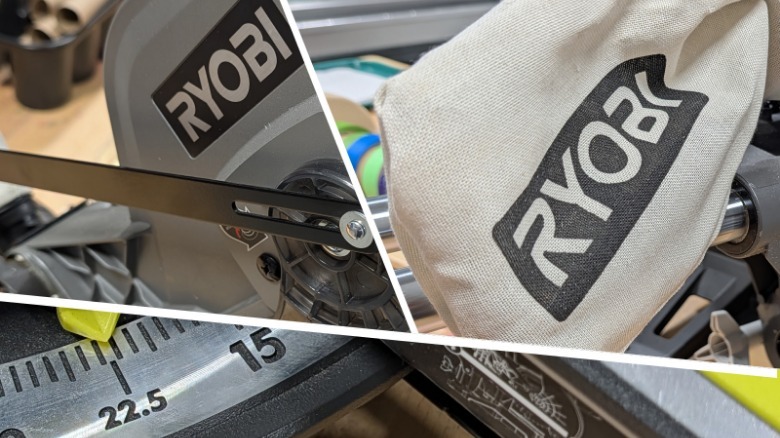
I cut so much wood in a span of a couple days that this saw's dust bag was fully packed. And on that note: I'd absolutely consider buying a 1-1/4 in. vacuum hose to connect to the exhaust here instead of the dust bag for long-term use. In the weeks I've used this saw I've found it to be one of the easiest and most versatile tools in my garage — I recommend it highly.
The Sander
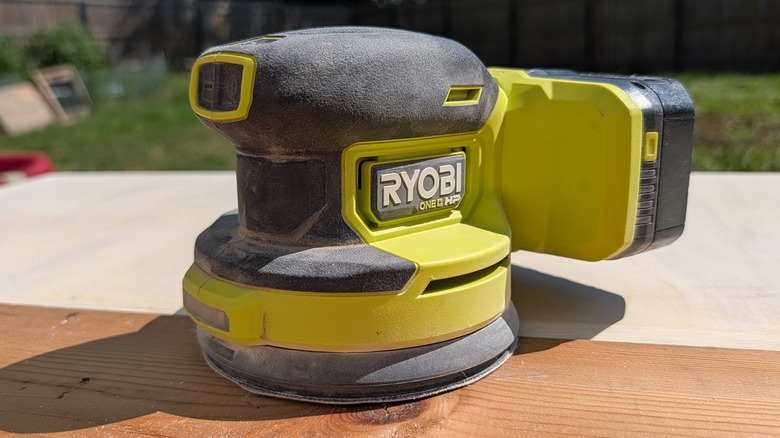
Ryobi also provided a test unit of the Ryobi 18V One+ HP Brushless 5-inch Random Orbit Sander Kit (PBLSD01K1). This sander costs around $129 without a battery and $170 with charger and battery from Home Depot
This tool uses a 18V One+ 2Ah Lithium battery (and this kit includes a charger for that battery.) This sander is simple, effective, and comfortable to use. It has two buttons, one for power, the other to move between 3 levels of speed between 7,000 – 11,000 OPM (orbits per minute).
This sander is made to work with hook and loop sandpaper with pre-cut holes — and you absolutely should use this specific sort of replacement sandpaper sheet if you're working with this tool. My experience with alternate hook and loop replacement sandpaper sheets suggests that it is in your best interest to make full use of the features of this sander — through the holes, a vast amount of sawdust is picked up with the greatest of ease.
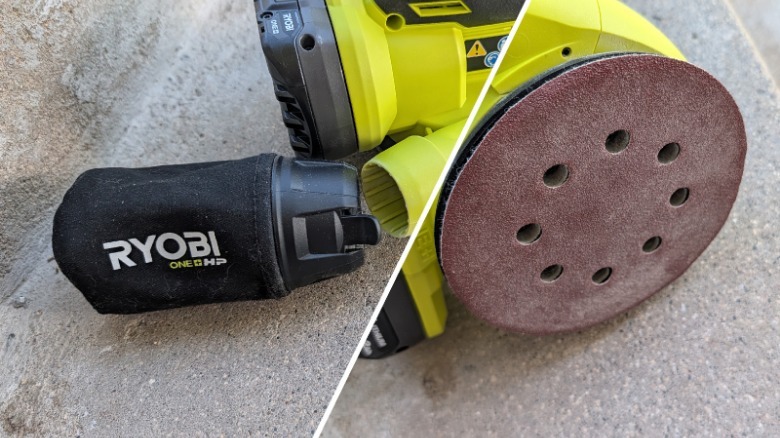 Chris Burns/SlashGear
If you're not making use of the dust collection system in the sander, you'll find yourself inhaling a few clouds of wood dust — which isn't the worst thing in the world, but it's certainly not great for your health.
Before this summer, I'd been using a sanding disk (with stick-on sheets) on a drill bit with my power drill and/or a piece of sand paper wrapped around a hand-operated sanding handle. I'll still use the sanding disk when I need to do sanding adjustments with extreme speed and little need for precision — but I'll never go back to the manual hand sander if I can help it. This Ryobi orbit sander is what I'd call an "every job, always" tool from this point forward.
The Nail Gun
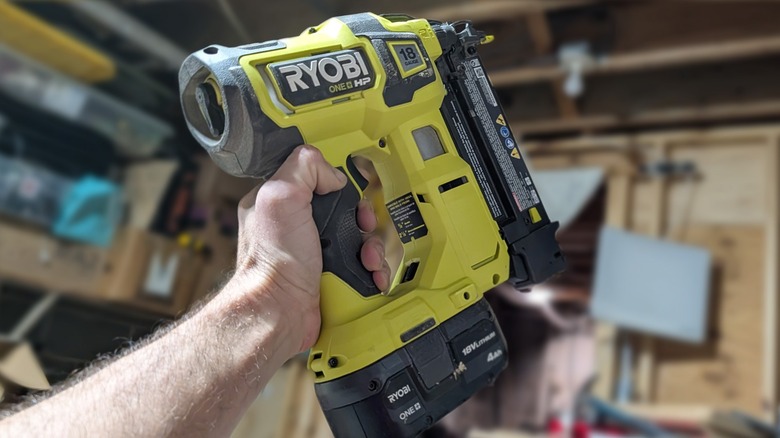
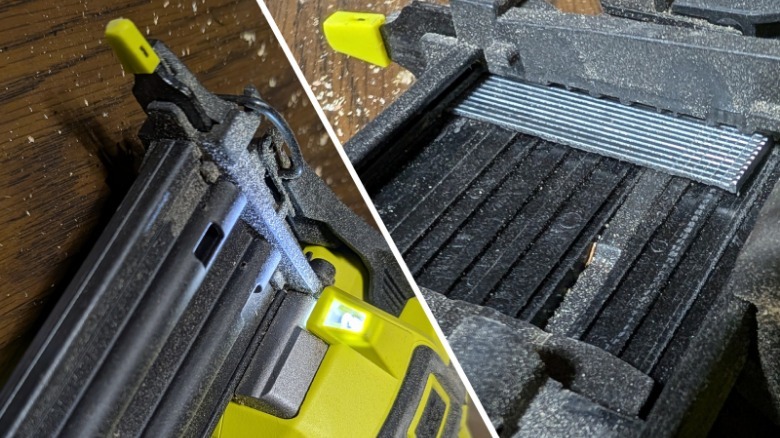
The Ryobi nail gun I purchased this summer has also rather quickly become an "every job, always" sort of tool in my collection. I purchased the Ryobi 18V One+ Airstrike 18GA Brad Nailer at Home Depot for right around $150 — that's the price for the device without a battery or a charger. You'll want to pick up some 18GA brad nails (made for a nail gun) when you purchase this tool — you'll go through them shockingly quick.
I'd foolishly used a hammer and nails to do a floor molding job this Summer — again, the "I'll just use the tools I already have" compulsion got the better of me. Paint-based circumstances required me to remove this floor molding not long after I'd installed it, so I had the opportunity to do a timing test with my newly-obtained nail gun. Where I completed the original job (with a hammer and nails) in approximately an hour, I completed literally the same job with the nail gun in under 20 minutes.
 Chris Burns/SlashGear
I am far from the first person to recognize this absurdity — you need the right tools for the right job — but experiencing this lesson firsthand made all the difference.
This tool is addicting. With some projects, you'll still need to go beyond the initial tiny brad nails this tool sinks into wood — but if you've never experienced it before: the ability to connect two pieces of wood with the pull of a trigger is truly a game-changing revelation.