

3 Things You Should Know Before Buying A Jeep Wrangler
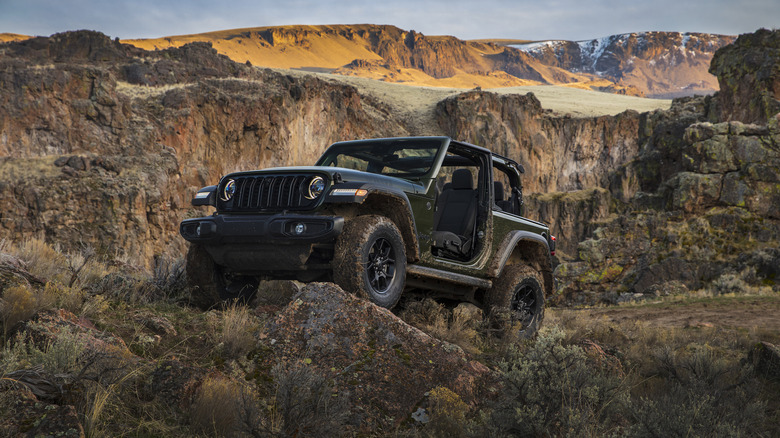
There are certain vehicle models that endure and become iconic symbols of the American automotive experience. The Jeep Wrangler, which debuted in 1986, has roots dating back to the WWII-era Willys MB. Since the mid-80's, there have been several iterations of Jeep's flagship, and we ranked every generation of Wrangler from worst to best.
Most people are already aware that the Wrangler is a capable off-roader. And due to its unique look, which has been largely preserved over the years, even non-enthusiasts can easily identify one. However, there are some other aspects of this vehicle that new shoppers might not be privy to, such as a basic feature being entirely absent pre-2023 on base trims. You'll also need to get used to the on-road driving dynamics and aerodynamic challenges. Despite this, the removable top, and off-road performance make it an exceedingly fun vehicle to own.
In addition to review outlets and forum posts from other Wrangler owners, I'll be including my personal experience. When I purchased a new 2024 Jeep Wrangler Sport 2-door (base model), there were a few things I didn't realize about it before experiencing them for myself. But I still consider the Wrangler a great option for certain buyers who prioritize its strengths.
Before 2023, base Wranglers didn't include AC
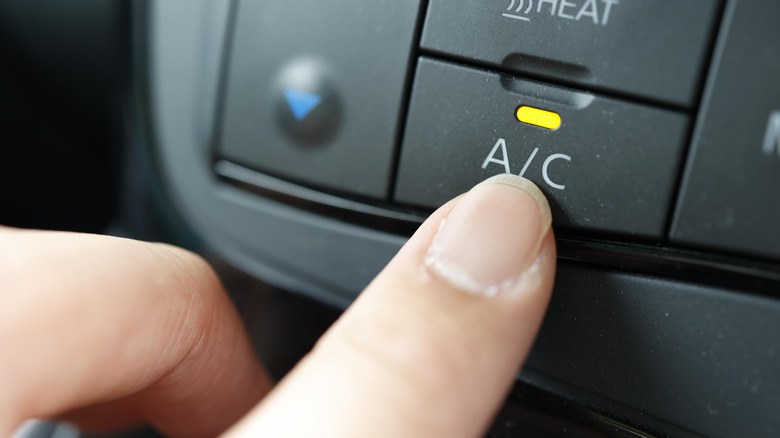
It's difficult to imagine, but air conditioning wasn't a standard feature on all Jeep Wranglers until recently. For context, the first factory installed automobile AC arrived all the way back in 1940. The feature is now so common it's literally included in 99% of modern automobiles. In fact, in the U.S., the Wrangler was the final model to stubbornly refuse to include air conditioning in all trims, until finally relenting.
Some look at the fact the Wrangler didn't have AC as a good thing. Reduced complexity, and the ability to put the Jeep's top down, was enough to satisfy the off-road purists who wanted the old school feel of a stick shift, crank handle windows, and manual door locks. But no air conditioning took that notion a bit far. Interestingly, prior to the change, instead of the automaker stating "No Air Conditioning," Jeep's website labeled it "Air Conditioning Bypass," in the list of interior Wrangler options.
On pavement the Wrangler's ride can feel stiff
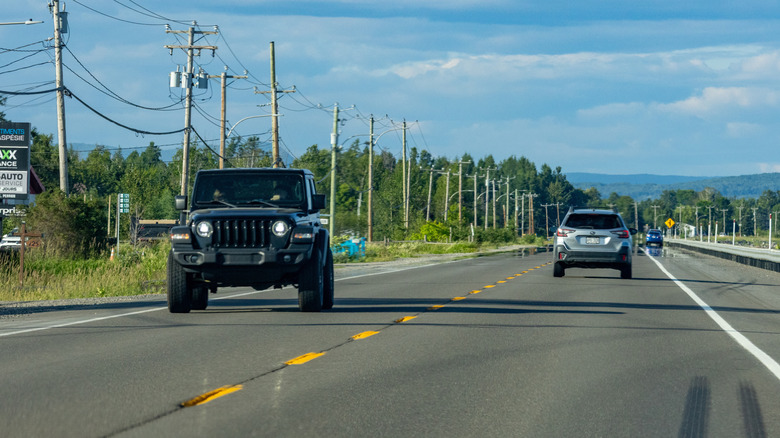
Jeep's legendary 4x4 shines off-road, and is clearly designed around maximizing performance over challenging terrain. After all, Jeep's trail rated badge, which comes on all Wranglers, is a certification that the vehicle has passed a litany of backcountry tests. The problem is, it's difficult to design a vehicle that's adept on dirt, mud, sand, and rock, while also offering a smooth ride on streets and highways.
As one JK Wrangler Rubicon owner put it on Reddit, the experience driving on pavement was what ultimately led them to move on to a different car, stating that it "110% rides like absolute [crap]." This isn't to say that every Wrangler variant has poor road manners. In fact, many Jeep fans have commended the latest generation of Wranglers for an improved ride over previous model years. Nevertheless, some consider the Wrangler to be among the worst options for a road trip vehicle out there.
The Wrangler is far from aerodynamic
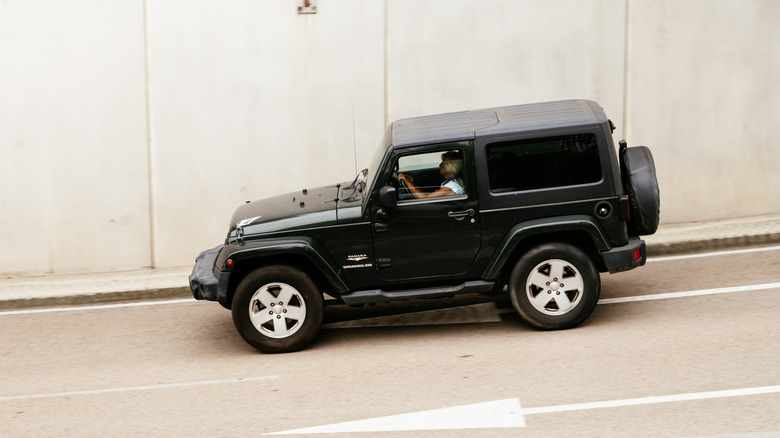
The fact that Jeep has continued to stay true to the Wrangler's roots by maintaining the round headlights, vertical grille slits, and upright stance is great — it gives this model a truly unique look. However, aerodynamics have advanced over the years, and the Wrangler is one of the worst options around, in this respect. Virtual wind tests comparing a Wrangler to a cow have surfaced online, showing the bovine with an aerodynamic advantage. One Wrangler owner on Reddit stated, "Pretty sure mine's less aerodynamic than even a brick."
Joking aside, the Wrangler's boxy shape, upright windshield, and enhanced ground clearance make it more susceptible to wind. One owner explained on JL Wrangler Forums, "It's no joke driving through serious winds with a Jeep, especially when you have tractor trailers passing you or trying to pass them." Not only can a crosswind push you around in the lane, but a gentle breeze can wreck your mpg. Considering Wrangler's on the highway get anywhere from 23 mpg to just 16 mpg, depending on the variant, a headwind can drop that even further.
My experience with the Wrangler
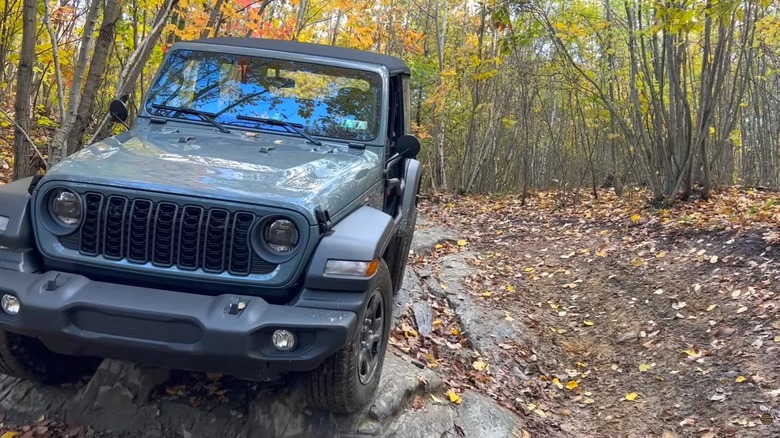
Prior to my 2024 Wrangler, I had a 2022 version for a few weeks before returning it to the dealership. It was a great deal, with low mileage, but at the tail-end of Spring, when temperatures and humidity started to climb, I was surprised by the lack of an air conditioner. I tried to make it work, but ended up swapping it for a newer model with AC.
In terms of ride quality and aerodynamics, I can't speak to upgraded trims or aftermarket enhancements, but the base JL Wrangler feels stiff and catches the wind on the highway. Imperfections in the road are felt more intensely and I've had a crosswind gust nearly push me out of my lane while traveling at 70 mph.
However, the Wrangler is also one of the most fun vehicles I've ever owned. Rven with its quirks, wouldn't trade it in. The soft top on my Sport is easy to remove, and once down, it transforms an ordinary drive into something special (weather permitting). Prior to owning a Wrangler, I had never been off-roading, but my base model has handily ripped through mud-covered courses and conquered steep forested trails, though its lack of fancy upgrades may make Jeep enthusiasts scoff. Taking to the backcountry has provided thrills and entertainment beyond expectations. For outdoor enthusiasts, few options can match the Wrangler in the areas it handles well.