

5 Downsides Of Window Air Conditioners To Consider Before You Buy
We may receive a commission on purchases made from links.
Window air conditioning units offer a lot of benefits. They're relatively affordable, easy to install by yourself in a single afternoon, don't take up any floor space, and many of them are surprisingly energy efficient. When summer hits and you need some relief from the heat, a good window AC unit from one of the more reliable air conditioner brands on the market offers a quick and easy way to cool a small indoor space with minimal effort and low upfront cost. That said, they're far from perfect.
It's all too easy to head over to your local big-box store and find a unit that will work in your space, but there are a handful of drawbacks that you might want to consider first, not least of which is that most window ACs are designed to cool a single small room, like a bedroom or office, and not an entire home. Some of you may find that something like a mini-split is the better option to help beat the summer heat. This isn't to say that window air conditioners don't have their place–they absolutely do–but it's always worthwhile to consider the cons and weigh all of your options before committing to a new appliance. That way you can decide for yourself if any of these drawbacks are deal breakers or if you still consider it to be a worthwhile option.
Loss of natural light
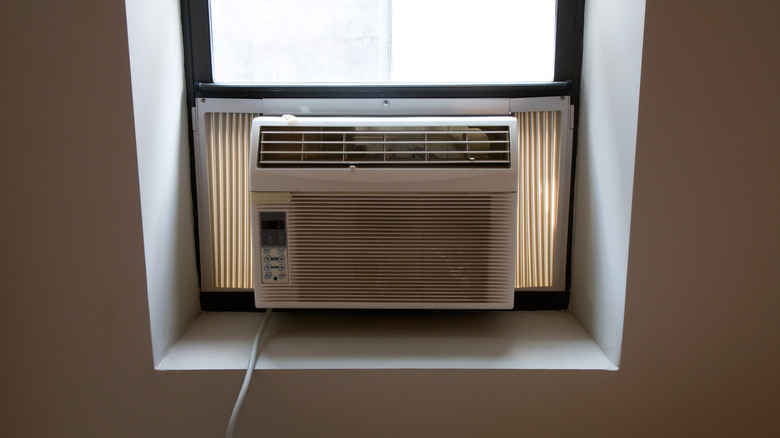
One drawback that isn't always apparent until a window air conditioner is actually installed is that it takes up a fair amount of space in your window. Most units are around 24 x 16 x 12 inches with accordion-like panels that come out from either side to fill the gaps in your window frame. This blocks a significant percentage of the natural light that would normally come through that window. This might not be that big of a deal in a well-lit room that has multiple windows, but it can feel significant in a small room that only has a single window shining natural light into it. A loss of natural light doesn't just make a room darker, but it can harm any houseplants you might own and can even have a negative impact on mental health.
And that's just in instances that involve vertically opening windows. Those who have horizontally sliding windows may need to block the area above the air conditioner as well. Many people use plywood or foam for this, which adds an additional layer of light obstruction, though some have developed workarounds by making a DIY plexiglass insert.
But even beyond the loss of light, you'd also be sacrificing a certain aesthetic quality. A window air conditioner will obstruct your view, replacing that little piece of the outdoors with a much less attractive plastic grille. You might consider this to be a worthwhile sacrifice for keeping the temperature down, but it's a downside of the design that's definitely worth taking into account.
They create a security vulnerability

Some windows are able to lock in any position, but many are only able to lock when they are completely closed. This isn't possible when there is an air conditioner sitting in the frame. Most of the time, people simply slide the window down so that it will sit as securely as possible on top of the air conditioner and then let it stay that way. This leaves a potential opening for any would-be intruders to gain access to the home -– especially if this window happens to be on the ground floor.
There are a couple of imperfect solutions for this, such as cutting a piece of wooden dowel to serve as a stop for the window. One of the better options is to invest in a secondary mechanism, such as a security bar or a rail lock. These will keep the window itself from moving any higher than it already is and help prevent the air conditioner from being easily removed. They're also pretty affordable, so they don't add too much to the total cost of installation. In extreme cases, some have even gone so far as to install external steel cages that secure the entire window.
It's also worth noting that any window alarm sensors will most likely not be able to function with an AC in place unless you reposition them. These are usually composed of a magnet and an alarm transmitter that form a circuit when the window is closed. This circuit is broken when someone opens it, setting off the alarm. A window that's already partially open won't be able to form the circuit in its original position, so it won't trip the alarm if the window is opened further as the air conditioner is removed.
They can be difficult to seal properly
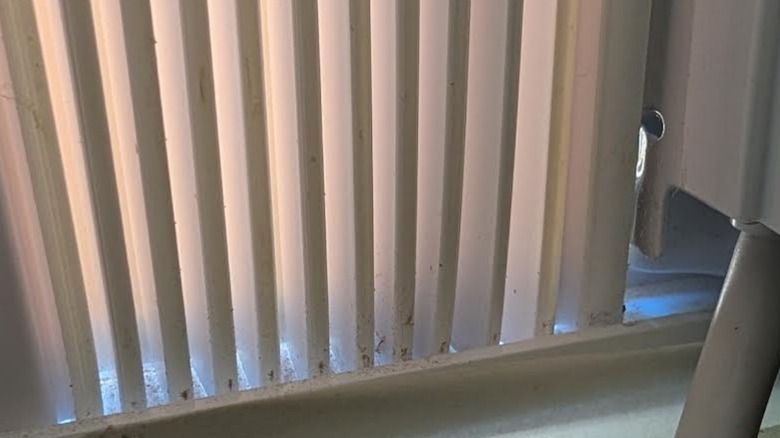
Different kinds of air conditioning units come with different installation hardware, but most of them have a pretty similar design. There's the AC unit itself, which sits at the bottom of the frame, extendable dividers on either side to fill the blank space between the sides of the unit and the sides of the frame, and a strip of insulation tape that goes in between to help block the flow of air. The dividers themselves are usually either made of thin plastic panels or accordion-like vinyl curtains.
These do a decent enough job of blocking the direct flow of air and wind if they are properly installed, but they aren't exactly insulated, so there is a certain amount of temperature exchange that is inevitable. What's more, there are often small gaps along the top, bottom, and sides of these curtains that allow warm air to enter or cool air to escape, depending on which way the internal pressure of the home is causing air to flow. This loss of air containment can reduce the efficiency of the air conditioner itself, as it will need to work harder to keep the room cool.
You can try to block off these gaps using masking or duct tape, or you can invest in something more specialized like XFasten Window Sealing Tape, but this can be difficult to do effectively as the tape would need to go between each and every groove in the curtain to form a proper seal. Some have even suggested using spray foam or caulk to fill these gaps. All of these solutions can be tedious and time-consuming, and you may be left with residue that is difficult to clean when it's finally time to take the AC down for the fall.
They tend to be louder than some alternatives
Another thing to consider before purchasing a window air conditioner is that they tend to be louder than some other kinds of HVAC. A handful of the quietest window air conditioners on the market today have insulated compressors, advanced fan blade designs, and special vibration-damping components to cut the noise in half. It's definitely worth looking into one of these for a bedroom, but the general consensus is that most models tend to generate a fair amount of noise.
There are a couple of reasons why this is the case. Sometimes an increase in noise can be caused by improper installation, loose parts, dirt buildup, bent coil fins, or other forms of wear and tear, but most units produce 50-60 decibels of noise on standard settings right out of the box, and they can get over 80 decibels on high. Part of the reason these fans are so much louder than central air simply comes down to the compact size required for an air conditioner to sit in a window. This means that the compressor and fan are packed closely together. Furthermore, this fan needs to be quite small and spin rapidly in order to generate the necessary airflow in such a compact space. This causes more noise than what you would get from a larger unit that has room for bigger fan blades.
There's also the simple fact that it sits in your windowsill. Foam insulation can help to absorb vibration, but this isn't really a mounting solution that is designed to absorb sound. The low rumbling of the moving parts inside the air conditioner naturally travels through the walls and floor.
Blocking outdoor airflow
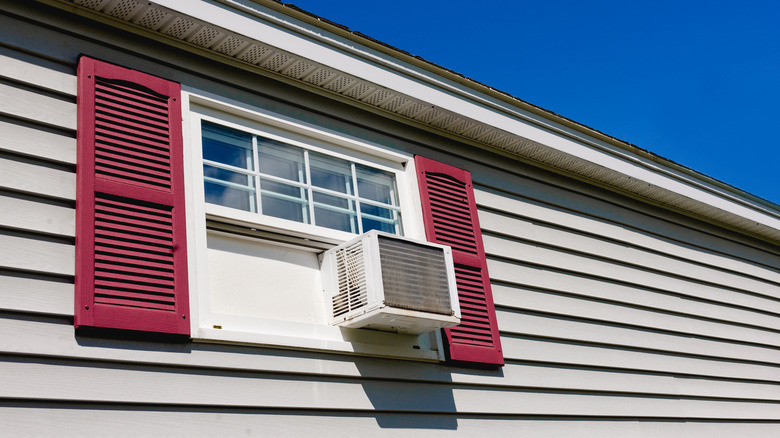
There is a common misconception that window air conditioners draw air from the outside. This isn't actually the case for most models. The intake for most window ACs is actually in the front. The machine draws warm air from the room inside through vents and filters on the bottom three-quarters of its face using an internal fan. This air passes over cold evaporator coils that contain refrigerant, absorbing the heat from the air before expelling the freshly cooled air back into the room. The part that's hanging outside the window is actually where the heat is expelled. The warmed refrigerant is cycled through the outdoor portion of the unit, where the condenser releases the heat drawn from the room outside. This is why it's actually safe to use these air conditioners when it's smoky outside, provided that they're properly sealed.
Unfortunately, this also means that these effectively block any sort of external airflow from that window. It might be hot enough for you to need the AC during the day, but you may prefer to let a little fresh air into the room in the evening if it cools down at night. Having a window AC unit means you would need to completely uninstall that unit to open the window and replace the window screen to keep out pests and debris. There are a select handful of models that give users the option to blow outside air into the room, such as the Frigidaire 10,000 BTU FFRE103WA1, but these are a rarity. The fan setting on the overwhelming majority of units simply recirculates internal air through the same pathway as the cool setting, only without activating the refrigeration cycle.