

Ryobi 18V One+ Lithium Vs. Lithium Edge Batteries: What's The Difference?
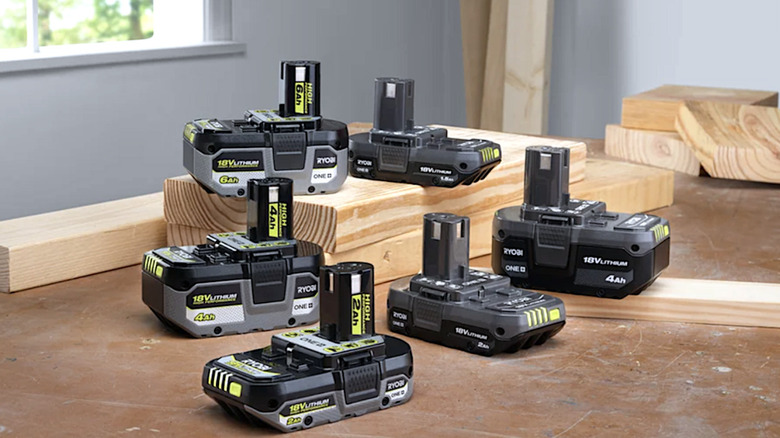
Ryobi power tools are currently being utilized, or at least safely stored in, residential dwellings all over the globe. It is, perhaps, less certain what specific variety of Ryobi tool you might find in those dwellings, as the Techtronic Industries-owned manufacturer offers a variety of devices that are powered by multiple different power sources, ranging from low-voltage USB models to the punchier 40V set.
Somewhere in the middle is Ryobi's generally well-regarded One+ 18V lineup, which features more than 300 different tools to choose from. And yes, any Ryobi battery bearing the 18V brand can be used to power those devices. There are also different types of 18V batteries, and we aren't just talking about their ampere hour (Ah) ratings. Over the years Ryobi has developed the One+ Lithium Edge variety of 18V battery pack alongside its standard 18V models. Even some Ryobi diehards may not be entirely sure about what makes them different.
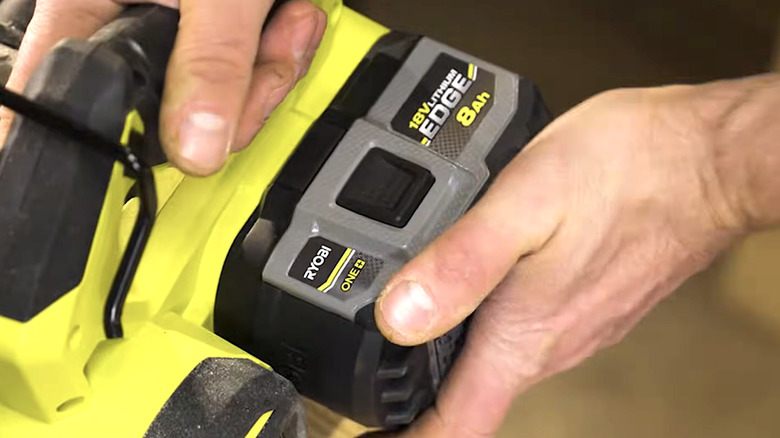
In the simplest terms we can offer, the Lithium Edge 18V batteries are high-performance models that are intended to provide both a power and a runtime upgrade over the standard 18V packs. They do so by utilizing Ryobi's tabless cell design, which purports to improve the flow of energy and thus the overall performance of the tool. Lithium Edge 18V batteries can also help tools run cooler during heavy usage, and are designed to charge faster than standard-cell 18V power packs as well.
What's the price difference between Ryobi's standard 18V and 18V Edge batteries?
Ryobi's standard 18V battery packs are still designed to deliver solid results when it comes to power and performance. One could easily argue that the long-running popularity and general effectiveness of Ryobi's 18V tools have helped it earn a spot alongside the best power tool brands in the game. There's also one very good reason to opt for Ryobi's standard 18V battery packs over those with the Lithium Edge branding, which is that they tend to be notably cheaper at the point of purchase.
In comparing the price points, we'll look at the lowest-rated comparable batteries in both the standard 18V and Lithium Edge lines for ampere hours. As the latter group starts at 4Ah, we'll tell you that a single 18V Lithium Battery in that range costs $149, and it does not come with a charger. By comparison, the standard 4Ah-rated 18V battery without a charger is priced at just $99. Moreover, in the standard 18V battery lineup, Ryobi also makes 2Ah and 1.5Ah models that can be purchased for far less.
As you can imagine, the prices increase incrementally with every jump in ampere hours. That will lead many shoppers to debate whether or not it's better to buy several of the cheaper, standard 18V batteries, or pay extra to have fewer of Ryobi's Lithium Edge models on hand, as their performance enhancements will likely require fewer battery swaps on the job. Unfortunately, we cannot make that decision for you.