

What Is The GM LS Equivalent In The Mopar World?
The legendary General Motors LS series is one of the most popular and significant engines ever to come from an American automaker, and for good reason. When the first LS engines arrived in the late 1990s, they represented a new era for the venerable small-block Chevrolet V8. It was an old-school overhead-valve V8, but the LS was light, compact, and capable of big horsepower. It very quickly won over auto enthusiasts as factory equipment in cars like the Corvette and Camaro, and would go on to become one of the most-swapped engines around, with gearheads dropping them into everything from vintage hot rods to professional drift cars.
While it's probably fair to say that no other modern V8 is quite as ubiquitous as the LS, the engine is not without its equivalents from other American automakers. On the Mopar side, the engine that comes closest to the LS is almost certainly the Gen III HEMI V8. Although it arrived after the LS, the engines have a lot of similarities. The first Gen III HEMI had the same 5.7-liter displacement as the original LS1, and the engines also use the same traditional, overhead-valve design.
Like the LS, the modern HEMI would evolve, with larger and more powerful versions coming later, as well as supercharged variants. In recent years, the Gen III HEMI has become an increasingly popular swap choice, with numerous aftermarket parts options, including plug-and-play crate engines that can be purchased with the click of a mouse.
A HEMI for the modern era
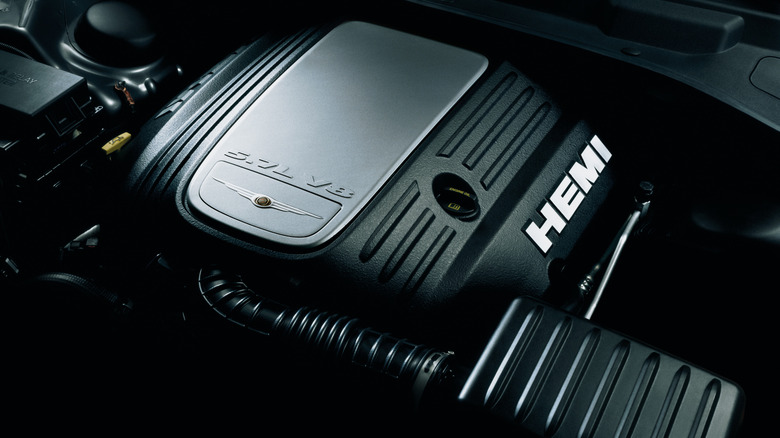
The 345-hp Gen III HEMI V8 debuted in the Dodge Ram pickup in 2003, by which point the GM LS V8 had already been on the market for several years. Though the new engine shared the same name and, at least partially, a similar type of combustion chamber with its predecessors, there are some big differences between the modern Gen III engines and the earlier HEMIs.
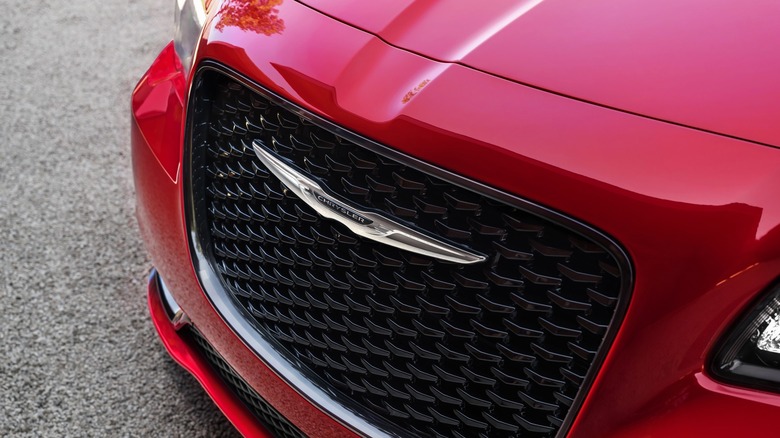
Still, this was a big deal for Mopar fans, and after debuting in pickups, the 5.7-liter HEMI made its way to cars like the new Chrysler 300C, the Dodge Charger sedan, and, by the end of the 2000s, the revived Dodge Challenger. As with the original LS1, the 5.7 HEMI was eventually joined by larger, more powerful versions, including the 425-hp 6.1-liter variant that powered cars like the Charger SRT8 and Jeep Grand Cherokee SRT8.
While the 5.7 HEMI remained in production with some updates, the 6.1 HEMI would grow to 6.4 liters and as much as 485 hp in Scat Pack and SRT-badged performance models. Additionally, just as the General Motors LS family spawned the factory supercharged 6.2-liter LS9 and LSA engines, the Mopar Gen III HEMI family eventually included the supercharged 6.2-liter Hellcat V8, which started off making 707 hp and broke past the 1,000-hp barrier in the Dodge Challenger SRT Demon 170.
The swap scene
It's not just modern performance vehicles that have made the GM LS engines so beloved — it's also the extreme popularity of the LS swap. By this point, it's almost hard to find a vehicle that hasn't been the recipient of an LS swap. The modern HEMI isn't nearly as common as a swap choice, but the mid-2020s have seen HEMI swaps become a lot more prevalent in the hot rodding and racing world.
For the most part, those who are interested in swapping a Gen III HEMI into their vehicle most likely own some sort of Mopar product. There's a large and growing aftermarket offering products to help people swap Gen III HEMIs into their vintage Mopar projects.
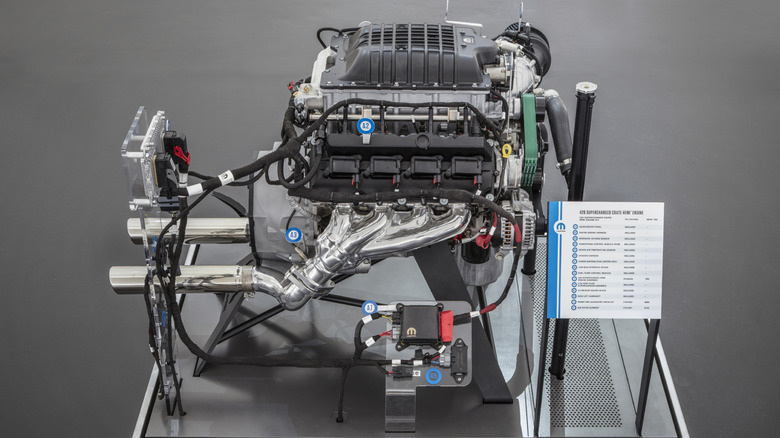
Stellantis' Direct Connection brand also has a complete line of factory Gen III HEMI crate engines, just like how GM offers a range of LS-based crate engine options. These HEMI crate engines range from the basic naturally aspirated 5.7-liter all the way to the 1,000-hp supercharged Hellephant A30 426. Whether you're a longtime HEMI fan or not, it's hard not to appreciate the contributions that Mopar has made to modern American V8 performance.