

How Many Nuclear Power Plants Would It Take To Replace Fossil Fuels?

The planet is still largely dependent on fossil fuels to satisfy our ever-growing energy requirements. However, this isn't a situation that can last forever. Even if we disregard the ever-growing specter of climate change and the impetus it provides for switching to green energy sources, the days of fossil fuels are still numbered. Put simply, fossil fuels are a limited resource, and according to the Energy Information Administration, there are currently enough liquid hydrocarbon resources to see us through to 2050. While coal and natural gas are also to be considered, the fact remains that, sooner or later, fossil fuels will be history.
This is worrying news, given that about 82% of our energy is still produced from fossil fuels, with about 9% from renewable energy sources and the remainder from nuclear power. Although there is one country that already generates about 70% of its electricity from nuclear power, this is very much an outlier.
With current technology, there are practical limits to how much energy we can extract from renewable sources — for instance, it would take about 800 wind turbines to replace one nuclear power station. A point that leads nicely to the next question – just how many nuclear power stations would it take to replace fossil fuels?
There are many variables to consider, so arriving at an exact figure isn't possible. However, using some known data points, we can estimate that it would take thousands of nuclear power plants; exactly how many depends on how we define fossil fuel usage. Let's dig into the arithmetic behind this figure.
Replacing all fossil fuel usage
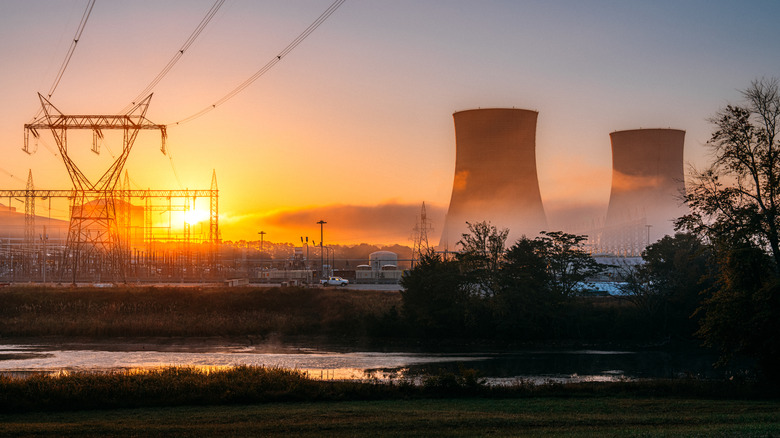
For the first figure, we'll assume we're considering all fossil fuel use, combining the energy we get from coal, oil, and natural gas into a single total. According to the Statistical Review of World Energy released by the Energy Institute and KPMG, in 2023 the total fossil fuel energy consumption was about 505 exajoules (EJ). A single EJ works out to about 278 terawatt-hours (TWh). For some context, the US generated a total of 4.43 thousand TWh of electricity in 2025.
A quick visit to the calculator shows that fossil fuels generated about 140,390 TWh of energy in 2023 (278 TWh multiplied by 505). However, this figure is the energy used per year, and we'll need to refine this a little to continue with the exercise. To work out how many nuclear power stations it would need to produce this much power, we need to convert that figure into average continuous power — this is needed because power plants are usually rated in megawatts or gigawatts, not in yearly TWh.
Calculator in hand again, and we simply have to divide our yearly TWh figure (140,930) by the number of hours in a year (8,760) for a total continuous fossil-fuel output of about 16,000 gigawatts. This is a figure we can finally work with. According to the World Nuclear Association, in 2023 there were 437 nuclear plants worldwide, producing a combined 392 gigawatts of electrical capacity (GWe), averaging just under 0.9 GWe per plant. If we scale this figure up to match our energy requirements, we get a total in the order of 18,000.
Scaling it back
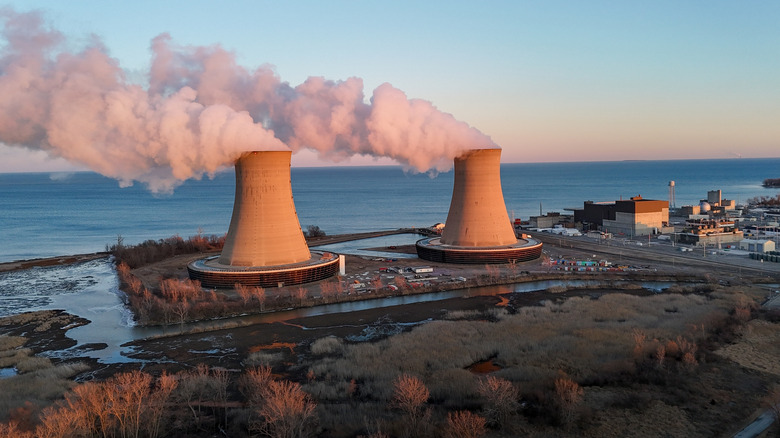
We've established that an awful lot of nuclear power plants are needed to replace all our fossil fuel usage; it's now time to temper that figure. The calculation was based on primary energy consumption. This also includes the fossil fuels used in transport and the like. For a fairer comparison, we can consider how many nuclear plants would be needed to replace only the electricity fossil fuels generate. To do this, we need to switch from primary-energy figures to electricity-only figures.
According to Ember's Global Electricity Review 2026, renewables generated 10,730 TWh of electricity in 2025, a figure that equates to 33.8% of global electricity generation or about a third of the total. For a rough figure, we can therefore infer that the remaining electricity consumption is around 21,460 TWh — this is the number we're interested in. For consistency, we'll again convert this into average continuous power by converting TWh into GW (21,460 TWh/8,760). In this case, the figure is about 2,450 gigawatts. To keep things simple, we can use the one-gigawatt average power output for a nuclear plant, as supplied by the US Department of Energy. Applying some basic arithmetic, we can infer that it would take about 2,450 nuclear power plants to replace fossil-fuel electricity-generating capacity.
A lot fewer than the 16,000 it would take to replace all fossil fuel usage, but a lot more than the existing 440 nuclear power plants currently supplying electricity. Given that it takes about five to six years to build a PWR plant — PWRs are the most common type of nuclear reactor — nuclear power still has some work to do if it's to completely replace fossil fuels.