

California Is Getting Way More Strict About What Tires Drivers Can Buy
Drivers make many choices when shopping for tires, but there are some areas where they don't get much of a say, especially when it comes to laws regarding tires and their make. One such example comes from California, the home of several weird traffic laws, with the approval of the Replacement Tire Efficiency Program on August 17, 2026.
This initiative, which dates back to 2003 and the passing of Assembly Bill 844, is intended to make replacement tires sold in the state on par with their new counterparts, with the California Energy Commission claiming that aftermarket tires tend to lack the longevity and fuel efficiency of those that come equipped on new vehicles. The goal of the program is to protect consumers from poor-quality, low-efficiency options that waste money and gas by setting a limit on the rolling resistance of tires available for sale in the state.
Estimates state that the change will cut around 2 million metric tons per year of carbon dioxide emissions, and that California drivers will save close to $1 billion on energy and electricity spending. The Replacement Tire Efficiency Program claims it will make a sweeping positive change for California drivers and residents of the state generally. Thus, one has to ask: What does it actually require of tires going forward?
What the Replacement Tire Efficiency Program entails
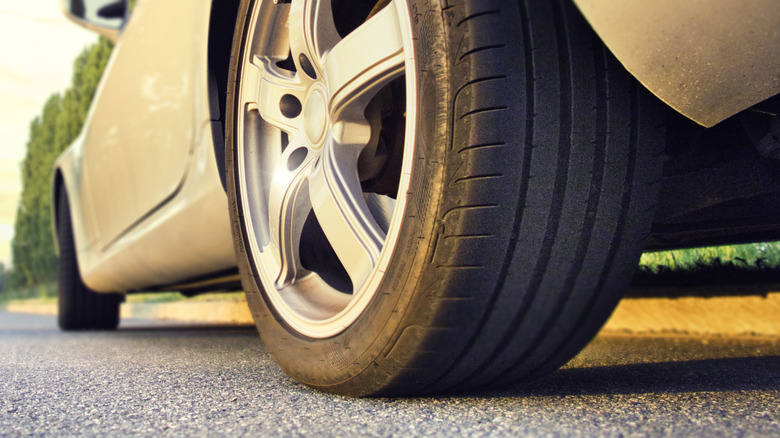
This new program centers around tires' rolling resistance, which is the amount of energy that a vehicle needs to keep its tires moving across a surface. Higher resistance means increased energy use, and the California government argues that replacement tires are typically of higher resistance than new ones. Drivers, including those who don't know how to check their tires' rolling resistance, are therefore susceptible to wasting money on gas while trying to save on replacements.
The Replacement Tire Efficiency Program's new regulations will unfold in two parts. The first will kick off in 2029 and will permit tires with 9.1 newtons per kilonewton of resistance to be sold in the state. This will shift when the second and seemingly final phase launches in 2033, bringing the limit down to 7.2 newtons per kilonewton. The Commission came up with these numbers based on tests of 537 different tires. It's important to note that several tire categories are exempt, including those for off-road vehicles, motorcycle tires, those with deep or no tread, snow tires, temporary spares, and more.
On paper, this sounds like it will be a major change that will shock tire companies and California drivers alike. In reality, the Replacement Tire Efficiency Program isn't as catastrophic as it may seem.
What the program means for manufacturers and consumers
There's a lot of buzz and misinformation about this new program, such as the claim that 70% of tire choices will simply disappear. In the short-term, it will mean that low-efficiency tires will be phased out, most likely prompting regulation-compliant options to take their place. As mentioned, the new resistance maximums won't be introduced for several years, so consumers have time to find a compliant set that fits their needs and preferences.
With that said, this is reliant on tire manufacturers rolling out new tires that adhere to the state's upcoming regulations. The California Energy Commission claims that major tire manufacturers like Michelin and Bridgestone have stated that they can meet the deadlines without compromising on elements like driver safety and brand innovation. Additionally, there are tires on the market currently that meet the new standards anyway, so it's not like tire manufacturers need to rethink their entire California business model.
Though the owners of the major tire brands have some changes to make, and California consumers should now familiarize themselves with the evolving tire landscape, the Replacement Tire Efficiency Program promises positive results on multiple fronts. It'll be interesting to see how the initiative actually pans out in the coming years.