

Why Don't Modern Cars Backfire As Often As Older Models?
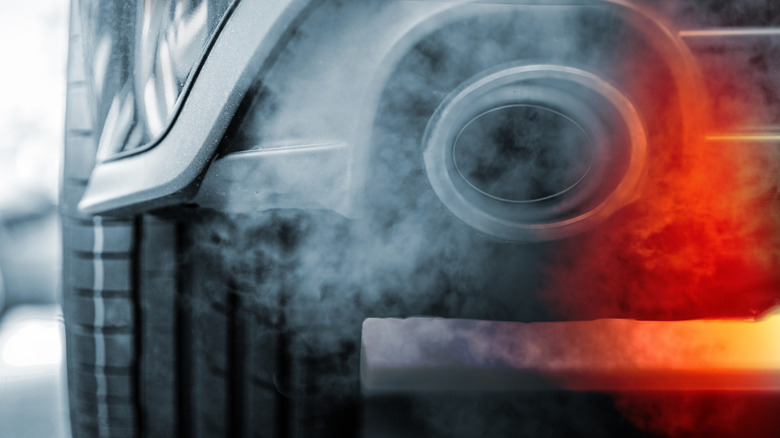
If you've ever driven a car that backfires, then you know how scary it can be. That sudden boom can be unsettling, and it always seems to happen when you least expect it. But if you've never experienced this, it's possible you drive a modern car with an engine that is much more advanced than those of the past. Understanding the difference means knowing how the engine gets its fuel and controls the mix of air and fuel.
Older carbureted engines mixed gasoline with air before the mixture reached the car's engine. This combination of air and fuel in the intake manifold created the potential for a backfire. But when fuel injection was introduced, it provided greater control over the air and fuel ratio. This new system used information such as engine speed, throttle position, and engine temperatures to determine how long the injectors should operate under different conditions. A modern vehicle's Electronic Control Module (ECM) manages both the fuel mix and ignition timing, while also monitoring engine operation and emissions equipment. This has greatly reduced the conditions that can lead to backfires.
In contrast, older vehicles did not have the level of ignition timing that modern engines now do. So if the timing was off in an older engine, the spark could arrive too early or too late. Additionally, the valves could potentially open and close at the wrong point in the combustion cycle. This imprecise timing could often create the perfect conditions for a car engine to backfire.
Why modern cars can still backfire
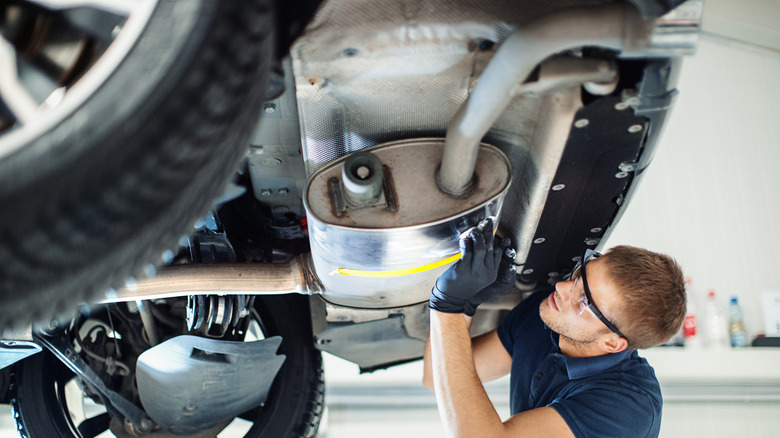
Modern engines may have measures in place to prevent backfires, but they can still happen when something goes wrong. Problems with components such as fuel injectors, oxygen sensors, and spark plugs can interfere with the engine's ability to properly mix air and fuel, or the combustion process itself. Though computerized engine controls reduce the likelihood of these problems, those controls cannot keep individual components from failing.
If your car begins to backfire, it's important to know that it can occur in two different places. An intake backfire moves through the intake system, while an exhaust backfire occurs when unburned fuel ignites in the exhaust. Both types of backfiring can sound similar, but the location of the noise can help identify what is happening inside the engine. The best move is to take your car in for service to discover the source of the backfires, and get it fixed as soon as possible.
If backfiring continues without being addressed, it can mean trouble for the other parts of your vehicle. Intake backfires can damage air intake ducts, the throttle body, and the air filter. Exhaust backfires can damage oxygen sensors, crack exhaust manifolds, and even destroy the muffler. Repeated exhaust backfires over time can also cause damage to the catalytic converter, potentially turning what may have been a simple repair into a much more complicated and expensive one.