

UV Flashlight Vs. Blue Light Flashlight: What's The Difference?
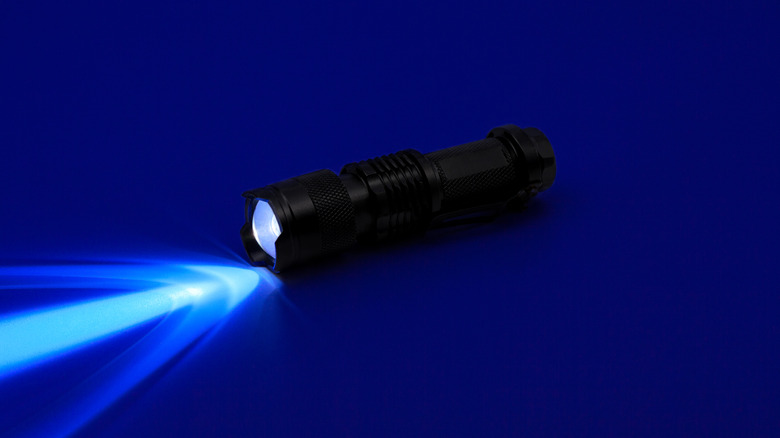
Gear aficionados understand that flashlights come in many forms, and that it's important to choose the right one for your needs and goals. One of the many decisions facing a budding flashlight aficionado is whether to invest in a UV or a blue light flashlight. To determine which is best for you, it's helpful to understand what each type of flashlight is used for. UV flashlights cause certain substances and materials to fluoresce, which makes them suitable for very specialized tasks, such as detecting counterfeit money or checking the cleanliness of a room. Conversely, a blue light flashlight is a more general-purpose device that takes advantage of blue light's wavelength to, among other benefits, reduce eye strain.
You've probably encountered UV light if you've ever been to a club, a college dorm room, or seen an episode of "CSI." Common household uses for UV flashlights include checking for pet stains and detecting leaks from cars, HVAC systems, and other such potential sources. UV flashlights are helpful when you need to check for substances, materials, and even objects that might otherwise be invisible to the naked eye. This also makes it great for tasks like checking for invisible stains in hotel rooms, looking for cracks in antiques, and identifying counterfeit currency and IDs.
Common uses for blue light flashlights
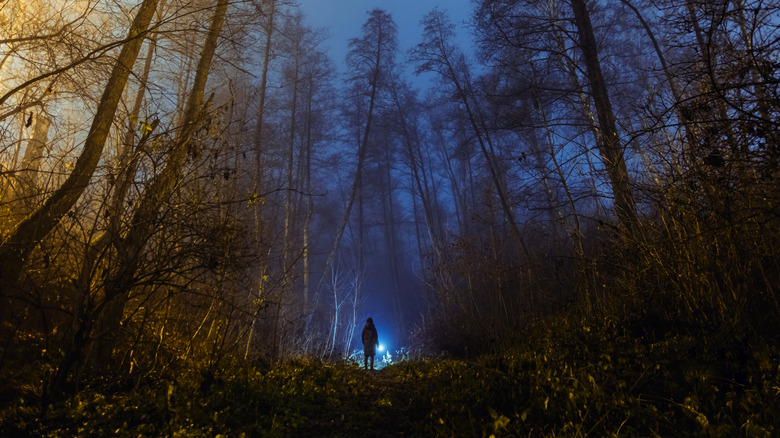
Blue light flashlights emit light that's very effective at penetrating fog and other conditions that might obscure your view outdoors. Blue light also reflects in a way that may help visibility, all while being easier on the eyes than white light.
As such, a blue light flashlight may be perfectly suited to various outdoor uses. For instance, hunters and fishers can use these flashlights to help them detect game in poor visibility. Similarly, they are helpful when reading a map outdoors, as the blue light helps you perceive details without the eye strain that may come with extended use of a traditional flashlight.
Just remember that knowing what type of flashlight you should purchase isn't the same as knowing what specific model is worth your money. Whether you're in the market for a blue light flashlight or a UV flashlight, it's best to research your options to find one that fits your budget. Consider the brand as well when sorting through your options, although you don't have to spend a fortune. For example, Harbor Freight makes affordable UV flashlights that are generally well regarded.