

Here's How Often You Should Be Replacing Your Washing Machine Hoses
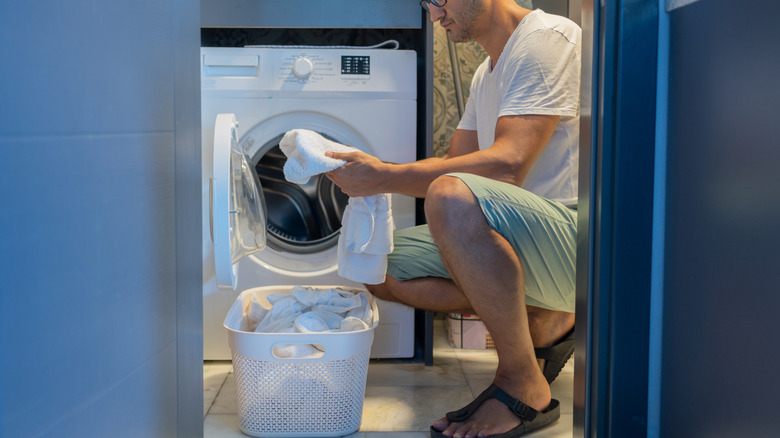
It's inevitable: at some point every home owner will consider whether it's time to replace their major appliances. However, a full replacement isn't often necessary, and an appliance can be rejuvenated through fairly light maintenance, like swapping out your washing machine's hoses.
A washing machine has three hoses: hot water, cold water, and drainage. All three hoses should be replaced every three to five years, with braided steel hoses more likely to stretch toward that five-year mark. If you've owned your washing machine for several years and never considered the hoses, it may be time to inspect them for signs of wear. While you've got the hoses disconnected, it's also a good idea to clean out the inlet filter, which can help with performance.
If you've already established a recurring home-maintenance schedule, adding a hose check to it is a great idea; if not, it may be time to set one up. You can mark the installation date directly on the hose label with a permanent marker and add a calendar reminder so it won't slip through the cracks, or you could pair the job with another five-year maintenance task. Whirlpool specifically recommends marking the date and using new washers with replacement hoses, since old washers can remain stuck to the inlet and prevent the new connection from sealing correctly.
How to replace your washer hoses
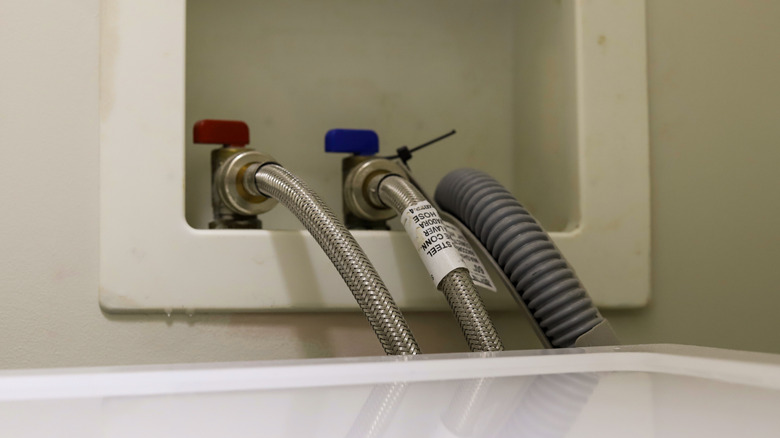
If your hoses are exhibiting signs of wear or if you just want to replace them preventatively, start by unplugging your washer and turning off both hot and cold water valves. Place a towel or bucket beneath the connections to catch any water that may dribble out. Next, remove the old hoses, and double check that the washers aren't still stuck to the inlets. Once they're clear, carefully attach the new hoses by hand. Be sure not to overtighten, as this can damage the hoses. Appliance manufacturer Maytag specifically recommends a three-quarter turn with pliers after you've gotten the hoses hand tightened.
Before you wrestle the machine back into place, be sure to turn the water back on so you can check for leaks. You should also check that the lines will have enough slack that they won't pinch when you push the washer back towards the wall, or when the machine vibrates while washing a load. It's also good advice to regularly check the new hoses for any signs of strain or damage, especially after you run the first load. Then take a peek every six months or so and look for any signs of cracking, discoloration, or corrosion, and be sure to update your maintenance schedule for the next replacement (assuming it's before the end of your washing machine's lifespan).