

Mooring Vs. Docking: What's The Difference In Boating?
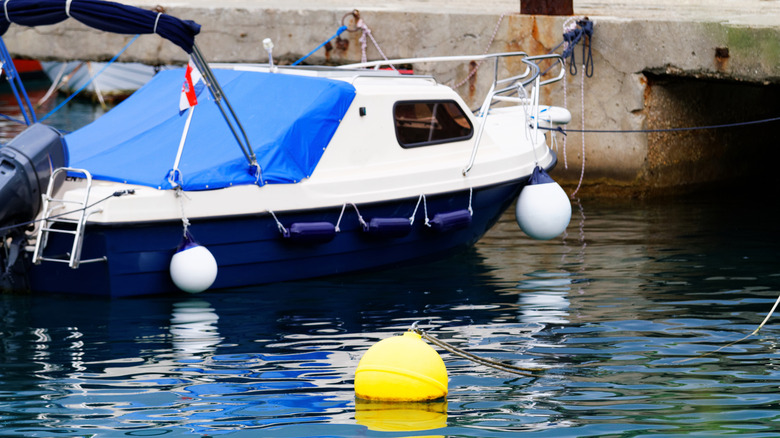
Boating is a favorite pastime for many across the globe with the means to, you know, own and maintain a boat. If you count yourself in that crew, or are looking to join their seafaring ranks, there are quite a few things you'll need to know before you shove off into open waters the first time.
For starters, there are several tools and devices you'd be wise to ensure are stowed away aboard your vessel each and every time you launch your boat. But once you've accounted for those items and successfully launched, the list of need to know things only gets more complicated, particularly when it comes to the terminology. Consisder how you "park" your boat while it's still in the water. In that arena, terms like docking and mooring are commonly heard. Both cover ways to park your boat on the water, they describe very different ways of doing it.
Docking is arguably the more common way to "park" a boat. And yes, as its name implies, docking involves steering your vessel into a position next to a dock, and using a rope to tie your boat directly to the stationary fixture. Mooring can also cover attaching your boat to a fixed location in the water like a dock or pier that is away from land, but it is more often used when you are tying up to an anchor, a chain, or a buoy that's positioned out in water.
Are there other ways to secure your boat in the water?
Both docking and mooring can be intimidating for new boaters. As with most things boaters encounter when starting out, they should get easier with practice. While you're learning the ropes, you'll also want to familiarize yourself with another mode of securing your boat when far from shore: anchoring.
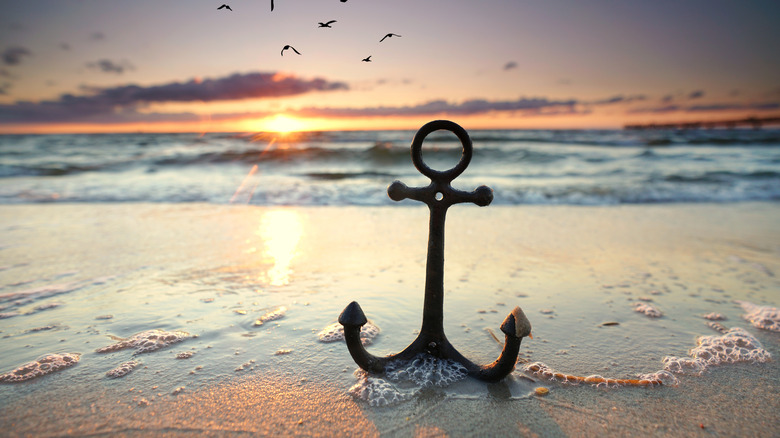
Most of you are probably familiar with an anchor, a heavy and typically hooked weight connected to a boat by a chain or rope. When you want to keep your boat stationary on the water, you drop the anchor overboard. It then sinks to the floor of the body of water and secures the boat by grasping the surface below. This can be handy any time you're out on the water and looking to wait out a storm, do some fishing, go for a swim, or even spend the night at sea.
To be clear, that method is actually called temporary anchoring, as you aren't intended to stay in that position for extended periods of time. There are a few caveats to consider with temporary anchoring too, as water depth and the size of your vessel may affect your anchor's abilities. Heavy currents and tides may eventually be able to move the anchor itself as well, and thus your boat. As noted, a more permanent anchor can be used when mooring your boat, though mooring options may be fewer and farther between when you're out on the water.