

Are Automatics Quicker Than Manual Cars?
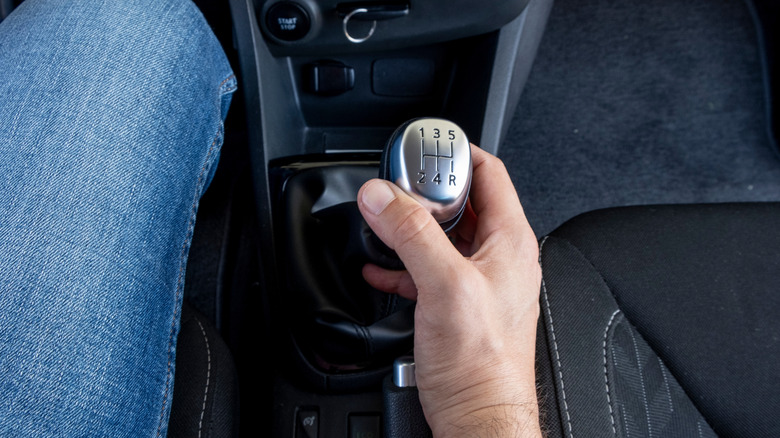
If you ask the car community, many purists will say manual transmission is superior to automatic. They will tell you manual transmission offers more control of the car and that you feel more connected as you drive. But there's one shortcoming that nobody can deny: Manual transmission cars are not as quick as their automatic transmission counterparts.
In the modern car world, automatic transmissions are superior when it comes to speed, due to a blend of physical requirements and energy transfer. First, drivers in automatic cars don't need to step off the gas to shift gears or make any other adjustments and balances. They simply step on the gas and go, thanks to advanced electronic systems. Second, automatic transmissions transfer energy to the engine a lot faster since there's no time wasted on gear shifting. You'll take off at the light a lot faster with an automatic transmission.
In a scenario in which both automatic and manual cars take off at the same time, the manual transmission car could face further setbacks, although this would likely be due to driver error. Seasoned drivers know exactly when to shift gears to ensure the car is accelerating smoothly, but if you shift too early, you lose engine revolutions per minute (RPM), which takes power away from the engine and causes sluggish acceleration. Accidentally skipping a gear can also slow down your acceleration, since you won't have the torque needed to support the higher gear's faster speeds. In the end, the manual vs. automatic transmission comparison really comes down to preference when debating which gearbox is better — and some manual cars are better than automatics, even if they can't get to 60 mph as quickly.
What is the fastest manual car ever?
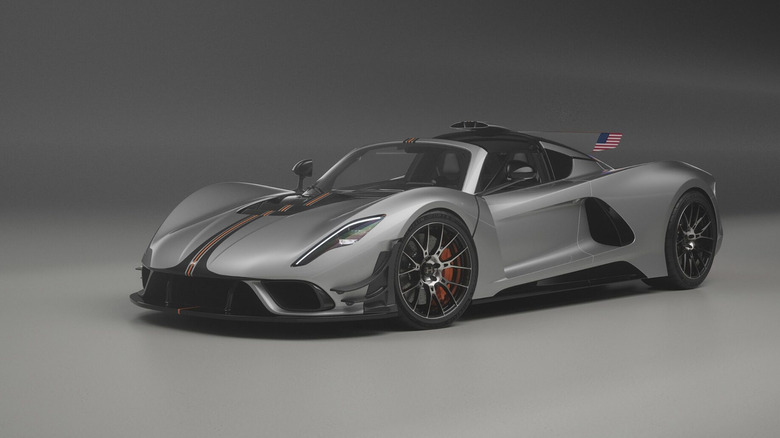
All of the fastest cars ever made are automatic, which is optimal for 0 to 60 mph times. However, the Hennessey Venom F5-M Roadster arrived with the goal of bringing manual transmission to the hypercar world. With a Fury V8 engine that makes 2,031 horsepower, it's the most powerful manual hypercar, reaching 60 mph in 3.3 seconds with a top speed of 285.6 mph. Unlike traditional hypercars, Hennessey wanted to bring a more visceral and immersive driver feel on top of just being extremely fast. "The noise, the feel, and the power delivery are raw and unfiltered –- it's the most all-consuming driving experience we've created!" CEO John Hennessey said.
Hennessey has continued pushing the limits of its Venom hypercar. The Hennessey Venom F5 Evolution has 2,031 hp and 1445 lb-ft torque, made possible after combining the Fury V8 engine with the largest mirror image turbo chargers in the world and a new engine design. The Evolution has an automatic transmission, but those who prefer manual grabbed one of 12 Venom F5-M Roadsters for $2.65 million.
Do race cars use manual or automatic transmission?
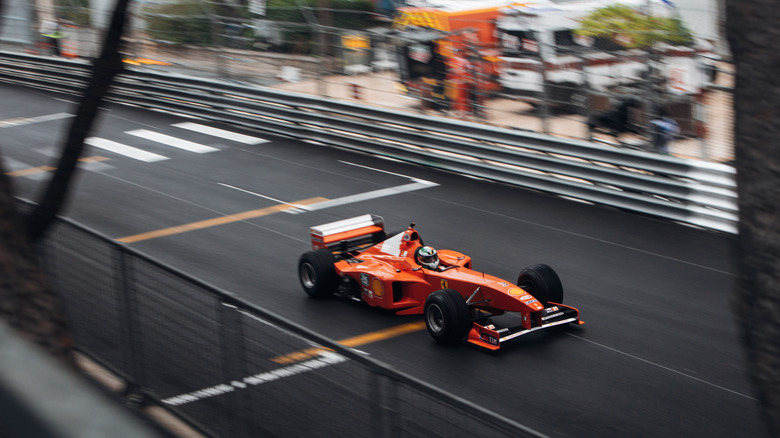
When it comes to race cars being manual or automatic, the answer is a bit complicated, since there are different kinds of racing. Automatic transmissions excel in drag racing since the goal is to accelerate as fast as possible without hiccups. Meanwhile, track-based races like autocross are better for manual transmission cars due to the complete control the driver has over the acceleration and torque. For Formula 1 racing, the cars are considered semi-automatic. This is because the driver still changes gears to ensure ultimate control, but they do it by pressing a button rather than using a pedal.
In the past, such cars were manual, but this was changed with a Formula One-changing innovation in 1989. F1 cars now have a lever, or paddle, that acts as the clutch, allowing the driver to control everything with the steering wheel. It's paired with straight-cut gears and dog rings, as well as an Engine Control Unit (ECU) program that shifts gears in milliseconds. This speed, accuracy, and simplicity allows drivers to change gears more than 3,500 times during a race.