

Why You Should Think Twice Before Buying That 30,000mAh Power Bank
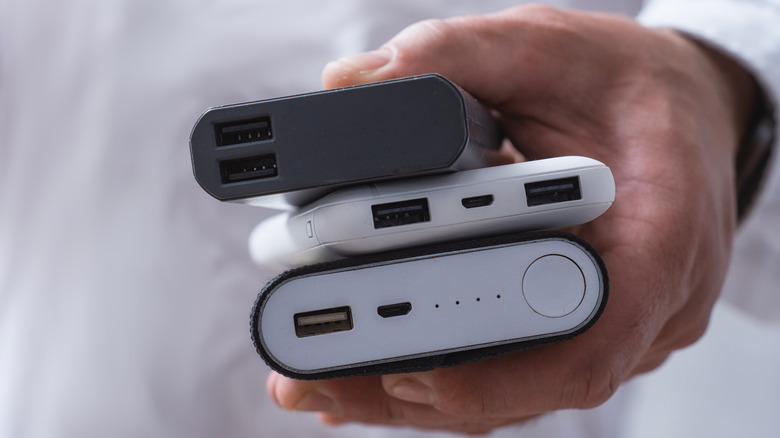
There's a time and place for large-capacity power banks. They can be essential for remote workers, since some models can handle the power requirements of a laptop. Similarly, a high-capacity solar power bank can be a great gadget to have when watching football games or engaging in any other outdoor activities. For long road or camping trips, a power bank can also come in handy when charging portable consoles, like the Steam Deck or Nintendo Switch. There are plenty of situations where a big power bank is very useful, but they aren't necessarily the best option all the time. Case in point: they're not what you want if you're flying.
Large power banks are among the travel gadgets we recommend thinking twice before buying, primarily because they're actually not allowed on many planes and airlines. Federal Aviation Administration rules limit passengers to 100 Wh lithium-ion batteries, and 30,000 mAh units exceed this number. Many airlines, such as Emirates, follow the same regulations.
There's also the practical issue of how large they are. Since you can't check them in, these power banks will take up space in your carry-on bag. And that may or may not be worth it if you're flying on a budget airline, as every inch counts. You'll also have to think about how useful they'll be when traveling, especially if yours is one of the heavier ones. But if you're dead set on bringing a power bank to your next trip abroad, here are some things you need to bear in mind before heading to the airport.
How to choose a power bank for your next flight
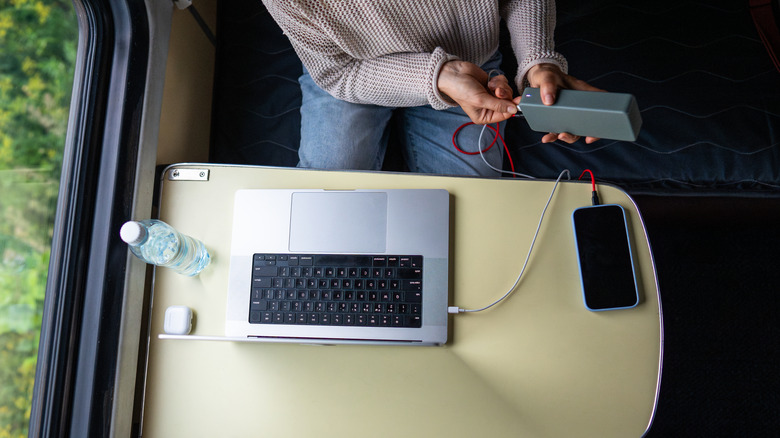
When it comes to choosing the right power bank for traveling, you'll need to check the regulations in your destination country, as well as the airlines you're flying with. China Eastern Airlines cautions passengers that power banks carried on domestic flights need to bear the China Compulsory Certificate mark. Vietnam Airlines passengers are limited to two power banks per person.
While it's almost a given that you're not allowed to put them in checked-in luggage, some airlines like Emirates even require that they're not stored in the overhead compartment. Even if you can carry the power banks you want, they might not even help during the flight, as airlines like Singapore Airlines and Cathay Pacific don't allow charging from a power bank during the flight.
To combat the need for power banks on long flights, you can check your airline's website for the seat configurations on its planes. Typically, airlines will show practical information on their seat maps, like plug types. This method isn't perfect, of course; airlines have been known to switch planes for operational reasons. You'll also want to make sure you have the right cables or charger, since the plane might not have the right port. But if you don't want more things to do on your pre-flight checklist, here are some alternatives to bringing power banks with you.
How to keep gadgets charged during a trip abroad
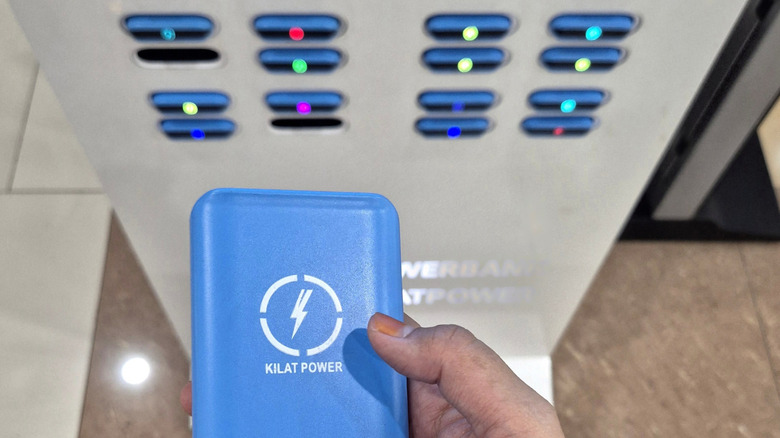
Depending on your destination, you might be able to find power bank rental stations, especially in popular tourist destinations like city centers or theme parks. By renting, you can skip the mental load of worrying about the logistics of bringing it back and forth between countries. Typically, they also come with built-in cables, such as USB-C, Lightning, and micro-USB.
Tokyo Disneyland, for example, lets you rent mobile battery packs for up to six hours for between $2 and $8 depending on duration, with plenty of pick-up and drop-off locations across the park. In Spain, services like FireVolt are available in cities like Barcelona, Madrid, Malaga, San Sebastian, and Valencia. These require you to download an app and pay a deposit via a QR code or credit card. Rates vary per city, but you can expect to pay between $6 and $12 for the refundable deposit, with the total amount you pay being the difference between the final cost and the initial deposit.
If you're planning to go hiking or camping, you might want to bring a smaller-capacity model and a portable solar panel from Ryobi instead. As long as you're going somewhere with a lot of sunlight, you'll be able to recharge your devices and your power bank even while walking.