

Have A Burning Smell From Your Car's Clutch? This Could Be The Reason Why
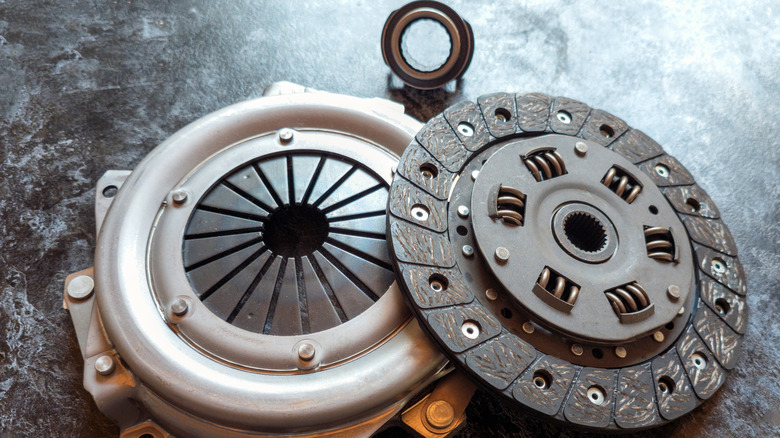
In a car with a manual transmission, the clutch performs the vital task of mating the engine and drivetrain. It's a surprisingly sophisticated system, with the clutch plate alone consisting of several components. You have the bulk of the plate, the friction material, the shock-absorbing springs, the splined hub within it, and so on. The plate and other parts all work in concert to deliver power from A to B.
Normally, the transmission shouldn't emit any foul odors. But it can, and when that happens, it's usually the friction material essentially burning up. The smell will depend on exactly what your friction material is made of, but it typically has an acrid, organic smell — a bit like burning paper with some hair thrown in. Either way, you'll know it when it happens, and it's a common indicator of a problem with your manual transmission.
As for why clutches burn up, that's generally down to clutch slippage. Now, it's obviously normal to slip your clutch a little; that's how you're supposed to drive a manual. But if you're holding the clutch on a hill, doing aggressive starts, or constantly creeping forward in stop-and-go traffic with the clutch pedal halfway down, that's when you'll get the smell. It's typically most prevalent when setting off, when the clutch is doing work with the friction material. Let's look into why it happens and what you can do to stop it.
Why the clutch can burn
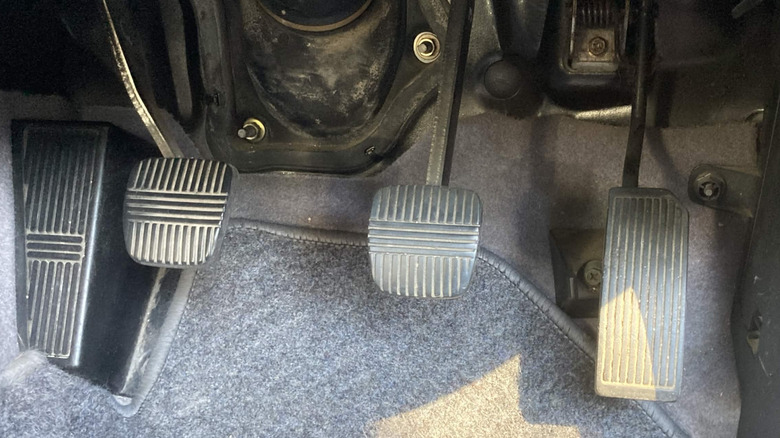
The clutch's job is to act as an intermediary between the flywheel and transmission, and it's designed to slip to an extent. When you let off the clutch pedal, you do so slowly and smoothly to ease the car into gear; otherwise, you'll get a clunk that sends a shock through the whole drivetrain — a common mistake when first learning how to drive stick. The problem occurs when the clutch keeps slipping even when the pedal is all the way up, meaning there's a discrepancy between engine and drivetrain speeds. Essentially, the clutch is being friction-welded to the flywheel.
You know how race cars have glowing-hot brakes when they're slowing down for a tight corner? That's because brakes convert kinetic energy into heat through friction. The same principle is what governs a clutch — friction material on the flywheel and clutch plate mesh together to form a solid bond, like a strip of Velcro. If your clutch is slipping, it's acting the same way as brakes on a race car, overheating and even glazing the surface of the friction material.
After a while, the material will get so smooth and hot that it no longer grips properly, and the friction effectively starts polishing everything, creating dust with that characteristic smell. Letting the clutch cool down can work, but only if you haven't worn the parts down; otherwise, you may be looking at an expensive repair bill.
How to prevent your clutch from burning
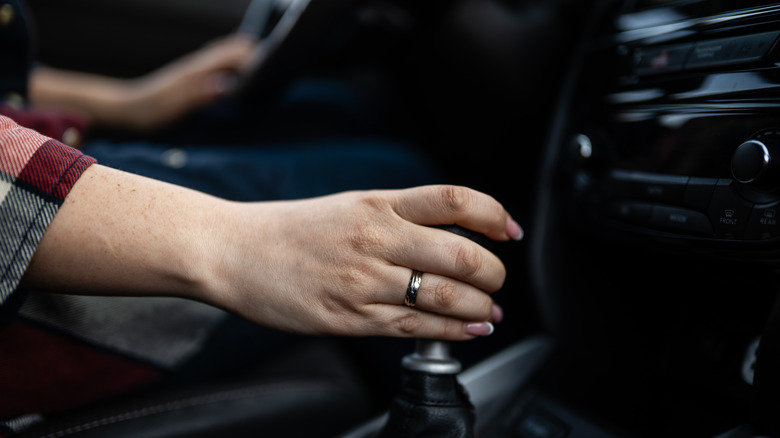
Manual transmissions generally last a long time, but even then, clutch slippage is virtually inevitable as the friction material will eventually wear down. Nevertheless, some key driving habits will help prolong its life. The main goal is to reduce the friction as much as possible. Granted, this isn't always down to driver error: A malfunctioning clutch pedal or throwout bearing, among others, might cause the clutch not to engage fully no matter how carefully you drive. But if your components are in good shape, then it's all on you.
First of all, practice good driving habits. Don't hold your foot on the clutch pedal if you're not using it — that's what your car's dead pedal is for. Fully engage the clutch and let it out smoothly and consistently, instead of applying a ton of revs and dumping it during a launch. Use the handbrake on steep hills, rather than holding the clutch at the bite point to prevent the car from rolling back. Basically, use the clutch pedal to shift and set off smoothly, and nothing else. That's all there is to it.
If your clutch is already burning, you should pull over to the side to let it cool off. Remember, the burning means your clutch plate is slipping, so give it a break first instead of carrying so you don't glaze the surface and cause a bigger headache.