

Which Direction Should Your Air Conditioner Vents Point For Optimized Cooling?
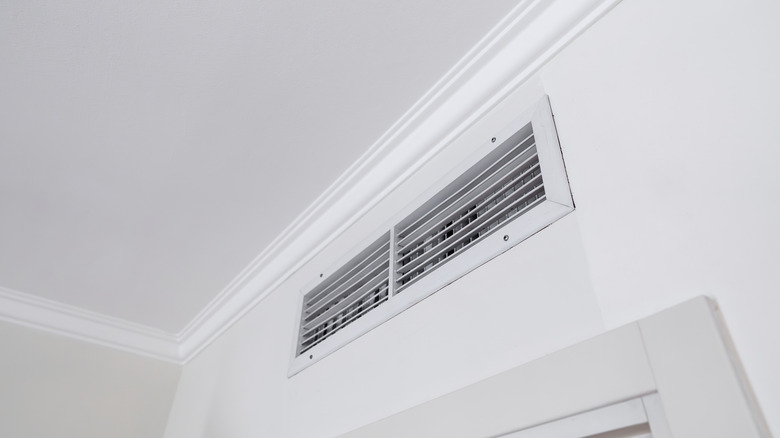
If your home includes the luxury of central air, and assuming your vents are adjustable, experts say it's a good idea to angle them upward during the summer, according to reporting over at The Spruce. It's a handy AC tip, like ensuring your air ducts are clean, and it works because air becomes denser and naturally sinks as it cools. Blasting it higher up in a room initially will allow it to spread out more evenly as it settles. The conditioned air will mix with warmer air up near the ceiling, and will then descend more gradually and disperse. It's also a more comfortable experience than sending a channel of arctic air blasting directly at a person or piece of furniture.
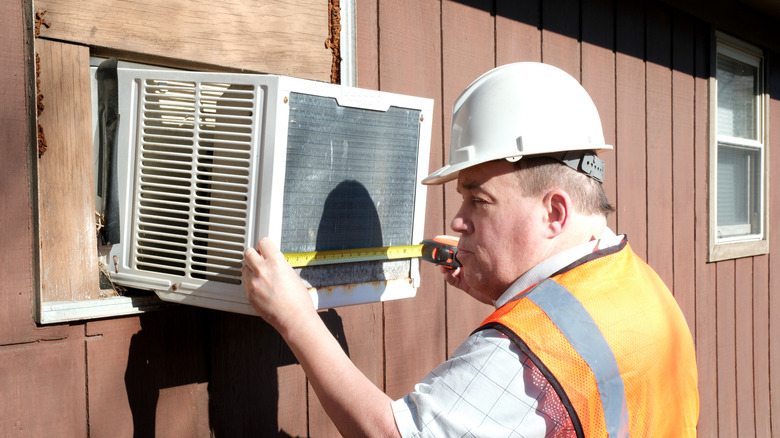
For HVAC setups and wall-mounted registers, this is a pretty simple tweak, though it might be slightly more difficult for window-mounted units. Window units often don't include an option to adjust the vertical angle of a vent, which can make things a little more difficult. It's generally a good idea to have the entire unit tilted slightly upward on the in-facing side, since this can help moisture drain from the rear of the AC. Just be certain that any time you're installing or repositioning a window unit, it's fully secure, and there's no risk of it slipping or falling out. Alongside addressing other common problems with air conditioning, angling your AC vents properly can have a big impact on its effectiveness.
Match the setting to your home
While pointing AC vents up is a good rule of thumb, it's not a universal recommendation. Floor registers can be tricky, for instance, because it's difficult to properly angle them upward without creating an awkward plume on the floor. For floor vents, the best advice is to point the louvers toward the middle of the space you're trying to cool, ensuring that airflow isn't interrupted (as much as possible) by furniture or other obstructions. You can even invest in a third-party vent deflector, which can help route cool air past a cabinet or sofa.
For ceiling-mounted vents, you should aim whenever possible to ensure they're moving air horizontally across the ceiling. Horizontal motion will lead to a better, more even circulation pattern, whereas a vent pointed directly at the ground can create unpleasantly cold drafts while leaving other parts of a space warmer. Ceiling fans can help as well, because they encourage air to mix and equalize temperature, while also pushing air across people's skin, making a space feel cooler. Set them to run counterclockwise in summer to push air downward. One good energy-saving tip is to turn off a ceiling fan when a room is empty, because they don't actually cool the air. Getting your hands on one of the best portable air conditioners can help as well. Not only do several of them have adjustable vents, but being able to position them on the fly can help determine the best spot for ideal circulation.