

How Many Solar Panels Would It Take To Replace One Natural Gas Power Plant?
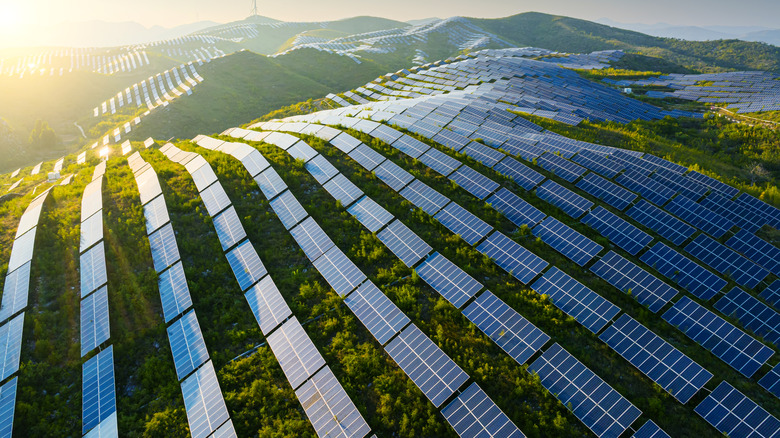
We've previously investigated how many solar panels it would require to replace the energy output of a coal plant, as well as how many would be needed to match the power provided by a nuclear reactor. To round out our series, let's calculate how many solar panels you'd need to approach the wattage produced by a natural gas plant.
Assuming a 56% capacity factor for a hypothetical 1-gigawatt natural gas plant (right around the U.S. fleet average), it would produce around 4.9 million megawatt-hours of electricity per year, which even high wattage, high efficiency solar panels would struggle to match except in staggering volumes. A high wattage solar panel for residential or light commercial usage now averages around 550W and have been described as the "sweet spot" for solar installers. Real-world yearly production for solar projects is lower than their listed ratings because they generate only while the sun's out and are subject to interference based on weather, the season, amount of shade, inverter losses, panel orientation, and available transmission capacity. These factors all combine to reduce solar capacity factor to an average of around 24%.
This means one 550-watt panel would generate approximately 1,157 kilowatt-hours annually. Dividing the gas plant's estimated 4.9 billion kWh annual output by that figure yields a total of around 4.3 million solar panels. If the solar project was sited at a sunnier location, or if static panels were replaced with sun-tracking panels, you could significantly reduce that number.
The mitigating factors
The math is slightly tricky when trying to calculate a gas plant's output because "natural gas power plant" is such a broad concept. Such a plant can range from a relatively modest, seldom-used peaker plant (a smaller plant only occasionally activated during periods of intense demand) to a large combined-cycle facility that runs the vast majority of the time. For our purposes, we targeted a larger plant, a 1-gigawatt combined-cycle natural gas plant; combined cycle indicates that the plant combines a gas-turbine cycle with a steam cycle.
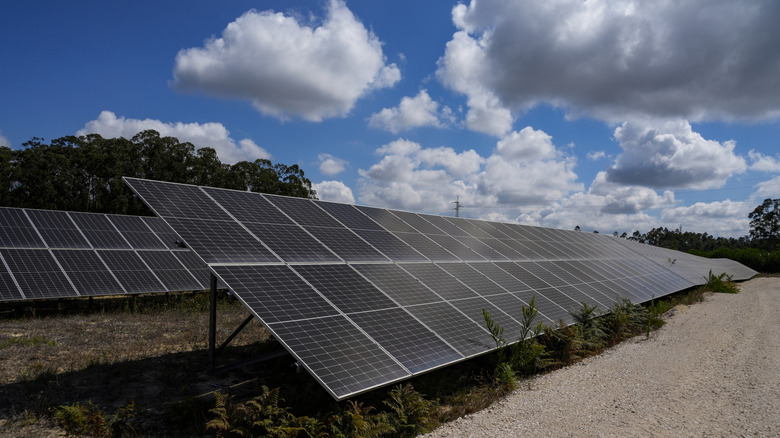
To reach a similar level of power production under relatively average conditions would require millions of solar panels. There are a number of factors that would significantly alter the math. Solar irradiance, for instance, the instantaneous solar power received on a given surface per unit area, is broadly variable: it can fall off a cliff because of haze, cloud cover, fog, or smoke. There are also universal considerations like day length and season. Panels will naturally be more productive at the peak of summer than in the shorter daylight hours of midwinter, and day length can vary tremendously by location.
Of course, because a solar project would also be limited by timing concerns and weather (cloudy days and storms significantly reducing capacity factor), any such project would also need to include significant auxiliary equipment and facilities for energy storage. That said, solar plants in many cases don't just produce power, and have environmental advantages beyond the obvious advantages over natural gas plants, like shading above-ground irrigation systems.