

'Strictly Prohibited': What GM's Aftermarket Part Ban Means For Your Next Repair
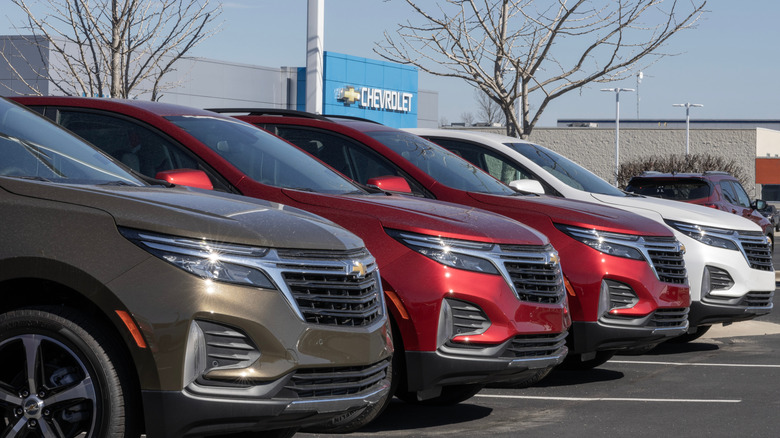
Buying car parts online may have its pros and cons, but going that route and doing the work yourself can save you some money over taking your car to the garage. But if your vehicle was manufactured by GM, beware that the automaker is clamping down on what parts you're actually allowed to use for certain repairs. More specifically, if your car needs collision repairs involving the manufacturer's Advanced Driver Assistance Systems (ADAS), you must now only use new GM Genuine Parts.
Going forward, this means that for your next collision repair, you don't have the option of using a cheaper aftermarket or used part when an ADAS component needs to be replaced. This includes the cameras, radar units, sensors, control modules, wiring, brackets, and the mounting hardware. You also cannot use recycled, salvaged, reconditioned, or remanufactured parts, as previous exposure to damage could affect reliability, calibration, and safety. If you do use an aftermarket part, whether it's self-installed or done by a service technician, and that part causes damage, failure, or system issues as a result, you're on your own. GM will not cover it under the new-vehicle limited warranty or its service plans.
Additionally, GM warns that accessories or modifications, including protective films and covers, stickers, window tint, magnets, hood protectors, light bars, cargo racks, and more, can interfere with ADAS operation. Even non-GM suspension, steering, wheels, tires, lift or lowering kits, and other modifications can also create problems. Any modification that alters ride height, alignment, or handling are also not recommended.
GM is pushing harder for genuine parts
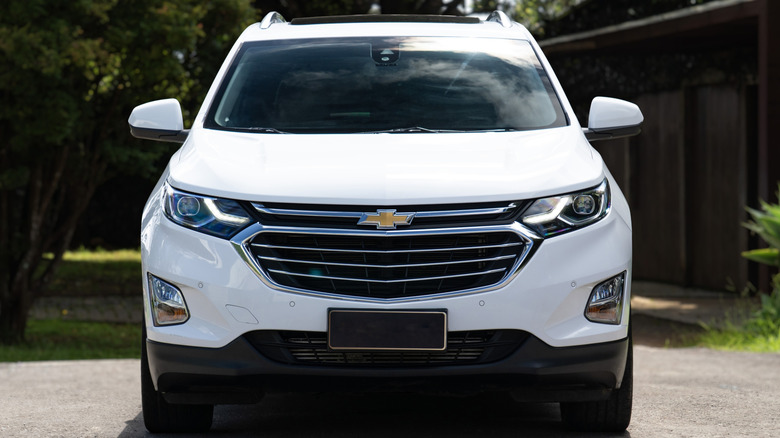
GM's policy on aftermarket ADAS parts is getting criticized by the Automotive Recyclers Association (ARA), which says the manufacturer could take away an important lower-cost option for people repairing their vehicles. But the argument isn't around non-OEM ADAS parts, but for OEM parts that have been recycled from another vehicle. The ARA believes that if it has been properly inspected and shown to meet the necessary testing and calibration requirements, the part should be allowed.
GM's latest restrictions came after an earlier statement where the automaker specifically addressed bumpers and fascias equipped with ADAS components. Aftermarket, reconditioned, and salvaged replacements were strictly prohibited because, unlike engine parts bought directly from GM, these are not approved by the company. The automaker also required that damaged bumpers or fascias with ADAS components be replaced if the damage affects the underlying material.
But GM's position on using OEM-only parts for ADAS repairs has been getting progressively stricter throughout 2026. As early as March, the company described aftermarket and non-Genuine parts as "not recommended" in areas around ADAS sensors. By April, that language changed to say that those parts were not approved, while also emphasizing ADAS as a safety system that needs to be restored to its pre-collision condition. Overall, these new restrictions are pointing vehicle owners more and more toward using only GM Genuine Parts for these repairs, regardless of their affordability.