

11 Of The Most-Copied Car Designs In Automotive History
They say that imitation is the sincerest form of flattery, and the automotive industry bears that out. There have been countless different automotive manufacturers over the years, but the truly great ones create vehicles that set new trends, inspire other companies, and change the course of automotive history altogether. The worst-looking cars ever designed and the least functional vehicles on the road find themselves resigned to the dustbins of history, while the true successes introduce new innovation that quickly circulates out into the rest of the industry.
Unlike some classic boomer cars overlooked by younger generations, many of the most-copied car designs in history basically invented new styles of car all on their own. These cars combined cutting-edge performance with a unique aesthetic that almost instantly connected with consumers. Some designs created with mechanically inclined drivers in mind immediately found themselves mimicked by an array of car kit manufacturers. Others introduced new functionality that inevitably got picked up by other companies and distributed all over the world. You've almost certainly seen these cars before, but if you haven't, you've at least seen their (many) evil twins.
1964 Mustang
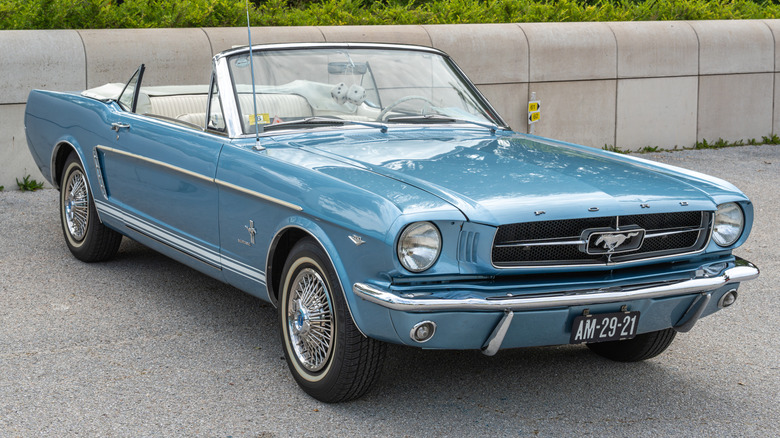
When it comes to classic car designs, you can't get much more iconic than the 1964 Mustang. From the moment it debuted, the Mustang was a massive hit. It almost single-handedly launched the pony car. Over the years, this style of vehicle's defining features have become a bit muddled, but a pony car is typically compact and sporty with four bucket seats, two doors, and an eye-catching longer hood.
There's a real argument amongst car enthusiasts about where the line separating muscle cars from pony cars really lies. Judgements vary, but the '64 Mustang is the platonic ideal of a pony car, and it's easy to see the vehicle's influence throughout the industry. In the wake of its success, several other companies followed Ford's lead. Chevrolet got out the first imitator and created its own classic with the '67 Camaro. Pontiac wasn't far behind with the '67 Firebird. All three designs have incredible legacies and dedicated fans today, and new designs based on the original Mustang come out with regular frequency. The pony car is now an institution of its own, and it all started with Ford and the Mustang.
Mini Cooper
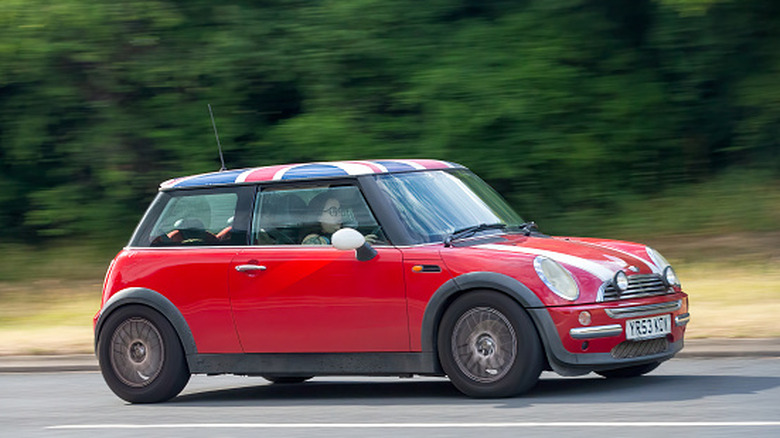
The Morris company began designing the car in 1957, and in 1959 it launched the first ever, and now iconic, Mini Cooper. Unlike any car before it, the Mini Cooper had a sideways-mounted gearbox that allowed it to have an extremely compact front end, spacious interior, and room for storage in the back, all without sacrificing performance and top-end speed. It was a revolutionary design that helped popularize front-wheel drive.
Fiat has the most well-known Mini Cooper copycat. The Fiat 128 and several of the company's other 1960s designs were intended to compete with BMC's design. And beyond direct imitators, dozens of other car designs have copied that key invention of the Mini Cooper. Civics, Camrys, RAV4s, and so many other front-wheel drive cars all use the sideways-mounted design that made the original '59 Mini Cooper such a success.
Like several other vehicles on this list, the Mini Cooper has been so influential that you can see hints of its design in all kinds of other vehicles. Plenty of other manufacturers utilized the Mini Cooper's signature gearbox innovation in their designs, even when they aren't trying to hew as closely as possible to the original's aesthetics.
Shelby Cobra
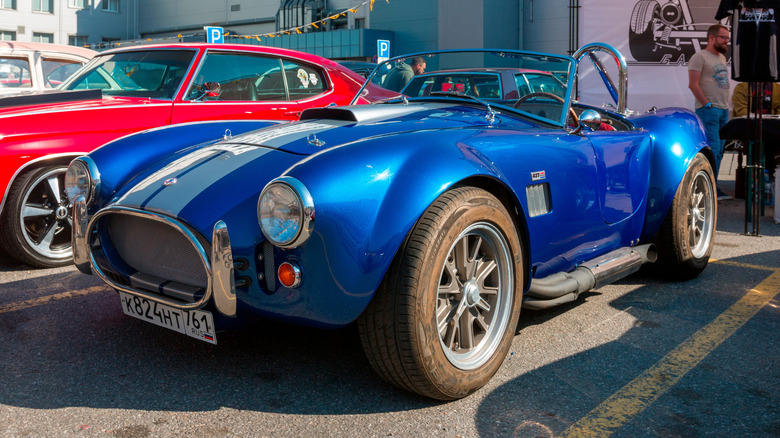
The Shelby Cobra is a celebrated high-performance vehicle first designed by Carroll Shelby in 1962. The design was meant to combine a weighty V8 engine with a lightweight chassis, and the result was an instant classic. Cobras quickly became unaffordable for most people. Fewer than 1,000 original models were made between 1962 and 1967, and today they sell for millions of dollars at auction. That's where the replica market comes in.
As early as the 1970s, companies like Factory Five Racing and Superformance were manufacturing kits that allowed mechanically minded enthusiasts to build their own Cobra replica at a significantly more affordable price point. Those same companies often also sold pre-built replicas that allowed collectors to purchase a fully functional, high-quality Cobra lookalike without having to build it themselves or take on a second mortgage.
An unexpected Cobra replicator arrived on the scene in the '90s. Carroll Shelby started selling brand-new Cobras that weren't replicas of the original model, but rather heavily based on that original design. Shelby American still sells similar models, meaning that the biggest modern-day Cobra copycat is Shelby itself.
Mercedes Benz G-Wagon
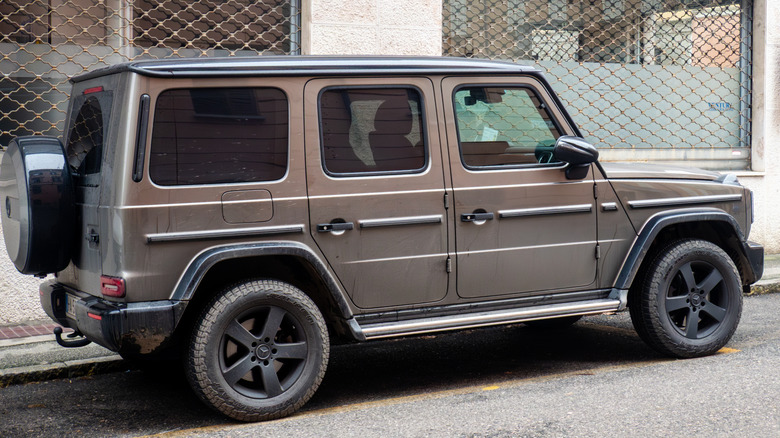
The Mercedes G-Wagon is one of the most recognizable car designs of all time, but have you actually seen a real one, or are you only spotting copycats? Car enthusiasts have been in love with the G-Wagon since its debut in the late 1970s, and they've struggled to get their hands on an authentic one for just as long. The G-Wagon was initially designed as a military vehicle, and its production was spurred by a request from Mohammad Reza Pahlavi, then-Shah of Iran and major Mercedes shareholder.
Despite its military origins, the G-Wagon has always had broad appeal. The multi-terrain vehicle is extremely practical in a way that some gearheads can seriously get behind. Throughout the '80s and '90s, Mercedes made improvements to the G-Wagon and began selling the car to retail customers, but it wasn't able to be imported into the United States until 2002. That gap opened the door for an American G-Wagon replica market, and created a demand for conversion kits that allowed gearheads to create their own version of the G-Wagon. To this day, conversion kits remain a popular option for enthusiasts.
Outside of the U.S. there were still plenty of G-Wagon copycats. China had the BAIC ORV created by Beijing Automotive Manufacturing, and Russia had the UAZ-manufactured Hunter.
Audi Quattro
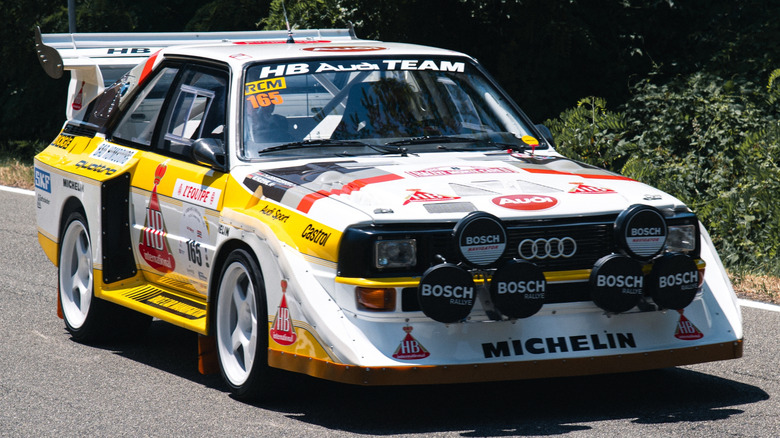
In 1980 the Audi Quattro blew the minds of motorsport fans all over the world. The car combined muscle car aesthetics with the aerodynamic concerns of a sleek, competitive sports car, and it began racking up racing wins in short order. Fans loved the Quattro's performance, but they latched onto the car's design even more tightly. As the Quattro itself became increasingly unattainable and unaffordable, would-be drivers began looking for alternatives.
Aftermarket conversion kits based on the design of the Quattro became incredibly popular among racing fans. You can still purchase kits to do the conversion yourself, and gearheads often document the process of creating their own replicas online. And beyond individual enthusiasts working on hobby vehicles, some companies have even tried to capitalize on the Quattro's popularity by selling high-quality replicas of the original design.
Arguably the biggest Quattro copier is Audi itself. The company has naturally leaned into the Quattro's popularity many times over the years. It continues to manufacture vehicles based on the Quattro's design, all but ensuring that you won't just see Quattro clones at rally car races today.
Chrysler Town and Country
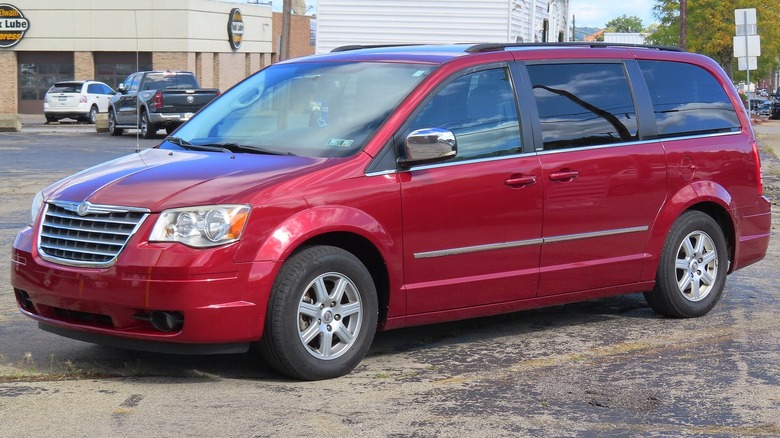
Another '80s phenomenon that lit up the car world, the Chrysler Town and Country was part of Chrysler's push for front-wheel drive minivans with mass appeal. Alongside other Chrysler models like Plymouth Voyager and Dodge Caravan, it helped put classic station wagons into an early grave. More than three decades after the release of the Town and Country, the station wagon is a relic from the history books, but the front-wheel drive minivan is very much alive and well.
Other companies saw the moves Chrysler was making, not to mention the public reception of the Town and Country, and decided to make their own versions. General Motors launched its own minivan with the GM All-Purpose Vehicle. Chevrolet got into the game with its Lumina APV, and Pontiac had the Trans Sport. Volkswagen released the Routan after licensing the design from Chrysler, making it one of the truest Town and Country clones out there. Unlike some other car design copies, the various Town and Country clones never outpaced the original, largely because Chrysler made sure that its original design was always available and regularly updated with small touches that improved the overall product.
Volkswagen Beetle
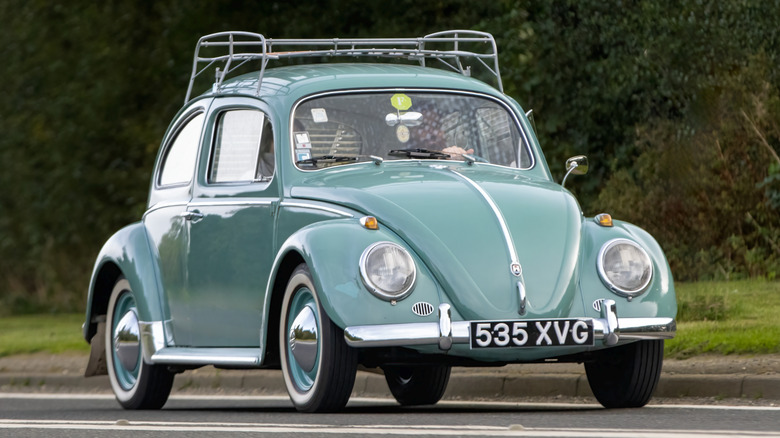
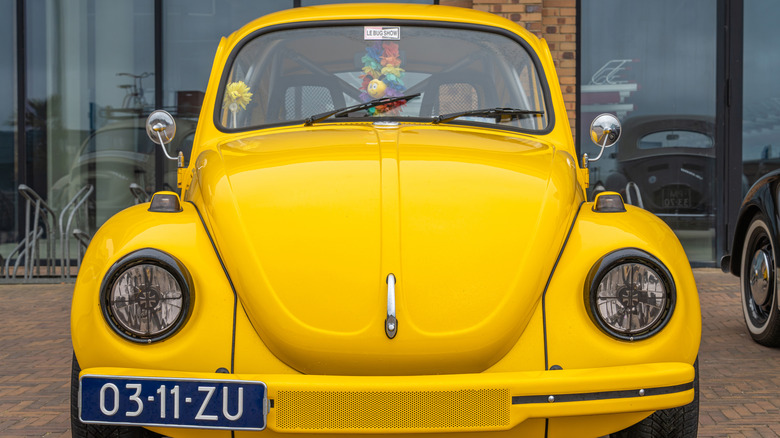
Originally designed by Ferdinand Porsche, the charming Volkswagen Beetle is one of the most beloved cars in history. Porsche intended for the car to be a budget option for German drivers, so from the very beginning the Beetle was aimed at mass appeal. The car's chassis holds its engine, transmission, and suspension, meaning that the signature Beetle body can actually be entirely lifted off the functional part of the vehicle. That's one of the key features that makes the Beetle less of a single car design and more of an open platform.
The Beetle may actually technically be a copy itself. The design has some significant similarities with a car designed by Hans Ledwinka and manufactured by Tatra several years before the Beetle hit the market. Tatra even sued Volkswagen over the design, but the German company ultimately won the suit. The story doesn't end with Tatra and Volkswagen, however.
The Dune Buggy is based on a Beetle chassis, and companies like Bradley Automotive built exotic-looking bodies that in reality use the Beetle design as the core of their functionality. Volkswagen itself used the Beetle as the basis for other designs like the Brasília. Of course, as great as the replicas all are, none of them quite measure up to the original, a car so well-known its the basis of road trip games like "slug bug" and the inspiration for fictional characters like Herbie the race car.
Hummer
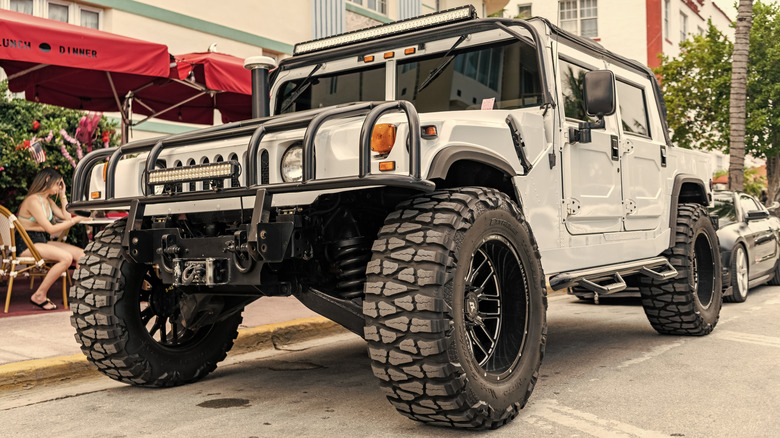
In the early 1990s, a new car design from AM General brought off-roading capabilities and military aesthetics to the consumer market. The box design of the Hummer has echoes of the G-Wagen, but it's actually based on Humvee used by the United States military. The Hummer design takes off-roading safety concerns into consideration, giving drivers a vehicle that can handle the daily commute just as easily as a wilderness adventure. It almost immediately inspired copycats around the world, the demand for which only increased when the Hummer itself was discontinued in 2010.
GMC revived the Hummer in 2020, making for something of an official copycat of the original design, but it's far from the first attempt at recreating the Hummer. General Motors purchased the Hummer brand back in 1998, and before producing a copycat of the original, the company released its own versions, somewhat more unique versions of the Hummer. The H1, H2, and H3 are the official Hummer copycats with the most mass appeal, particularly in the United States.
Outside of the U.S., other companies also made their own versions. In China, the Dongfeng Mengshi was literally built onto a Hummer chassis in its early days. In Japan, Toyota released the Mega Cruiser, which wasn't built on a Hummer chassis but still looked nearly identical to the beloved boxy vehicle. Today there's no shortage of Hummer-adjacent designs and kit cars meant to mimic the original, so would-be Humvee owners have lots of options.
Range Rover
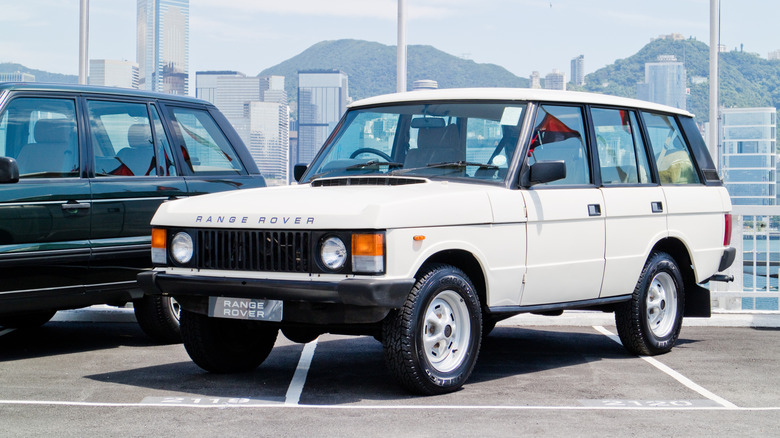
Great multi-row SUVs are commonly seen on the road today, but the four-door Range Rover is a big part of what helped get us here. Developed in the late 1960s by British Leyland, the first Range Rover hit the market in 1970 to near-immediate success. Drivers were thrilled by the vehicle's attainable pricing, and they were incredibly enthusiastic about its stripped-down, utilitarian design. Today the Range Rover might look inconspicuous on the road, but when the vehicle was first introduced, the design so striking that it got featured in an exhibit at the Louvre.
Range Rovers weren't readily available in the United States until Land Rover started importing its vehicles in 1987. Before that, would-be Range Rover owners in the U.S. had to rely on grey market deals, and many of them did. In other places, car enthusiasts bought from companies with copycat designs. In 1974, the Fiat Nuova Campagnola Station Wagon became one of the go-to alternatives to the Range Rover throughout Europe. In Russia, the French Matra Rancho was also made with parts originally sourced from Land Rover itself. The copycat trend didn't end after the boom of the '70s and '80s. Chinese manufacturer Land Wind launched its X7 SUV in the mid-2010s, and the vehicle was such a carbon copy of the Range Rover Evoque that Land Rover sued the company and won in a Chinese court. That lawsuit didn't do much to discourage copycats, however, and as recently as 2024, consumers could buy ridiculously cheap Range Rover lookalikes from places as unlikely as Alibaba.
Subaru Outback
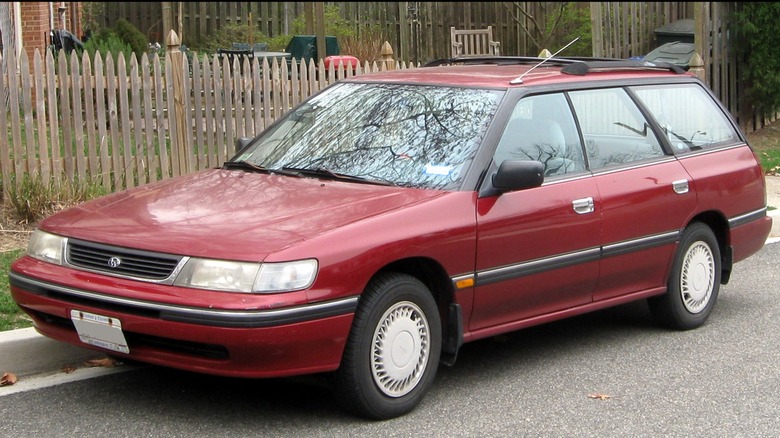
When Subaru released the Outback in 1995, the company was trying to establish a new kind of vehicle. Trying to bridge the gap between two different types of consumers, the Outback billed itself as "The World's First Sport Utility Wagon." The Outback is an all-wheel drive vehicle built on a raised, station wagon-style chassis. That crossover basically kicked off a new trend for consumers and vehicle manufacturers that later led to vehicles like Toyota's RAV4 and Honda's CR-V.
Arguably all crossover vehicles are inspired by the Outback, but they aren't all copies. That said, there are some designs that attempted to capitalize on the crossover trend by essentially recreating the Outback from the ground up. Vehicles like the Volvo Cross Country and the Audi A4 Allroad are both sporty station wagons, but they distinguish themselves from the Outback by opting for a more stylish aesthetic and by targeting higher-earning consumers. On the other hand, a car like the Honda Orthia is targeting the exact Outback consumer, because it's essentially an Outback from the ground up. The Outback's unique form factor is flexible enough to be turned into budget vehicles and luxury automobiles, and because of that there's probably going to be a few more generations of copycats at the least.
Lotus Seven
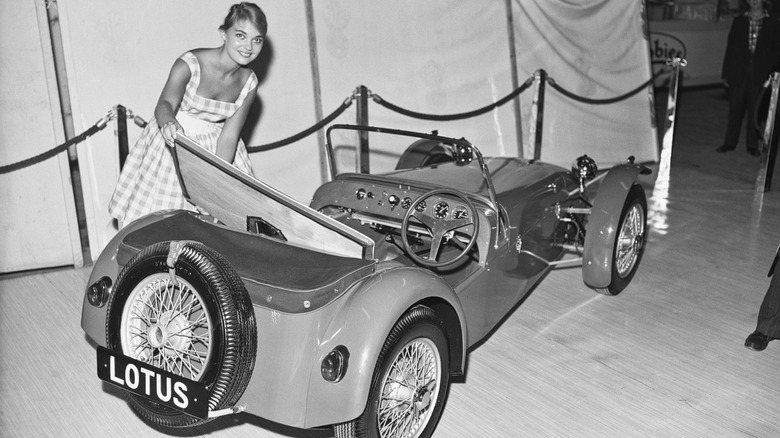
From its debut, the Lotus Seven was begging for other companies and designers to put their own spin on it. Colin Chapman created the car in 1957 with a particular type of customer in mind. Chapman initially sold it as a kit, allowing enthusiasts to build their own version of the vehicle from the ground up.
The kit scheme meant that the Lotus Seven was fairly easy to construct, and as the vehicle became more popular, hobbyists started creating their own versions. The original design was purchased from Chapman by Caterham Cars in 1973. Caterham immediately began producing its own version of Chapman's Lotus Seven, which it still does to this day. Caterham wasn't the only manufacturer interested in reproducing Chapman's design. Berkin Cars released its own version called the Berkin S3, and around the world other manufacturers like Fraser Cars, Brunton Auto, and World Class Motorsports also developed Lotus Seven copycats.
One Lotus Seven replica was so close to the original design it caused a legal battle. Westfield Sportscars, a U.K.-based company, released the Westfield 7SE in the mid-1980s and promptly got sued for copyright infringement by Caterham. Westfield lost the lawsuit and had to make drastic changes to the design of its vehicles. Despite that cautionary tale, plenty of other companies continued to play on the Lotus Seven's design, and today it's one of the most-copied car designs in automotive history.