

Why Is Ford's Modular 4.6-Liter 2-Valve V8 Engine So Reliable?
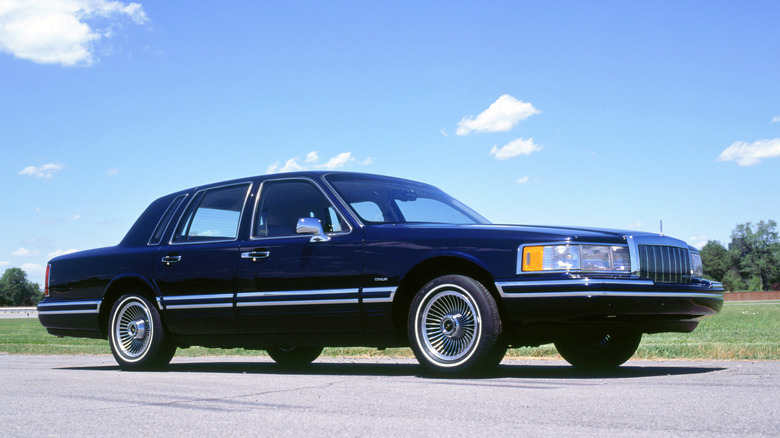
One of the most prolific engines in use today is Ford's Modular series, a powerplant with a base that goes all the way back to the 1991 Lincoln Town Car. It's seen a wide variety of iterations over the years — multiple displacements, single and double-overhead cam setups; two, three, and four-valve configurations, and countless upgrades to keep it relevant in modern traffic. The Modular umbrella encompasses everything from the ubiquitous Coyote 5.0 to the 5.4 Triton and its derivatives, the 5.8L Trinity all the way up to the 6.8L V10. But that legacy didn't start itself — it was built on a foundation of solid bedrock: the 4.6L 2V V8.
What's funny is that, at the time, the 4.6L Modular wasn't particularly well-received. It was a relatively underpowered and novel approach to the V8 zeitgeist, that being large-displacement pushrod engines. By contrast, the Modular was a single overhead-cam design fitted to a big, lazy luxury car. Its internals were noticeably more complicated as well, thanks to the camshafts requiring chains, specialized valvetrain components, and more that were unheard-of in most American V8s of the time period. And yet it's this very engine which spurred a legendary reputation of reliability that persists to this day — why is that?
It's actually a combination of multiple factors. For one, it was fitted to some of the most durable platforms in existence, and the engine's anatomy was also designed to handle more power than it produced. After all, engines with 1,000-plus hp aren't impossible; the trick is making all that power reliably. Having an overbuilt, underpowered engine is an excellent formula for bulletproofing. Let's explore some more.
The cars that boosted its reputation

The 4.6L 2V, an engine distinctly separate from the 3V by more than just the valvetrain, cemented its reputation by powering some of the most durable cars on the road, chief among these being the ubiquitous New York Taxicab. Once upon a time, New York City was flooded with Crown Vic taxis. They were relatively roomy Panther-bodies with plenty of grunt, something which undoubtedly many cabbies took advantage of when firing their yellow missiles into the middle lane of Fifth Avenue day after day.
Granted, the taxi firms do regular maintenance, but these cars were driven hard in some of the densest-populated places on the planet for virtually their entire service lives. The same thing applies to the Crown Vic police interceptor and countless other fleet vehicles — the 4.6 was basically the "do everything" engine. Late-model taxicabs even came standard with flex fuel capability with their SOHC 4.6s, providing even more excuses for people to keep buying them.
And buy them, they did. Ford kept this engine in passenger service until 2004, using it in everything from Mustangs and Panther-body sedans to full-size trucks and SUVs like the F-150 and Explorer. It was reasonably powerful as well, producing 240 hp and 280 lb/ft torque in its final consumer-grade iteration, albeit upgrading the engine also became commonplace. Its reputation as an engine readily able to accept good power helped engender it to the modding community, certainly helped by its parts-commonality with other more powerful Modular engines.
Designed with durability in mind
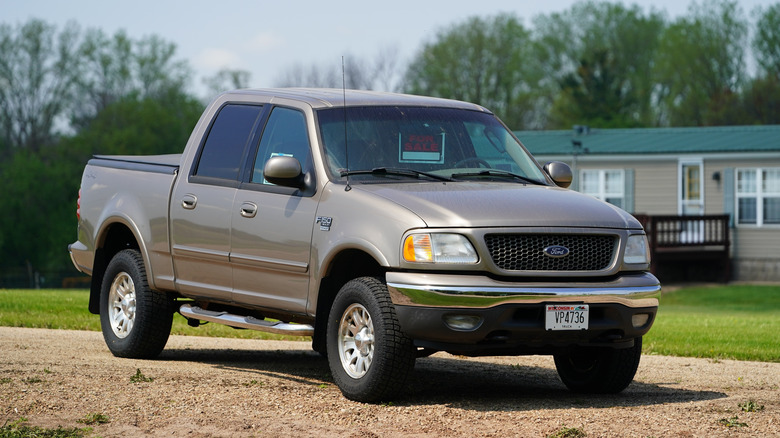
The early 1990s marked a transitional period in American car culture. The days of the carbureted, pushrod V8 were almost over, replaced little by little with overhead-cam setups sporting multi-port fuel injection. The Modular was among the first examples of such an engine fitted to a car, and it was designed from the outset with the knowledge that it would likely serve as the basis of Ford's V8 line for decades. That's part of why these engines are called "Modular." It's a baseline that allows Ford to build out any number of configurations with all sorts of power figures.
What that means is that the "weakest" link in the chain must still be strong enough to cope with the power of the strongest link. The whole point is to simplify logistics by building a relatively similar block between models so you don't need a million different tooling jigs; what that translates to is the underpowered 4.6L 2V being overbuilt for its purpose.
It features a deep-skirt, 90-degree construction with either six main bolts in passenger cars or eight steel mains in trucks and SUVs. Engine blocks were either cast iron or aluminum, fitted with forged pistons and powdered conrods. Even the heart of this engine was built to last. Take the engine timing, for example. Ford uses a complex but undoubtedly robust timing chain setup, featuring two chains running along hardened plastic guides.
While the 4.6 2V has no outstanding major recalls, it's not without its flaws. The plastic timing chain guides can wear, it can blow out spark plugs, and the intake manifold is prone to leaking. But those are relatively minor issues on one of Ford's most impressive engines of all time.