

Should You Remove The Batteries From A Flashlight When Not In Use?
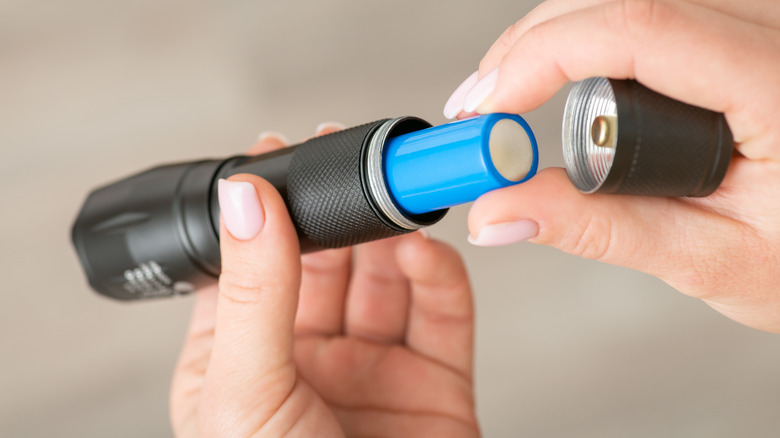
Whether you're using a bright flashlight several times a week or a few times a month, you want to get the most out of your batteries. That's why it's a good idea to take the batteries out of your flashlight when you know you won't be using it for a while. Doing so could help preserve their life.
While turning a flashlight off stops it from producing light, some flashlights can still experience a small amount of battery drain after the fact. This residual current drain is due to the electronic circuitry inside the flashlight. But beyond preserving their life, removing batteries can help prevent damage inside the flashlight as well. Old or dead batteries can corrode the contacts inside the device, which could interfere with the electrical connection and keep the flashlight from working properly.
A 2019 lawsuit involving certain Duracell LED flashlights shows what could happen when a light continues using power while switched off. In the lawsuit, the plaintiffs alleged that some models could drain their batteries in less than a month, potentially leaving the flashlights unusable during an emergency. Duracell later introduced models advertised as preventing battery drain while turned off, and the company eventually agreed to a $2.2 million settlement in 2020.
How to maintain your flashlight batteries
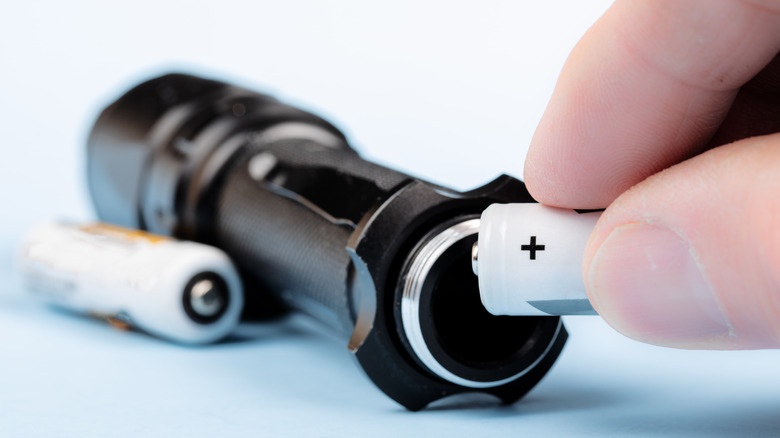
If batteries leak inside your flashlight, you should remove them in a well-ventilated area. Wear household gloves and safety glasses to protect yourself and keep the leaked chemicals away from your eyes and mouth. Don't just toss out the batteries, as used batteries should be recycled when collection programs are available. If you're storing the batteries before taking them to a collection site, be sure to keep them in a non-metal container.
To clean the flashlight, use an old toothbrush or cotton swab to remove the chemical residue from the electrical contacts. For alkaline, NiCd, or NiMH batteries, you can use a half-and-half mixture of diluted vinegar or lemon juice and water to clean the affected areas. Then let the flashlight dry completely before installing new batteries and don't allow the new batteries to get wet in the process.
To help prevent future leaks from happening and to properly maintain your batteries, it's important to use the correct size and battery type recommended for your flashlight. Make sure the batteries are inserted correctly and don't mix old and new batteries. You also shouldn't mix different battery types or brands, and when it's time to replace the batteries, you should change all of them. Avoid exposing the batteries to extreme temperatures, which can decrease their performance and cause leakage to occur.