

What's The Difference Between Daikin Standard And Premium Inverter Models?
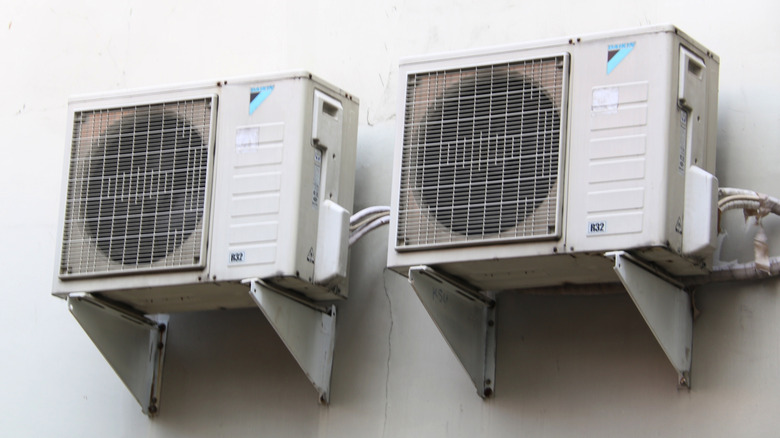
If you're familiar with home heating and cooling brands, then you probably know about Daikin Industries, the world's largest HVAC manufacturer. Daikin owns several air conditioner brands, but also sells air conditioning units under its own name. It also has two lines of inverter ducted ACs, Standard and Premium. The main differences between them involve performance and flexibility.
Daikin's Standard Inverter models are designed to provide efficient air conditioning while taking up as little physical space as possible. These systems use a DC fan motor, a Cross-Pass heat exchanger, and increased outdoor coil passes to improve energy efficiency. Their indoor units are no taller than around 14 inches, making them ideal for homes with limited roof space, while some models use a side-discharge outdoor unit for added flexibility. R22 retrofit capability is also available on some models, allowing existing field piping to be retained for the newer system.
Daikin's Premium Inverter models are geared toward applications where energy performance and installation flexibility are key priorities. In addition to the DC fan motor and Cross-Pass heat exchanger used in the standard inverter, premium models feature improved refrigerant control technology. A refrigerant-cooled PCB allows these inverters to work in ambient temperatures up to 122 degrees Fahrenheit. Daikin's Premium Inverter also has R22 retrofit capability.
Understanding inverter AC technology
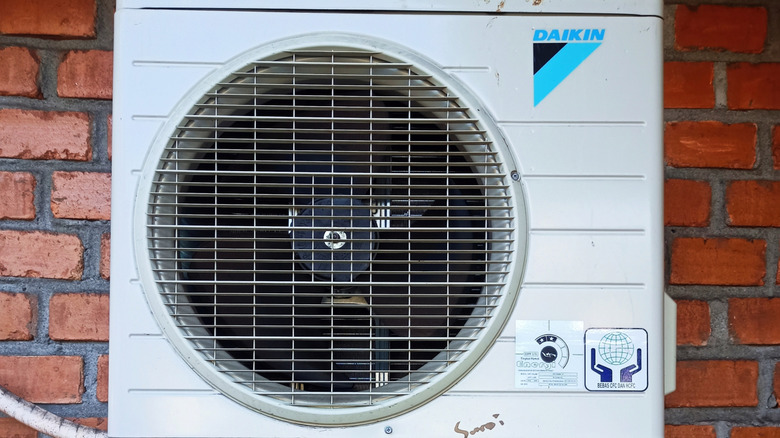
While many homeowners understand how HVAC systems essentially work, the technology that some manufacturers use can be a bit confusing. Daikin Industries uses inverter technology, which lets an air conditioner vary its motor speed to match the amount of heating or cooling needed. This means that instead of running at a fixed speed and repeatedly turning the motor on and off to maintain the set temperature, an inverter system can adjust its output as conditions change. This can help decrease energy waste and allow the system to keep a more consistent indoor temperature.
Inverter air conditioners can also have benefits beyond energy efficiency. Because the compressor rarely needs to operate at full power, inverter systems tend to run more quietly than non-inverter air conditioners. They can also cool a room more quickly and respond to small temperature changes better than conventional systems. Additionally, the improved efficiency can help reduce operating costs over time.
However, inverter AC systems do have some drawbacks to consider. While they can save you some money in the long run, they can cost more upfront than conventional models. But it's worth noting that the cost gap has somewhat narrowed, which is why it's smart to compare prices before buying. Proper sizing is also important with inverter systems. If the unit is too small for the space, the compressor may have to run at full power constantly, which can limit the system's ability to operate as designed.