

Should You Keep Your HVAC Set To 'On' Or 'Auto' In Summer?
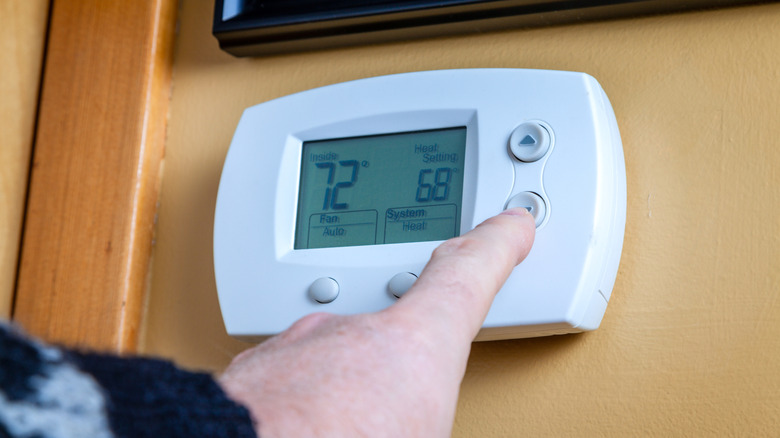
According to the U.S. Energy Information Administration, it's estimated Americans will see an increase of 5% on their power bills in 2026. The rising expense of staying cool might have some looking for a way to cut costs, including the use of smart thermostats this summer. One idea floating around the web, is whether or not setting your HVAC system fan to "on," is better than keeping it at "auto." When set to "on," the system fan will run continuously, versus when set to "auto," it operates intermittently only when your HVAC is producing cool air. So, which one should you use?
It depends on factors like the climate you reside in, the age and health of your system, and how well your home is insulated. The average lifespan of an AC unit usually tops out at around 10 years, and properly caring for it is essential for longevity. As you might expect, with your fan running continuously, you'll use more energy than with things set to "auto," but it ultimately comes down to preference. In terms of costs between "on" and "auto," the former will cost you more, though it's typically only around 5%.
Humid climates and aging HVAC systems

The component within your air conditioner that produces the cool air and removes humidity is called an evaporator coil. When set to "auto," the fan only engages when the evaporator coil is running and blows that cool air into your home. In states that experience high humidity, keeping the fan on, which runs even when the evaporator coil isn't, will bring in untreated moist air, potentially making things uncomfortable. So, if you opt to keep the fan running, you may notice indoor humidity levels climbing.
Conversely, an older home prone to uneven HVAC performance from room-to-room, might benefit from a constantly running fan. Some aging air conditioning systems may struggle to produce even cooling, with temperature swings from room to room. In this case, setting the fan to "on" would circulate airflow and provide more universal results. You can also use ceiling fans to help circulate colder air, which is just one of the tips to keep your air conditioner running optimally during a heat wave.
System wear and filtration
Another thing to keep in mind when setting your system to "auto," is the additional wear the components will experience. For instance, the motor driving the fan will kick on and off repeatedly throughout each day of the summer season. This can result in the part fatiguing more rapidly than it might running continuously. A blower fan can cost in the hundreds of dollars to replace, though it depends on several factors.
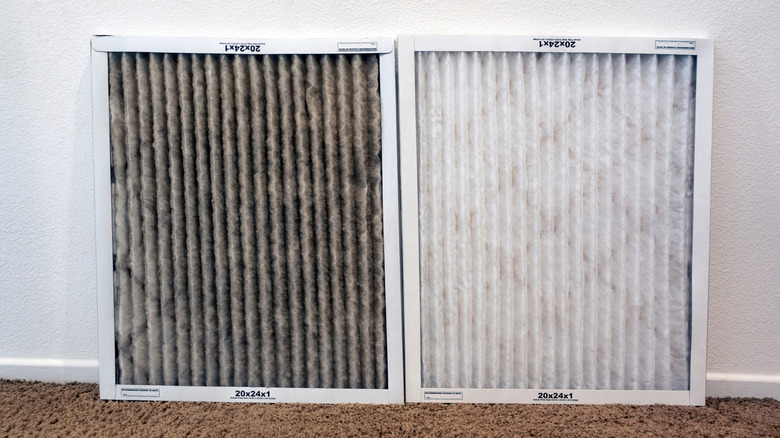
Filters and the quality of indoor air are also affected by the fan setting. When set to "on," those HVAC filters are continually working. This means that you'll need to replace filters more often in order to keep your system healthy. On the plus side, with that fan running continually, your indoor air is constantly being cleaned. But failing to regularly replace filters can leave them clogged, meaning the system will work extra hard to push air through.