

Why Are American Car Brands Getting Back To Making More Combustion Engines?
The U.S. is getting back into an internal combustion groove, thanks to some recent actions taken to reduce the number of electric-powered vehicles that are sold on our shores. Foremost among these actions are the current administration's elimination of the $7,500 tax credit that was formerly provided to buyers of new electric vehicles, along with a $4,000 credit toward a used EV.
American car brands find themselves in a situation where their larger, internal combustion-powered vehicles like pickup trucks and big SUVs are generating most of their current profits. But the real global threat is the massive advantage that the Chinese carmakers have in manufacturing EVs. How the American automakers face this challenge will decide the future of the industry. EV sales are currently 5.8% of all new car sales as of the second quarter of 2026 and if you're interested in purchasing an electric, we have the lowdown on the 5 top-selling EVs in 2026.
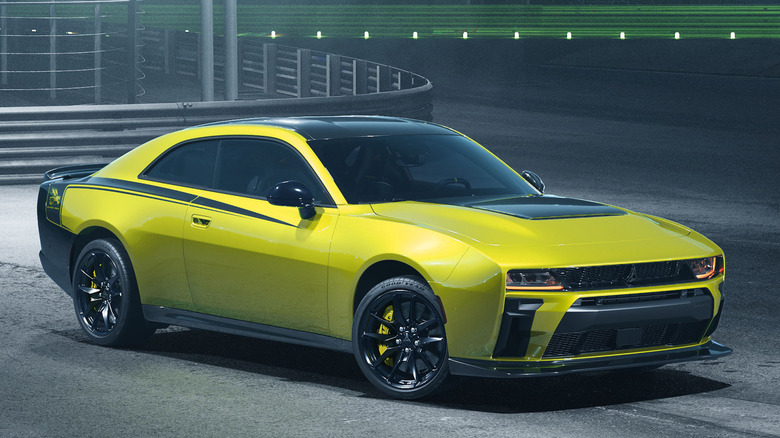
A simple process of subtraction, therefore, tells us that 94.2% of all vehicles sold here will have a combustion engine, either alone or paired with a hybrid system. And while many carmakers are expanding and promoting their hybrid options to deal with high pump prices, there are also those who are fully committed to letting their horsepower flags fly, like Stellantis has with the recently announced, 600-horsepower Dodge Charger Super Bee, shown above. So if it's power that you want, we have compiled 13 of the highest horsepower cars on sale. In America, you can truly have it both ways.
What should American car brands be doing about their combustion engines?
It would be very helpful to their overall sales if American carmakers were to actually have more hybrid models. Many mass-market vehicles from manufacturers based in Japan and South Korea are available with hybrids, which now represent 15.4% of new car sales, with Hyundai, Honda, and Toyota capturing 86% of hybrid sales. General Motors currently has no hybrids in its lineup that are intended to improve fuel economy. While it is true that the Chevrolet Corvette E-Ray and ZR1X do use hybrid drivetrains, they are there to provide added performance and not better mileage. General Motors has promised to add some hybrids in important segments in 2027.
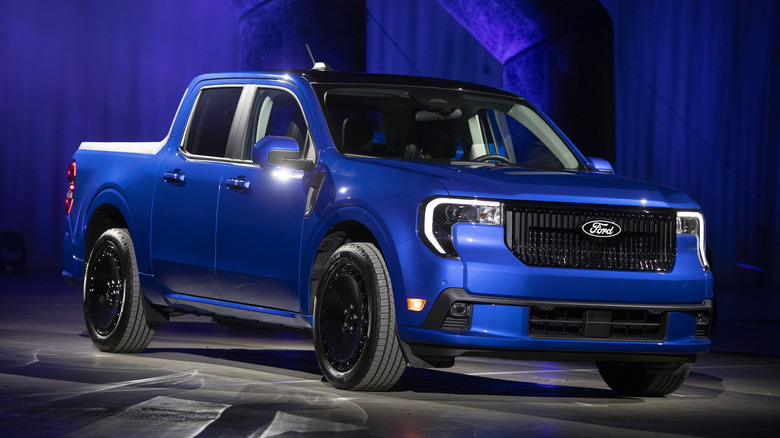
Ford does have a few hybrids. These include the Maverick hybrid, the Escape hybrid and plug-in hybrid, and the F-150 hybrid. Then there's Stellantis, which cancelled its entire lineup of three plug-in hybrids this year, which consisted of the Chrysler Pacifica, the Jeep Grand Cherokee 4xe, plus the Jeep Wrangler 4xe, and we learned that it's not the only model on the chopping block. As to what's left in the U.S. Stellantis stable, the new 2026 Jeep Cherokee is available with a hybrid powertrain, while the Ram 1500's 48-volt hybrid system will be phased out during the 2027 model year. Range-extender powertrains are also slated for the Ram 1500 and Jeep Grand Wagoneer models in 2027.
If American car brands are hooked on combustion engines, it stands to reason they should learn how to make electrified vehicles like hybrids. It might help when the Chinese eventually hit us with their low-cost EVs.