

How Many Lumens Should An Emergency Flashlight Be?
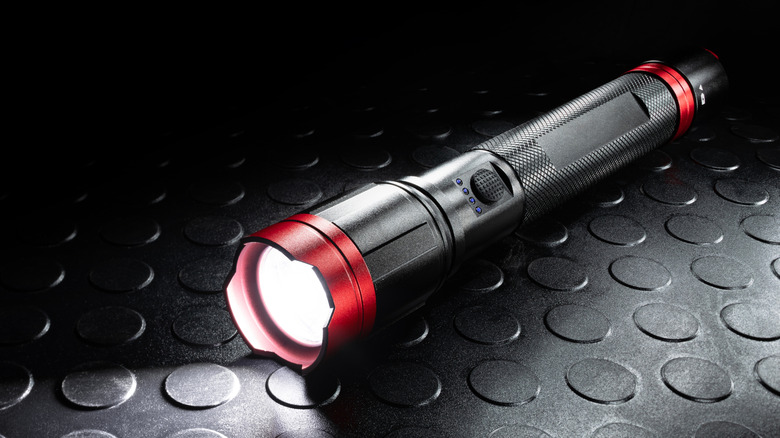
Flashlights come in many forms, from various light colors to different brightness ranges. The latter is the most important thing to focus on when it comes to an emergency flashlight. Measured in lumens, the higher the number, the brighter the flashlight is. How efficiently a flashlight illuminates the area also depends on other things, such as its optics, but we won't go too much into that. So, how many lumens should an emergency flashlight have? The answer primarily depends on your activity and location.
To give you a better idea of how many lumens are needed in certain situations, the US Department of Labor has issued guidelines for the work environment. For instance, accessways, exits, gangways, stairs, and walkways should be illuminated with a minimum of three lumens per square foot of space, while changing rooms, showers, toilets, and break areas should have a minimum of 10 lumens per square foot of space. First aid stations and offices go to 30 lumens.
A bright emergency flashlight should have an adjustable brightness range going from about 20 to 1000 lumens. Around five lumens is enough to read when in complete darkness, but you'll need up to 10 times that to comfortably navigate a hallway. An emergency flashlight with up to 300 lumens will suffice to light up the whole room in most cases. The needed lumens change based on the activity, and up to 1000 lumens and above is reserved for outdoor activities. Also, do note there's much less brightness difference going from 600 to 700 lumens, compared to 100 to 200 lumens. The math says that if you want your flashlight to reach twice as far, you'll need four times the number of lumens due to the way our eyes perceive light.
What makes a good emergency flashlight?
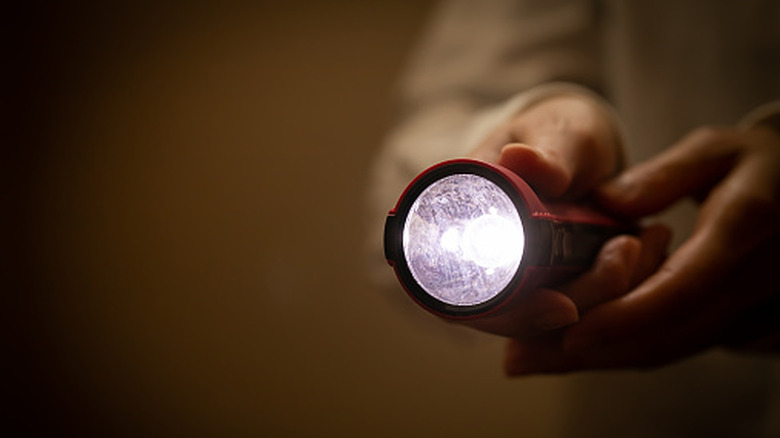
There are several solid and popular flashlight brands out there, and when buying one, keep an eye on specifications other than just lumens. For example, runtime is rather important for an emergency flashlight. In many cases, you're much better off having a 200-lumen flashlight that lasts for eight hours than a 1200-lumen one that runs for an hour. You'll need to consider the battery life as well to avoid a power-hungry gadget with more lumens than you'd possibly ever need.
Additionally, check if a flashlight runs on common disposable batteries (AA/AAA) or USB-C rechargeable batteries versus an internal rechargeable battery and prepare accordingly so you aren't left in the dark during a prolonged power outage. Ideally, you'll want an emergency flashlight with multiple brightness modes. This means that the flashlight can switch to a lower brightness level when you don't need much light to conserve power, but can also be cranked up for outdoor use.
It's worth noting that high lumens don't automatically mean that a flashlight will cover a huge area. Beam pattern plays a role here too, as some flashlights with lower lumens can reach much farther than high-lumen flashlights. This is because certain models have a concentrated beam that focuses on a smaller area but has more reach, while others are designed to illuminate a wider area with a smaller reach.