

Why Modern Wind Turbines Turn Clockwise – But Traditional Dutch Windmills Didn't
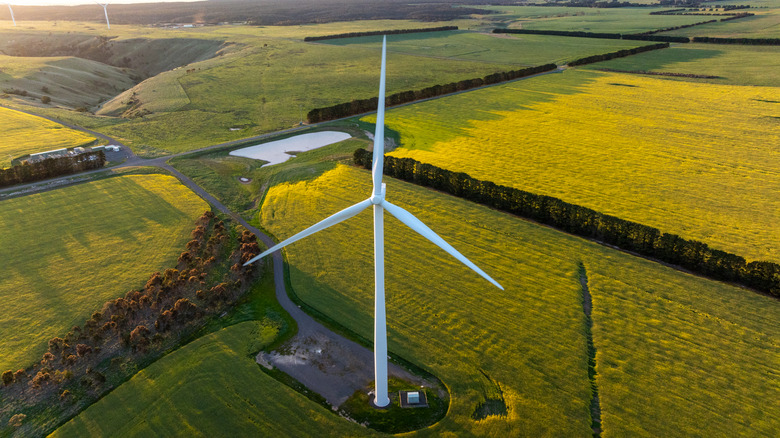
Today, most modern industrial-scale wind turbines rotate clockwise, but there's no fundamental engineering law, scientific benefit, or mathematical reasons that require them to do so. Rather, it's about trying to distinguish modern-day turbines from traditional European windmills. Back in the day, Dutch and Danish designs typically rotated in the opposite direction. In fact, traditional Danish windmills only turned counterclockwise because of the work habits of right-handed millers. The thin ends of the wooden laths used to make the blades were positioned toward the left simply because that orientation felt more comfortable for the right-handed craftsmen working on them.
Beyond that, it had nothing to do with location, terrain, weather, or day-to-day operations like how they pumped water from underground. That counterclockwise tradition later carried over into the designs of some early wind turbines, but it wasn't until the development of modern fiberglass blades that things started turning the other way.
What's more efficient, clockwise or counterclockwise wind turbines?
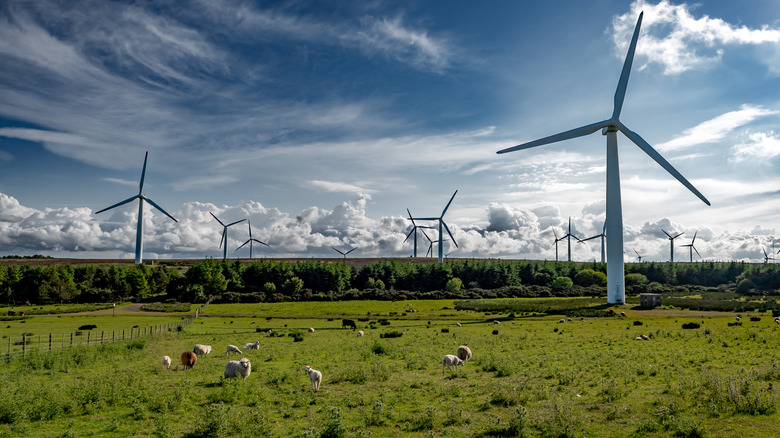
A little history lesson: In 1978, Erik Grove-Nielsen and his wife Tove developed the very first fiberglass blades. They were five meters in length, and they rotated clockwise to distinguish themselves from those made by the pioneering Tvind company. In the years that followed, the two competing designs evolved along separate paths: Windmatic and Tellus continued on with counterclockwise rotation, while Vestas, Bonus, Nordtank, and Enercon stuck with clockwise rotation. Little by little, counterclockwise was phased out and clockwise became the standard.
But does direction actually matter for efficiency? In short, no. For individual turbines, the differences between clockwise and counterclockwise rotation are generally pretty small. Studies by the European Academy of Wind Energy show you'll really only start to see an issue with specific directions on large wind farms. There, if they were all spinning in different directions, one turbine's rotation could reduce the power available to a turbine positioned behind it. Basically, it doesn't matter the direction so long as they're all spinning the same way. And with clockwise being the established standard among the largest wind turbine manufacturers, there'd be no real reason to change that.