

What Makes The Canopies Of Modern Fighter Jets Like The F-35 So Special?
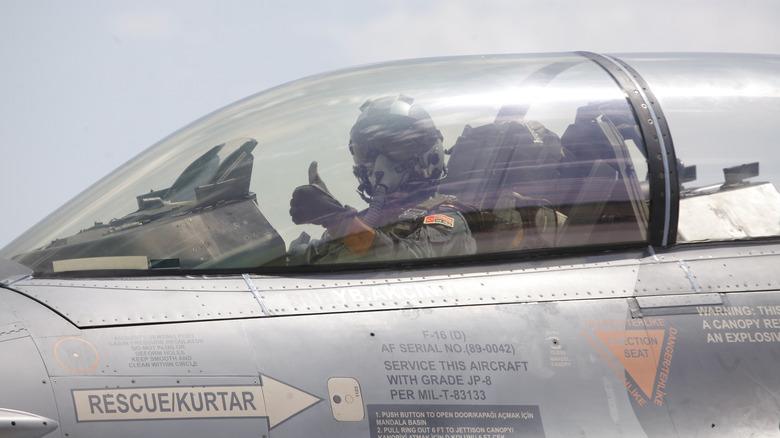
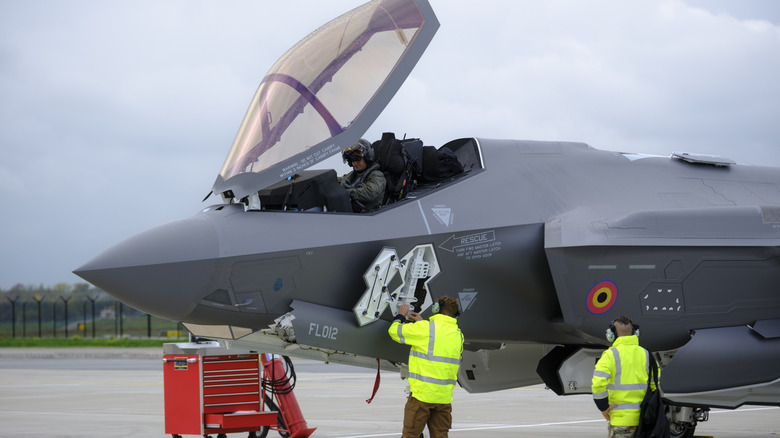
The canopy is one of the most vital components on just about any modern fighter jet, including the popular F-35 model. After all, it's the primary line of defense between the pilot and the crushing pressure of the air flying past them. They're equipped with safety features like the zig-zag lines of the Canopy Severance System and a front-closing latch. Those aren't the only factors that make these canopies so special, however. Modern fighter jets like the F-35 have a fascinating array of features hidden within their canopies, from ice-busting heaters to conductive radar-blocking layers.
Fighter jet canopies are built from polycarbonate- or acrylic-based composite materials, with additional components and/or coatings added to the mix depending on a jet's particular mission and purpose. By carefully selecting coatings, pilots can both fend off the worst of atmospheric conditions like frost and fog and cover potential weak spots from enemy combatants. You may be surprised how many of a fighter jet's important features are located on or, in the case of the flap behind the F-35B's cockpit, near the canopy.
The canopies are made of special materials with multiple functions
Coatings can be applied to fighter jet canopies in a few different ways, from the relatively standard lamination coating to more advanced methods like physical vapor deposition and magnetron sputtering. These methods apply coatings down to the molecular level, creating a layer that's thin and malleable while still sticking strong. Canopy tint is also frequently selected and formulated during this process, with different air forces around the world using different tints both to signify their allegiance and serve various environmental needs.
Speaking of environmental needs, that's a big factor in selecting canopy materials and coatings. Certain external canopy coatings help to dissipate the static electricity that jets typically accumulate from air friction while in high speed flight. Inversely, other coatings can have electrical currents sent through concealed heating elements to quickly disperse ice and fog in cold conditions. Canopy tints are particularly vital when a jet is operating in especially hot, sunny climates, as they protect the sensitive avionic equipment in the cockpit from intense heat.
Sunshine isn't the only thing the canopy protects avionics against, though. The components and coatings of the canopy may include a special thin film that protects everything beneath it from electromagnetic interference, ensuring enemy forces can't scramble avionics with directed radar wave attacks. This has the added benefit of scattering incoming radar waves in general, which makes the jet harder to detect.