

Apple AirTag Vs. Google Pixel Tag: Which Has More Features?

The latest battle in the ongoing innovation war between Apple and Google is upon us. On August 12, 2026, Google announced its rival to the Apple AirTag: the Pixel Tag. It comes with a feature set that puts it in direct competition with Apple's take. It basically works the same as an Apple AirTag (that is, to help people find their misplaced belongings), and both devices are priced the exact same, as well. The Pixel Tag costs $29 for one or $99 for a four-pack, which is identical to the pricing structure of Apple's second-generation AirTag. But which has more features?
Given the fact that this is only the first iteration of the Pixel Tag, while the Apple AirTag just upgraded to its second, AirTag is the one with more features to offer. Sure, they both cover many of the same basics, but Apple's tracker offers more precision finding, a better crowdsourced tracking network, and more unwanted-tracking protections than Google's Pixel Tag. You also get support for sharing a lost item's location with participating airlines and other trusted third parties. It's simply a much broader feature set than what you get with this long-rumored first-gen Pixel Tag.
How the Google Pixel Tag compares to Apple AirTag
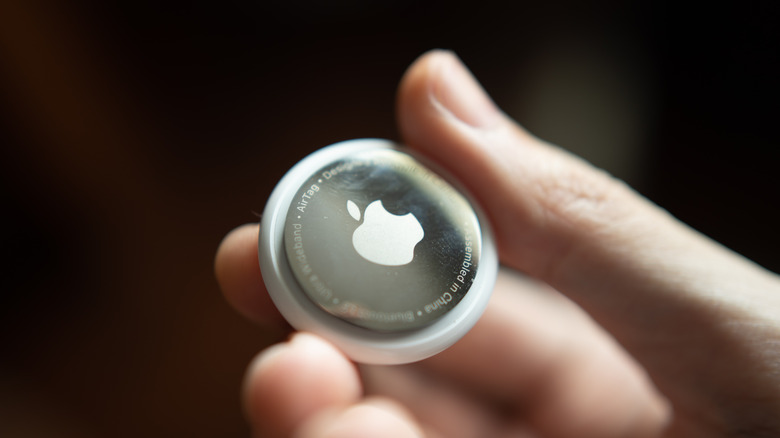
That being said, the Pixel Tag still has plenty to offer. Its Find Hub network leverages the millions of Android devices out there to help locate a lost item when the tag is outside Bluetooth range. If you're not an Apple user, that's really nice to have. Not unlike the Apple AirTag, users can also ring the Pixel Tag. You also get Ultra-Wideband and Bluetooth Channel Sounding for more precise visual distance and directional information, plus Left Behind alerts to warn you when you've left an item behind. Uniquely, the Pixel Tag can also be shared with up to 10 people, which is nice for those belongings that get used by multiple people. Its button can ring a paired phone, while a paired Pixel Watch can pinpoint and ring the tag from the watch. Pixel Buds owners can also ask Gemini to ring it.
Still, the AirTag combines most of those capabilities with several additional features that the Pixel Tag doesn't offer. The best example is the aforementioned Share Item Location, which lets you temporarily share the location of a misplaced item with a trusted third party to help you track it down (such as an airline, for example). AirTag also comes with free personalized engraving and works with existing AirTag accessories. You essentially get the same basic tracking tools found on the Pixel Tag, just with more recovery and sharing features.