

Why Are There Different Speed Limit Signs For Trucks?
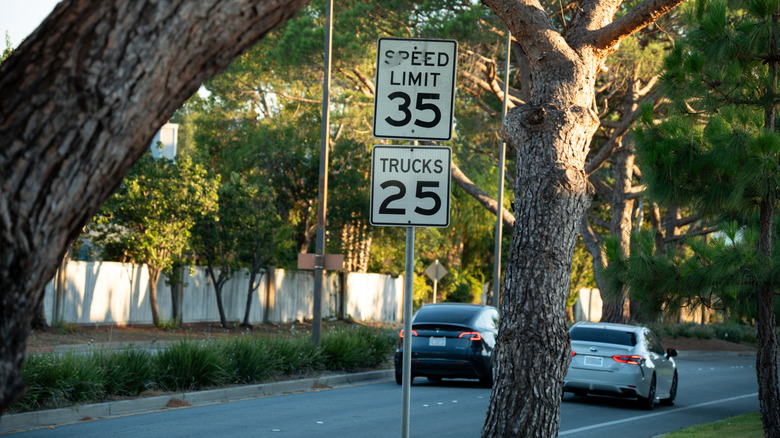
Ever driven down the interstate and noticed a different speed limit for trucks than the one passenger cars have to follow? Never faster, always slower: that's how trucks have to drive on these bifurcated roads. It's definitely a little puzzling at first glance, but it makes a lot more sense once you learn the reason why.
To state the obvious, large commercial vehicles behave differently on the road than passenger cars. But the need for two different speed limits goes beyond this surface-level observation. A truck's size, weight, tires, braking ability, and handling characteristics can all affect how safely they can travel at a given speed, not to mention weather conditions. All that adds up to make a truck's maximum safe speed lower than a car's under the same conditions. So, in some states and on some roads, transportation officials rely on different (or "differential") speed limits for trucks compared to passenger vehicles. That brings down a truck's legal top speed on the freeway.
Not everybody's a fan of them, however. Some cite research that says rural interstates benefit from differential speed, while other research argues two different speed limits create a different set of safety problems than the ones they're intended to solve.
Why some states use them and others don't
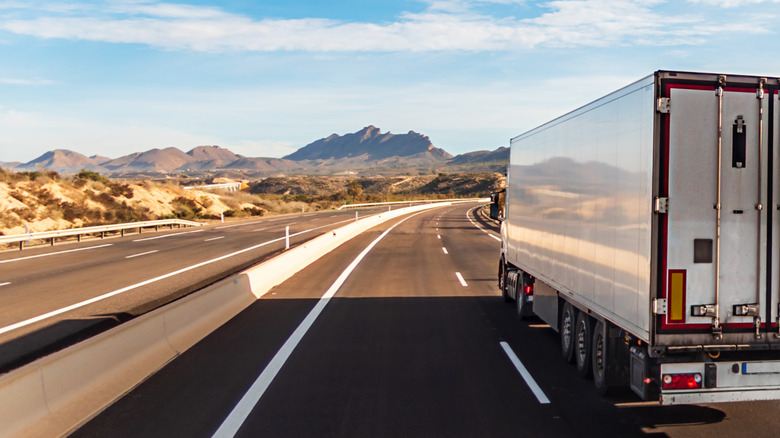
So what's the truth? Is it safer for a truck to move as fast as passenger cars, or to have them moving slower? The answer depends almost entirely on the road and driving conditions. Road geometry, pavement friction, braking ability, tire characteristics, sight distance, weather, even the vehicle itself... it can all affect how fast it is safe to travel. That's true of both trucks and passenger cars. But trucks add another important factor into the mix, and that's more weight. The heavier the weight, the greater the distance needed to stop. A variable speed limit system can help account for all these changing conditions by lowering the displayed speed for trucks.
But lowering the truck limit can also create a larger speed gap between cars and trucks, which is the main argument against differential limits. Critics say a truck traveling significantly slower than the surrounding traffic actually interacts with other vehicles more often because of how often they have to be passed. (That fact alone was enough to get differential speed limits removed in Idaho in 2026.) At the end of the day, it's an issue to be debated on a state-to-state level. For now, the one consistent thing across the board is the reason why: because trucks have different physical and operating characteristics. Whether separating their speeds improves overall highway safety or not will, no doubt, continue to be debated.