

What Makes A Chainsaw A 'Pro' Saw?
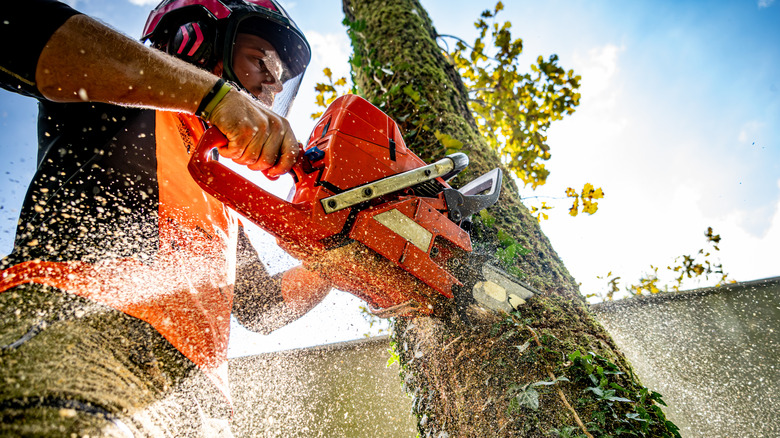
When some DIYers need a chainsaw to clear trees on their property, they may use a model from one of the major brands and never need anything else. But for bigger and more demanding jobs, some homeowners may decide to trade up and get a pro saw instead. However, there is no universal specification that makes a chainsaw "professional." Instead, manufacturers classify their chainsaws according to the level of work they're designed to handle.
Stihl professional chainsaws are for users handling commercial work, including logging, tree care, land clearing, and large amounts of cutting. In contrast, Stihl's homeowner saws are intended for less demanding tasks such as pruning and cutting firewood. Stihl competitor Husqvarna also uses the "professional" designation for saws constructed around demanding use beyond everyday tasks. Husqvarna's pro chainsaws are designed to balance power with ease of handling, reduced vibration, and overall durability.
For example, the Stihl MS 250 is classified as a homeowner saw and has a 45.4cc, 3-horsepower engine, and weighs 10.1 pounds. The 50.2cc Stihl MS 261 C-M produces 4.1 horsepower and weighs 10.9 pounds, while adding features such as M-Tronic engine management and a long-life air filter system. The MS 261 is classified as a pro saw designed for forestry work, showing how a pro model can deliver more power and features without being extremely heavy when compared to a homeowner saw.
What to know before buying a pro saw
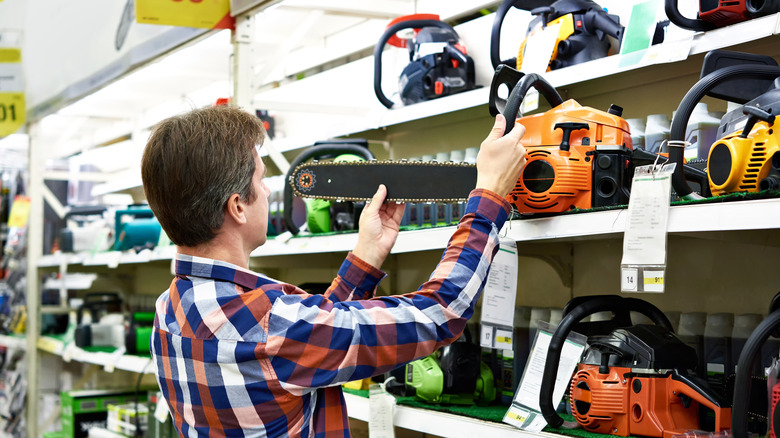
When it comes to real-world use, Pro Tool Reviews showed that professional saws aren't one-size-fits-all in their 2024 Best Professional Chainsaw Reviews. The publication separated its picks into categories based on different applications and saw configurations, including overall performance, top-handle saws, 50cc and 60cc models, long-bar saws, and battery-powered saws. Its selections show that pro saws can vary in size, power, and design depending on the work they're built to handle.
A professional chainsaw also has to be designed to suit the safety demands of the work. For example, OSHA's logging standard specifically addresses chainsaws used in logging operations. These saws require features such as a chain brake and continuous-pressure throttle control, while gasoline-powered models must also meet specific operating requirements. OSHA also requires regular inspection of chainsaw components including the chain, muffler, controls, and other safety devices.
While professional chainsaws offer the durability and additional features for more demanding work, that doesn't necessarily make them the best option for every buyer. The fact is that a chainsaw for DIY work like occasionally cutting firewood, cleaning up after a storm, or everyday property maintenance may not need to be a professional model. That's why considering how often the saw will be used and the work it's expected to handle is the best way to determine what is actually needed.