

Why Do Some Speed Limit Signs Have A Black Background?
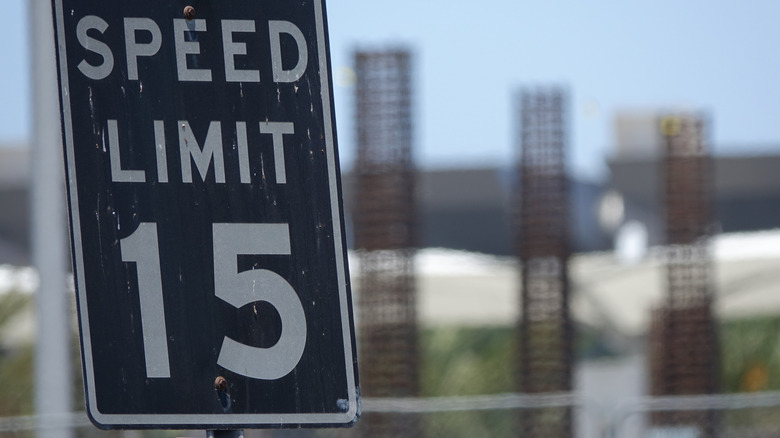
Virtually anyone with experience as a driver or passenger of an automotive vehicle in the U.S. is familiar with the difference between speed limit signs with white backgrounds and those with yellow backgrounds. A traditional speed limit sign with a white background defines the maximum speed at which a motorist can travel without breaking the law, while one with a yellow background is more of an advisory sign. For example, such a sign might indicate it's wise to reduce your speed when approaching a tight curve in the road. However, even a driver who thoroughly understands the differences between these two common types of speed limit signs might be surprised to see one with a black background. Although somewhat rare, speed limit signs with black backgrounds are useful when the speed limit varies depending on whether a motorist is traveling in dark conditions at night or in bright, daylight conditions.
The Manual on Uniform Traffic Control Devices (MUTCD) is a Federal Highway Administration (FHWA) publication offering guidance on the design of traffic signs. Its purpose is to ensure traffic signs and signals across the nation conform to consistent design standards. Per the MUTCD, when the night speed limit on a road differs from the daytime speed limit, a night speed limit sign should be installed with or below the traditional one. It should have a black background with white lettering and the word "night" above the numerals.
The importance of understanding different types of speed limit signs
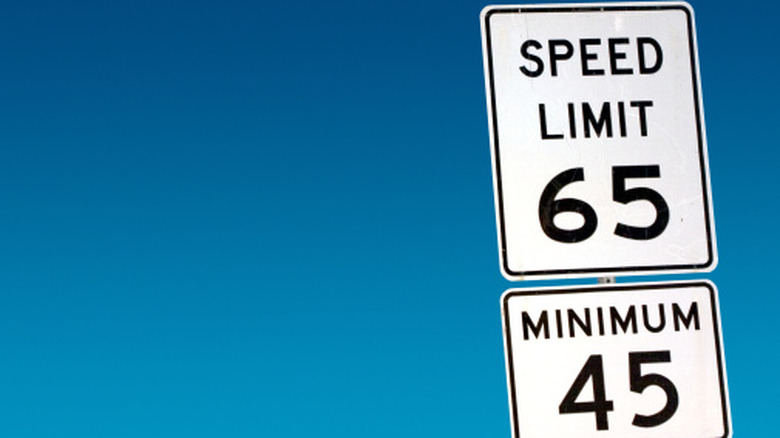
You probably don't need to directly consult the MUTCD to understand a speed limit sign with a black background. Because these signs should include the word "night" on them, a motorist can likely guess what such a sign means when encountering it on the road.
However, not all signs and related signals are obvious. For example, we've covered how the presence of an orange diamond on top of a speed limit sign can be confusing when there's no additional instruction explaining what the diamond represents. Although diamond-shaped signs have specific meanings and functions per the MUTCD, smaller diamonds on top of signs are typically used to boost the visibility of speed limit signs.
Understanding these nuances when driving can naturally help you abide by the law. Because speed limits exist to promote motorist and pedestrian safety, familiarizing yourself with the various types of signs you might encounter on the road could also potentially reduce your odds of being involved in a collision.