

Why Do Some Speed Limit Signs Have An Orange Diamond On Top?
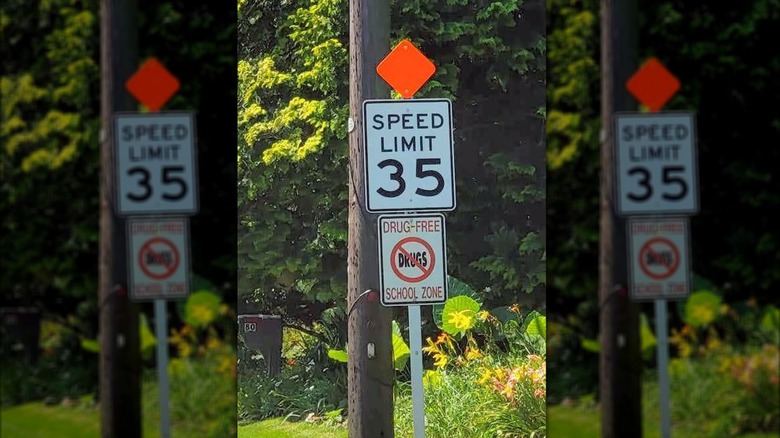
For many drivers, it can be difficult to keep track of all the road signs and what they mean. In fact, we've gone into detail about some of the most confusing traffic signs out there, which include object markers, photo-enforced, soft shoulder, or begin or end reverse lanes. Not to mention, there can even be some variation in signs across the world, wherein different-looking signs can mean the same thing or there are hyper-specific ones that have local context (like crossing animals). In recent times, several netizens have taken note of orange diamonds showing up on top of signs in several states – but what does it actually mean?
In general, the Manual on Uniform Traffic Control Devices (MUTCD) notes that diamonds are used to signal a warning series, while orange is used to indicate temporary traffic control and guides. It also mentions that adding a "strip of retroreflective material" to a sign can make it more conspicuous. While it doesn't specifically indicate using an orange diamond, it does fit the description of what one would expect to increase the possibility of a driver paying attention to the speed limit sign. Aside from this, the MUTCD lists other ways a sign can be improved to be more obvious, including adding red or orange flags, an additional plaque that says "new", or a warning beacon. On the border, it's also possible to add diagonal black-and-yellow stripes or even LEDs.
Why knowing colors and symbols on signs matter
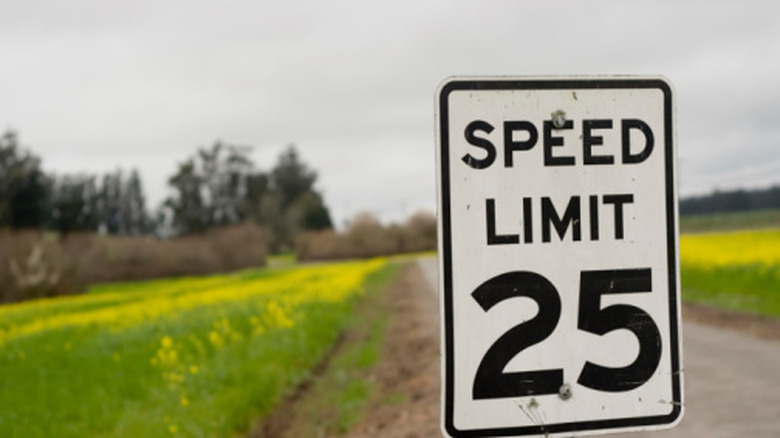
You have a lot to gain by learning about the different combinations that make up a road sign. If you know what the different components mean, they can help you make decisions while on the road more efficiently. To start with, you can learn about what each shape tends to mean, like octagons, triangles, circles, pentagons, and trapezoids. On the other hand, there are also legends for colors, which range from regulatory, warnings, guides, to information. It's important to know, for example, that speed limits can be on both yellow and white signs, but only the white signs can get you in trouble with the law. This is because yellow signs are considered warnings.
We've gone in depth before on how you'll see green signs a lot on United States highways, since they help indicate direction and distance. On the other hand, other design choices can be more common, such as speed limit signs having a red border. In the United States, one fun fact is how all stop signs are all red and octagonal in shape. However, regardless of what country you're driving in, some things can be somewhat universal, such as using the color red on signs to indicate slowing down or needing to pay more attention immediately. After all, it also means "stop" when we see it on the stoplight during intersections, which is one of the most basic concepts every driver needs to learn.