

DJI Mini 5 Pro Vs DJI Mini 3: How Do These Drones Compare?
We may receive a commission on purchases made from links.
If you're shopping for a camera drone, you've likely heard of DJI, as the company led the market in 2025, with over a 22.3% market share, per GM Insights. However, even if you're familiar with this drone manufacturer, DJI is among a list of tech brands so popular in America that you probably didn't realize are owned by China. DJI offers a variety of attractive drone models catering to recreational, professional, and even specialized uses. The Mini series includes options like the Mini 3, which is more affordable for beginners, up to the Mini 5 Pro, a drone feature-packed enough for professional users. Unfortunately, the DJI Mini 5 Pro isn't currently available to U.S. buyers on the DJI website, but you can find it for sale on other platforms like Amazon.
There are many differences between the Mini 3 and Mini 5 Pro, with the first being sticker price. While the Mini 3 can be had for just $210, the Mini 5 Pro is just under $770. There was a DJI Mini 3 Pro; however, it's no longer available from DJI, leaving only the Mini 3 (non-Pro version). The DJI Mini 3 dropped the Pro's best feature but got a lot cheaper as a result. In terms of weight and dimensions, the DJI Mini 5 Pro weighs slightly more at 249.9g versus the Mini 3's 248g. This makes sense, though, as the Mini 5 Pro is also a bit larger when unfolded with propellers.
Camera quality, subject tracking, and navigation
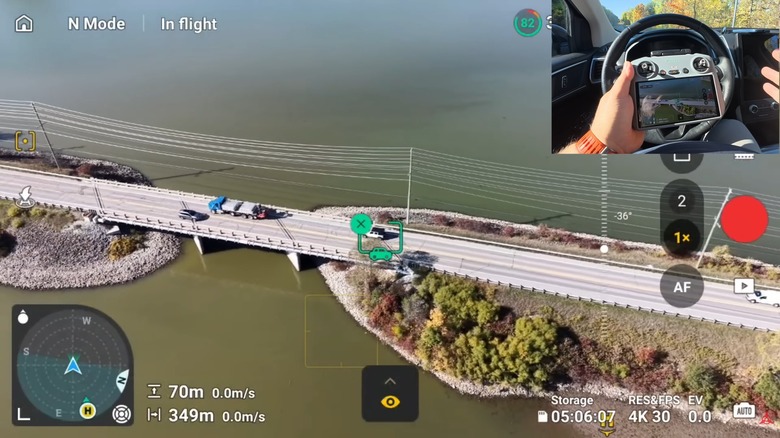
Where the Mini 5 Pro really takes things to another level is its camera. The Mini 5 Pro's 1-inch CMOS sensor enables the drone to take 50 MP photos and includes a wider ISO range and shutter speed settings for creating simulated long exposure.
With regard to video, while the Mini 3 can manage 4K resolution up to 30 fps (frames per second), the Mini 5 Pro can provide the same clarity with up to 120 fps. Dropping the resolution of the Mini 3 can get you up to 60 fps, but the Mini 5 Pro in 1080p can get 240 fps, which is crucial for smooth slow-motion capture. Speaking of capture, the Mini 5 Pro features a gimbal design that can rotate 225 degrees, which isn't common outside of commercial drone models.
While the Mini 3 offers QuickShots, essentially baked-in aerial maneuvers for capturing interesting moving shots, it doesn't offer tracking features. Active Track 360 technology (improved for the Mini 5 Pro) intelligently follows moving subjects while avoiding collisions. In addition, with LiDAR equipped obstacle detection, the Mini 5 Pro provides users the ability to capture media at night, where other models like the Mini 3 might struggle. For those who want some of the features found in the Mini 5 Pro, but something more affordable, you can still find the DJI Mini 4 Pro for sale, a drone model we praised in our review.
Flight speeds, performance, and battery life
In terms of flight capabilities, the Mini 5 Pro outshines the less expensive Mini 3. For instance, the Mini 5 Pro doubles the maximum ascent speed of the Mini 3, achieving a velocity of 10 m/s (meters per second). While the Mini 3 can manage a maximum descent speed of 3.5 m/s, the Mini 5 Pro pulls off 6 m/s with the standard battery and even faster, 8 m/s with the Enhanced Battery Plus. When measuring top horizontal speed, the Mini 5 Pro can reach up to 19 m/s with the enhanced battery, while the Mini 3 maxes out at 16 m/s. Keep in mind, though, these figures are dependent on the drones flying at sea level and in calm conditions with no wind.
In a win for the budget-priced Mini 3, with the standard battery it can stay in the air for 38 minutes, a few more than the Mini 5 Pro. However, swap out the standard battery with the Intelligent Flight Battery Plus, and the more expensive Pro model edges out the Mini 3 with the longest flight time in the series at 52 minutes. To be fair, the cheaper drone still manages to offer only a minute less at 51 minutes of flight.