

Want To Install Wind Turbines For Your Home? Here's What You'll Need
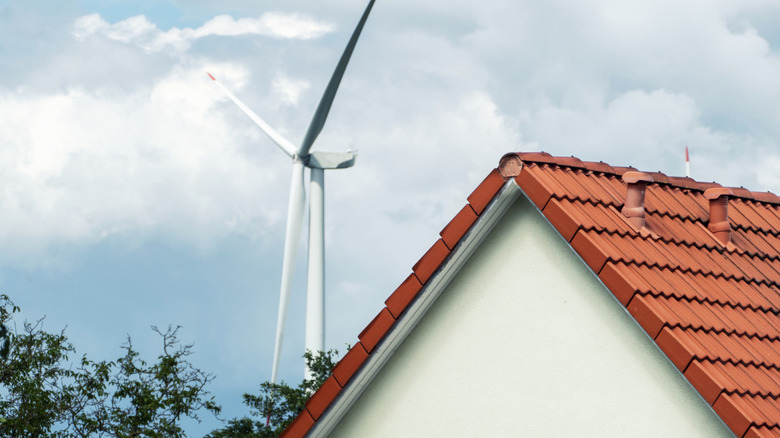
It's not a controversial statement to say that energy bills are high these days, and that finding ways to lower these costs is essential to the modern budget. Consumer Reports offers helpful tips for lowering energy bills, though one of the biggest difference-makers is seeking out an alternative energy source to offset traditional energy consumption. Arguably the most popular option is solar, but wind power shouldn't be overlooked in its own right. Installing a wind turbine at home isn't just possible; it's an effective method of cutting a sizeable percentage from your energy bill — though it is a pricey investment, ranging from $20,000 to $50,000 on average for a full-size unit.
On the whole, there's potential for a wind turbine setup to save a significant amount of money every year on energy. Estimates place a small system as possibly dropping bills by between 50% and 90% in the absolute best conditions. With a battery setup, storing wind energy for later use is a possibility, too, and that's not even getting into the environmental benefits. As a clean energy source, wind turbines don't produce harmful emissions, nor do they require fossil fuels for power or water for cooling, so you'll have peace of mind knowing much of your home energy production is environmentally conscious.
With all of that said, setting up a home wind turbine or two isn't accomplished in an afternoon. It takes the right parts, expertise, documentation, and setup to reap the many benefits of this renewable energy source.
1. A sufficient location
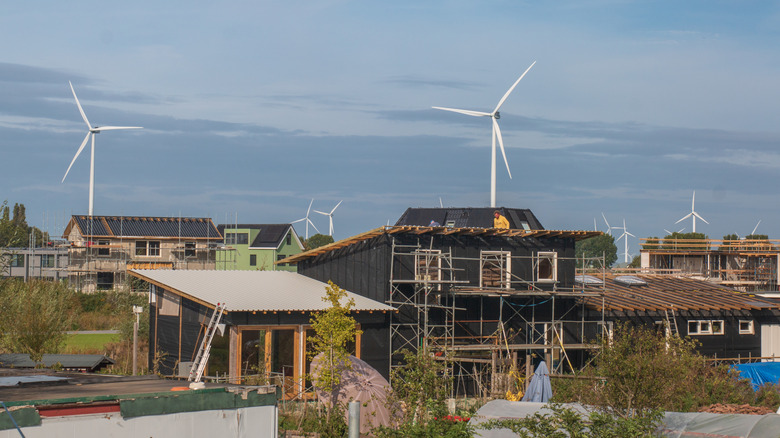
Before purchasing a single wind turbine part or planning where to set it up, you need to assess if your home is in an ideal place for wind power to begin with. Naturally, even smaller wind turbines require ample wind, with residential turbines needing approximately 7 miles per hour (mph) of wind to generate power. All kinds of obstacles, including high surrounding buildings, tall trees, or even tight-knit homes in neighborhood environments, can restrict or divert wind gusts away from the turbine, limiting the potential for energy production. Thus, in such an area, wind power might not be worth the effort, and instead one of the other green energy alternatives for homes could be the answer.
If you're comfortable moving, there are some regions worth considering for their wind energy viability. The most wind turbine-friendly areas within the United States include seacoasts, ridgelines, and throughout the Great Plains region, so if you want to try wind power, these areas are the way to go. With that said, you're not strictly limited to these parts of the country. So long as there's consistent wind movement to keep the turbine blades turning at a sufficient speed and a lack of wind-inhibiting obstacles, you'll generate some amount of electricity for your home to run on.
2. The necessary permits and certifications

So, you're ready to set up your residential turbine, but you can't get started just yet. As any homeowner could tell you, building on your property isn't simple. Wind turbines are no exception, being both a home improvement project you shouldn't tackle yourself and an endeavor demanding extensive paperwork. Worse yet, there can be some legal inconsistencies from region to region, so it's a good idea to start local with your documentation journey to make sure you don't miss any key parts. Your chosen installer is a valuable resource at this step, since they should be able to acquire the necessary permits and certifications before beginning.
Generally speaking, a valid building permit is required to construct a wind turbine at your residence. To connect it to your power grid, you'll need to reach out to your local utility for approval and assistance with this setup. At this point, you may have the opportunity to enter a net metering agreement with them to sell off any excess energy your turbine produces, so this could be a nice moneymaking venture, too. You should also be mindful of the color and patterning of your wind turbine, as some areas are highly specific regarding their appearance. During all of this paperwork, don't forget to look into the potential tax benefits and general incentives turbines can qualify you for.
3. Professional help
Setting up residential wind power requires more than a few helping hands. Professional help is crucial to getting everything installed safely and correctly. As far as setting up the turbine, while a crew of capable friends and family members could get a guyed turbine raised and stabilized, a large self-supported tower will more than likely require more experienced hands. A concrete foundation is required, and depending on the size of the tower and turbine, heavy machinery could be necessary to move and stand everything up.
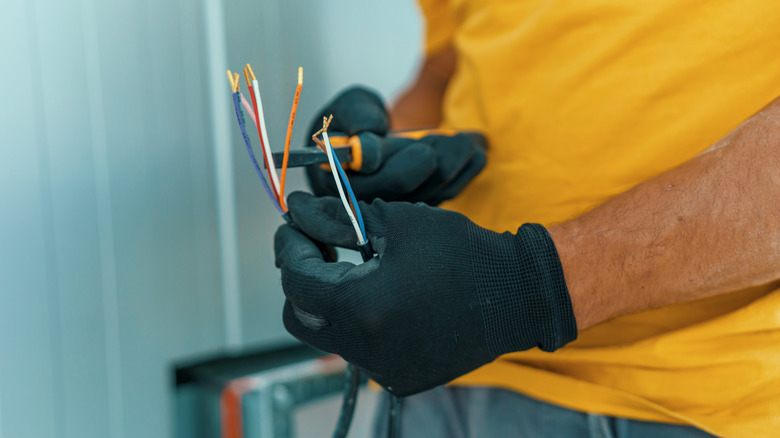
Structural labor aside, the electrical side of wind turbine setup isn't for the faint of heart. Whether you're connecting to the power grid or opting to connect the turbine to a battery, you need to have a strong understanding of how electrical systems work and how to safely work on them. Otherwise, you could add to the list of major electrical mistakes you don't want to make at home. Thus, you'll want to hire someone familiar with this type of wiring, and for all setup steps for your turbine, you'll want to budget accordingly to cover these professionals' services.
4. The turbine and tower
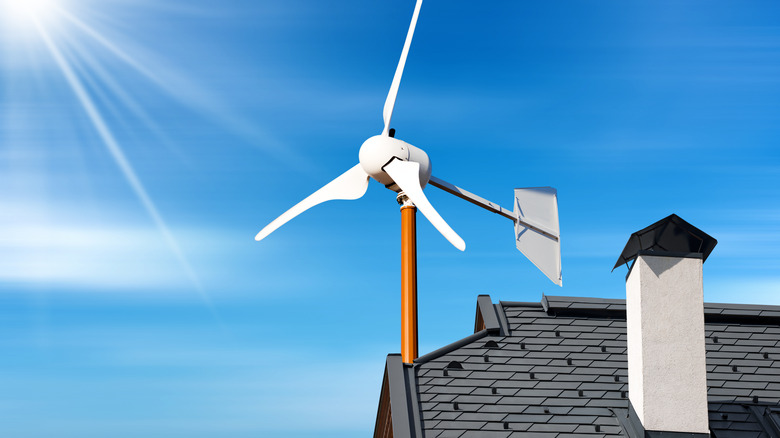
With your space determined, paperwork done, and professionals lined up, you can turn your attention to the turbine itself, as well as the associated items needed to run and utilize it. First, you want to assess what size turbine you want in terms of energy production. Home turbines range from 400 watts to 100 kilowatts, so you should do some research into what your dwelling needs. This power need will determine the size of the turbine, which can come in multiple forms. Most common are horizontal turbines, though vertical turbines — available in S-shaped Savonius and oval Darrieus forms — are possibilities for your setup, too.
Under the turbine goes the tower, to which it must be mounted in order to catch the wind and turn it into electricity. It's recommended that the tower leave at least a 30-foot gap between the bottom-most part of the turbine and grounded obstacles within 300 feet for safety reasons. They come in two main variations: self-supported, concrete foundation-bound towers and guyed towers, characterized by pipe or tubing, stabilizing guy wires, and an anchor. Investing in a tilt-down tower for easier maintenance isn't a bad idea either, assuming it doesn't uncomfortably strain your budget. Of course, roof-mounted turbines like those from Ridgeblade are out there as well for those limited on yard space.
5. The electrical elements
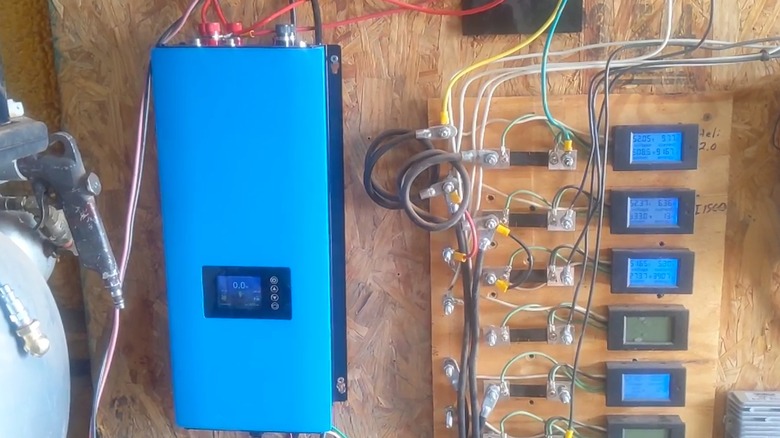
Now that the wind turbine and mounting tower have been selected, the next step is the more technical part of a home wind setup. There are several key electrical elements to bring together that will allow the turbine to actually do its job. If you're planning to connect your turbine directly to the home's power grid, you'll need a power conditioning unit, which is also known as an inverter. This is necessary to make the system's direct-current output compatible with the alternating-current grid, making it safe and usable. That said, even without hard-wiring into the grid, an inverter is still necessary.
Should you keep your turbine independent of the existing power grid, you'll need something else to store and channel that wind-generated power. This is where a battery setup comes into play, taking in the energy and holding onto it during periods of low wind. Alongside the battery itself, you'll need a battery charge controller to prevent it from overloading and overheating, in addition to an inverter. While some appliances can use DC power directly from the battery, most will need DC-to-AC conversion to work safely. In either case, it's paramount to consult a professional electrician to ensure these volatile electrical elements are set up correctly.
How these elements were selected
To choose these elements for a home wind turbine installation, we took a multifaceted approach to researching the build. For one, there's the actual selection and setup of the wind turbine itself, and the associated construction necessary. These parts of the process aren't cheap or simple, so being aware of all of the elements needed to get such a system up and running is crucial. Not to mention, it's a good idea to be aware of the potential cost range for this effort; this way, those considering wind power know if they can realistically afford such an undertaking.
Aside from the actual wind turbine planning, setup, and use, there are the location and paperwork-related aspects. Wind turbines need to be set up in specific areas with ample wind to achieve the owner's energy production goals; they need to be built within the local laws and regulations in the area to avoid any legal trouble; and they should be set up by those who actually know what they're doing. Homeowners need to know that there's a lot of paperwork, phone calls, and planning involved to get this set up from a hypothetical to a usable reality.